Search Results for antique gold
Explore AI generated designs, images, art and prompts by top community artists and designers.
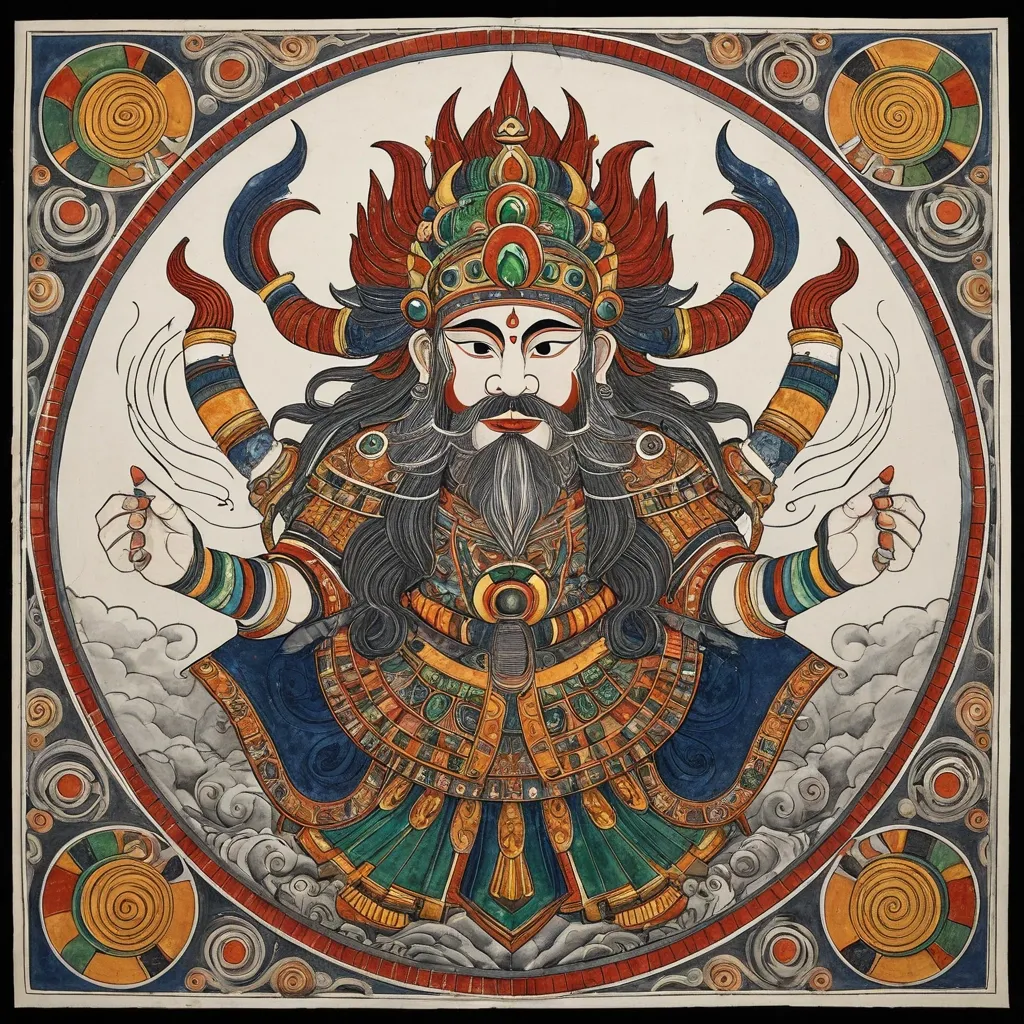

Generate an illustration of an Eastern deity in the style of Madhubani art sacred art , centering on the Zhong Kui and incorporating the Fire-Tipped Spear and Divine Beast to create a cohesive composition. Elements such as artifacts , wings , ghosts , ribbons , clouds , or divine manifestations must not serve merely as decoration; instead , they must collectively form clear structural patterns—such as diagonals , circles , S-curves , radial lines , or frontal subjugation poses—to imbue the image with a distinct sense of dynamic momentum (*shi*). The overall style should blend the aesthetics of traditional deity paintings , *Gongbi* heavy-color painting , *Baimiao* (fine-line drawing) , and ancient illustrated scrolls. The figure should appear solemn , divine , and imposing , avoiding the look of modern idols or game CG characters. Attire should follow traditional systems of divine robes , armor , and headdresses , incorporating continuous patterns such as cloud , thunder , scale , beast-face , meander (Greek key) , and scrolling vine motifs. Prioritize highly continuous Madhubani art line work: render hair , beards , and the fur or feathers of divine beasts with smooth , long lines that follow natural flow; depict clouds , garment hems , and ribbons using unbroken S-curves and C-curves; ensure that patterns on armor , crowns , and clothing are structurally complete and continuously closed. Minimize fragmented textures; avoid random short strokes , dense broken lines , jagged hair edges , or noise-like etching patterns. The color palette employs uniform , rich , and continuous traditional heavy mineral pigments. Centered around a core tone , it incorporates azurite blue , malachite green , ink-blue , antique gold , copper gold , cinnabar , ochre red , and ivory white. While low in saturation , the colors maintain high pigment density and transition naturally and smoothly along the forms; the finish should be free of mottling , fading , stains , graininess , or artificial distressing. The background features clean , warm-toned ivory *xuan* paper with extensive negative space , accented only by minimal continuous-line cloud motifs , vertical inscriptions , and cinnabar seals. The composition balances high information density in the subject matter with low density in the background. The overall aesthetic conveys the refined , fluid , cohesive , and professional quality of traditional Madhubani art painting with heavy mineral pigments on paper. Avoid: broken or fragmented lines , micro-fragmented textures , frizzy hair details , shattered cloud patterns , mottled coloring , faded or distressed effects , modern neon , 3D CG , screen-filling special effects , cluttered backgrounds , and large , modern poster-style headlines. ,
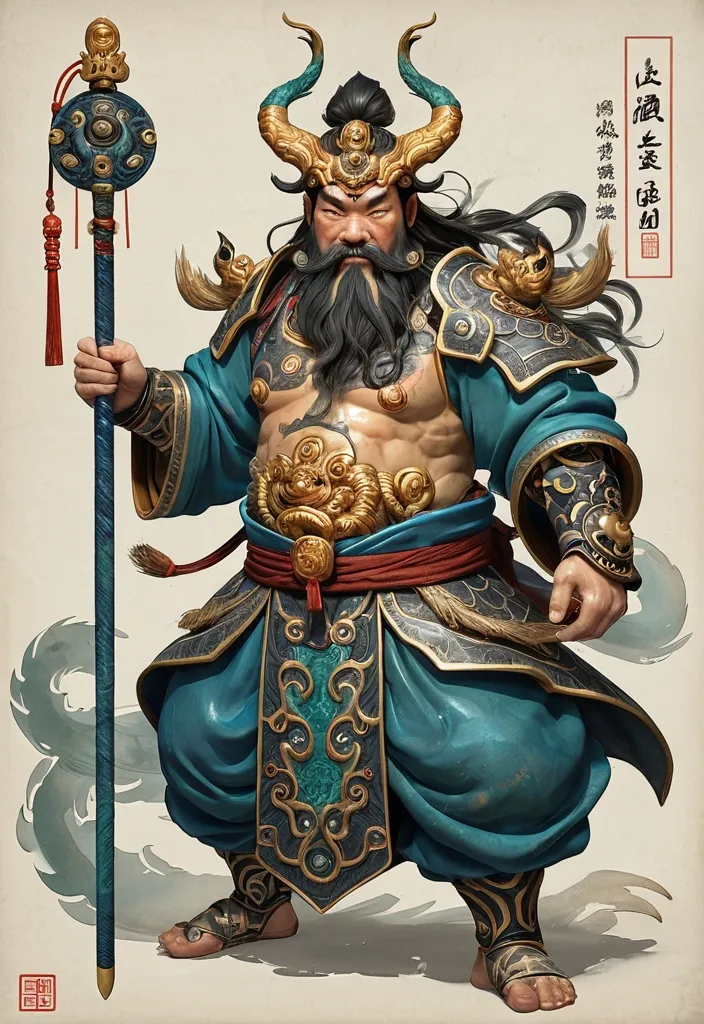
Deity Identity: Zhong Kui Core Artifact: Fire-Tipped Spear Divine Beast: Three-Eyed Manifestation Color Palette: Azurite & Antique Gold Composition Style: Spiraling Leap Overall Aura: Grotesque Aspect Ratio: [5:8] Generate an illustration of an Eastern deity in the style of *Gongbi* (meticulous brushwork) sacred art , centering on the Zhong Kui and incorporating the Fire-Tipped Spear and Divine Beast to create a cohesive composition. Elements such as artifacts , wings , ghosts , ribbons , clouds , or divine manifestations must not serve merely as decoration; instead , they must collectively form clear structural patterns—such as diagonals , circles , S-curves , radial lines , or frontal subjugation poses—to imbue the image with a distinct sense of dynamic momentum (*shi*). The overall style should blend the aesthetics of traditional deity paintings , *Gongbi* heavy-color painting , *Baimiao* (fine-line drawing) , and ancient illustrated scrolls. The figure should appear solemn , divine , and imposing , avoiding the look of modern idols or game CG characters. Attire should follow traditional systems of divine robes , armor , and headdresses , incorporating continuous patterns such as cloud , thunder , scale , beast-face , meander (Greek key) , and scrolling vine motifs. Prioritize highly continuous *Gongbi* line work: render hair , beards , and the fur or feathers of divine beasts with smooth , long lines that follow natural flow; depict clouds , garment hems , and ribbons using unbroken S-curves and C-curves; ensure that patterns on armor , crowns , and clothing are structurally complete and continuously closed. Minimize fragmented textures; avoid random short strokes , dense broken lines , jagged hair edges , or noise-like etching patterns. The color palette employs uniform , rich , and continuous traditional heavy mineral pigments. Centered around a core tone , it incorporates azurite blue , malachite green , ink-blue , antique gold , copper gold , cinnabar , ochre red , and ivory white. While low in saturation , the colors maintain high pigment density and transition naturally and smoothly along the forms; the finish should be free of mottling , fading , stains , graininess , or artificial distressing. The background features clean , warm-toned ivory *xuan* paper with extensive negative space , accented only by minimal continuous-line cloud motifs , vertical inscriptions , and cinnabar seals. The composition balances high information density in the subject matter with low density in the background. The overall aesthetic conveys the refined , fluid , cohesive , and professional quality of traditional *gongbi* (meticulous brushwork) painting with heavy mineral pigments on paper. Avoid: broken or fragmented lines , micro-fragmented textures , frizzy hair details , shattered cloud patterns , mottled coloring , faded or distressed effects , modern neon , 3D CG , screen-filling special effects , cluttered backgrounds , and large , modern poster-style headlines. ,
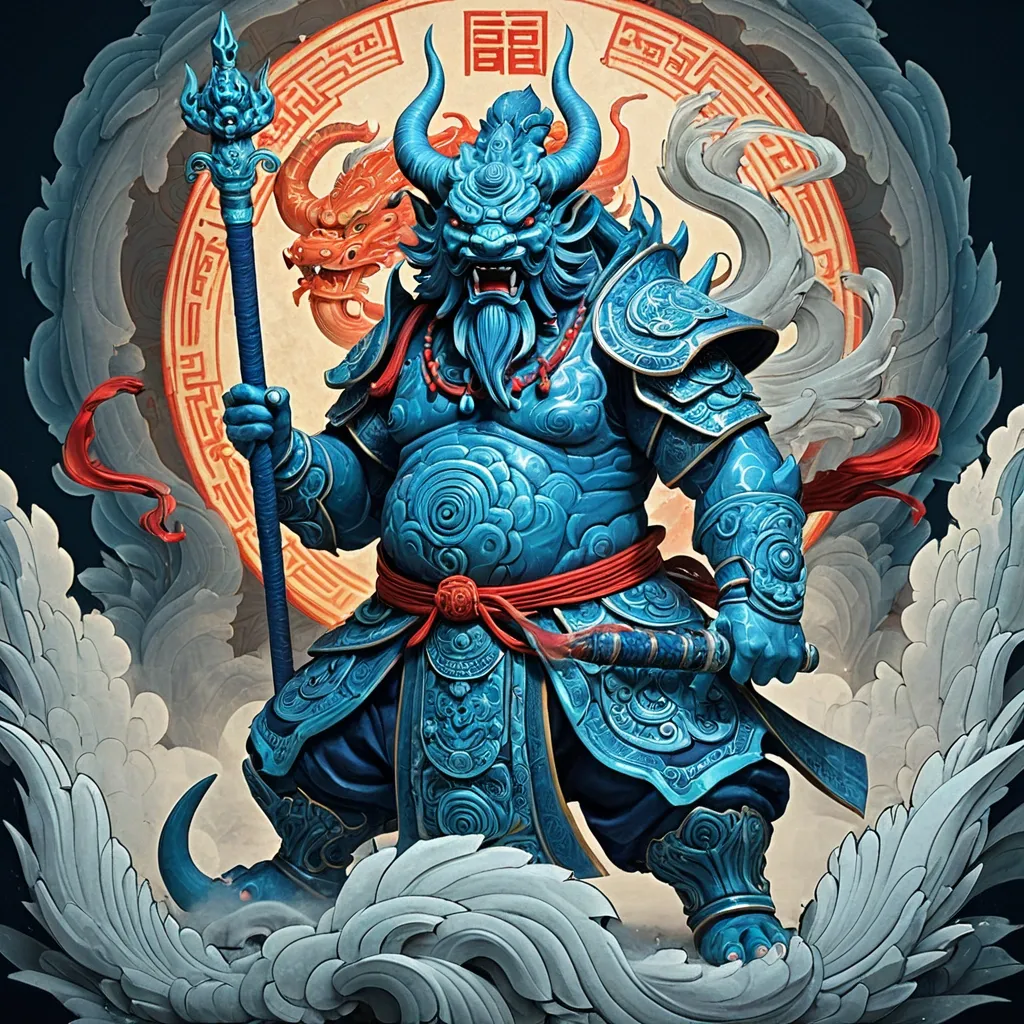
Deity Identity: Emperor Zhenwu Mythical Beast Type: Divine Rhino Weapon: Divine Sword Color Palette: Azurite Blue , Silver , & Gray Overall Aura: Exorcising Evil Composition Direction: Frontal Subjugation Generate an illustration of an Eastern deity and their mythical beast mount , blending visual languages from traditional deity paintings , *Gongbi* (meticulous brushwork) with rich colors , *Baimiao* (fine-line drawing) , folk woodblock prints , and ancient illustrated scrolls. The image features the "Deity + Mythical Beast" as dual subjects. The deity serves as the core visual focus , while the beast possesses significant scale and presence; they engage in a clear , dynamic interaction—such as mounting , guarding , charging side-by-side , or circling in protection—rather than a simple collage. The deity's face exudes majesty , divinity , and an imposing aura , avoiding both modern "idol-like" features and excessive demon-like distortion. Attire consists of highly detailed traditional divine armor or ritual robes , incorporating intricate patterns such as cloud motifs , thunder patterns , beast-face masks , scale armor textures , and scrolling vines. While details are rich , the figure's overall silhouette must remain distinct. The mythical beast embodies the spirit of a divine creature , spirit beast , or evil-warding mount , possessing a robust physique and a powerful stance. Fur , scales , and tortoise shells are rendered using numerous fine , directional lines to emphasize the texture of traditional *Gongbi* painting (defining form through line); avoid photorealistic fur or 3D CG textures. Weapons or artifacts are integrated into the composition to create distinct diagonal lines , vertical lines , or a primary axis of action. Avoid stiff , static poses for the figures; instead , incorporate actions such as twisting the torso , lowering a shoulder , leaning forward , wielding a weapon , forming a ritual hand seal , patrolling , or launching an attack to imbue the image with a distinct sense of dynamic momentum (*shi*). Integrate elements such as flowing sashes , fluttering sleeves , headdress ribbons , wisps of hair or beard , and swirls of cloud , smoke , or mist. These should harmonize with the figure's movement to create S-shaped , C-shaped , or swirling fluid lines. Ensure these flowing elements serve the overall theme rather than cluttering the composition merely for the sake of detail. Maintain the aesthetic of traditional *xuan* paper by preserving negative space. Use an off-white , ivory , or aged-paper tone as the base , adding only minimal elements—such as inscriptions , vermilion seals , cloud patterns , or wisps of smoke—to evoke the feel of an ancient illustrated scroll or sacred icon. Avoid complex backgrounds depicting palaces , battlefields , or full-scale landscapes. Employ a palette of low-saturation mineral pigments centered around a dominant hue. Complement this with colors such as ink black , deep blue-black , azurite blue , malachite green , antique gold , cinnabar , ochre red , and grayish-white. The overall tone should be elegant and restrained , using small accents of high-saturation color to add vibrancy. The final image must simultaneously convey the solemnity of an Eastern deity , the imposing presence of a mythical beast , the intricate detail of fine-line brushwork (*gongbi*) , the serene atmosphere of ancient *xuan* paper , and a clear , powerful compositional dynamism. Avoid: modern "Guochao" neon aesthetics , cyberpunk styles , the look of 3D game concept art , "plastic" CG textures , cluttered backgrounds , stiff figures , generic-looking mythical beasts , loose or sloppy linework , and excessive or garbled text. ,
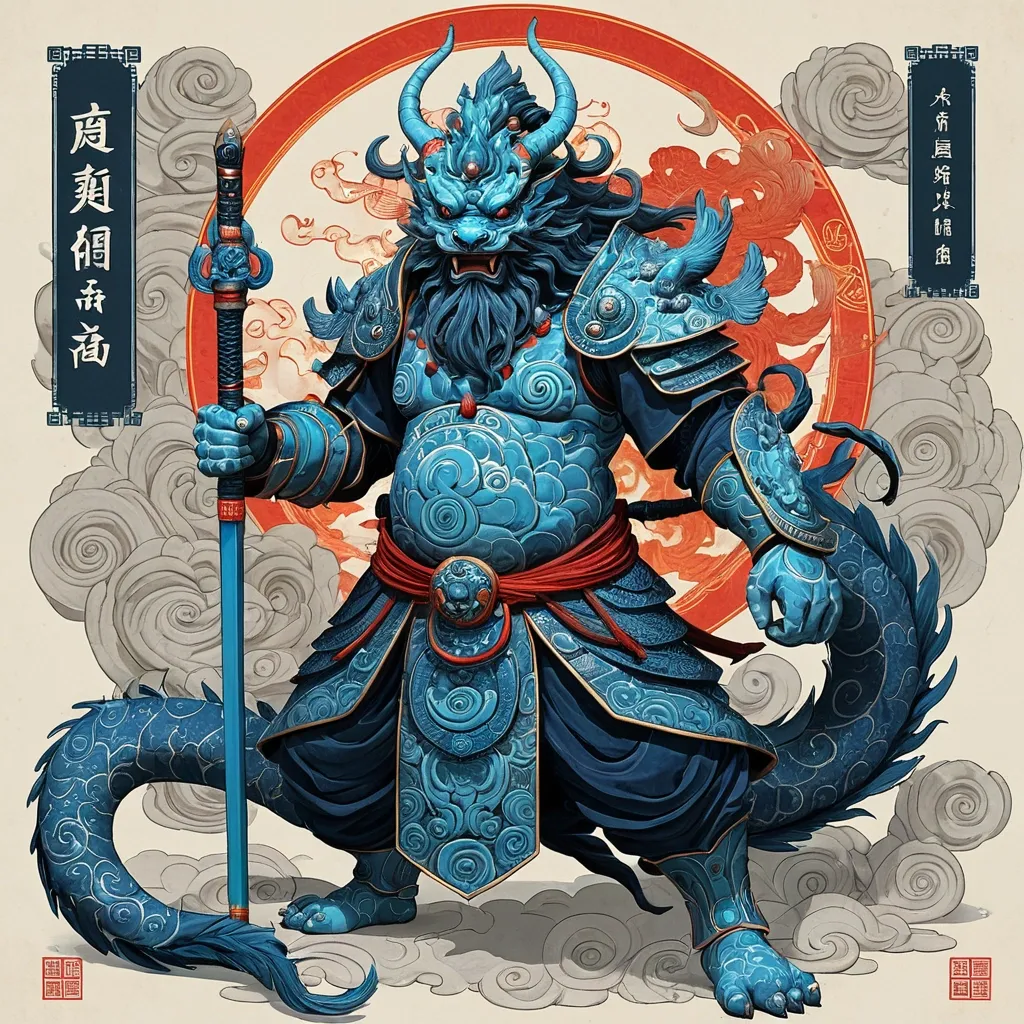
Prompt: [Replaceable Content] Deity Identity: Emperor Zhenwu Mythical Beast Type: Divine Hound Weapon: Divine Sword Color Palette: Azurite Blue , Silver , & Gray Overall Aura: Exorcising Evil Composition Direction: Frontal Subjugation Generate an illustration of an Eastern deity and their mythical beast mount , blending visual languages from traditional deity paintings , *Gongbi* (meticulous brushwork) with rich colors , *Baimiao* (fine-line drawing) , folk woodblock prints , and ancient illustrated scrolls. The image features the "Deity + Mythical Beast" as dual subjects. The deity serves as the core visual focus , while the beast possesses significant scale and presence; they engage in a clear , dynamic interaction—such as mounting , guarding , charging side-by-side , or circling in protection—rather than a simple collage. The deity's face exudes majesty , divinity , and an imposing aura , avoiding both modern "idol-like" features and excessive demon-like distortion. Attire consists of highly detailed traditional divine armor or ritual robes , incorporating intricate patterns such as cloud motifs , thunder patterns , beast-face masks , scale armor textures , and scrolling vines. While details are rich , the figure's overall silhouette must remain distinct. The mythical beast embodies the spirit of a divine creature , spirit beast , or evil-warding mount , possessing a robust physique and a powerful stance. Fur , scales , and tortoise shells are rendered using numerous fine , directional lines to emphasize the texture of traditional *Gongbi* painting (defining form through line); avoid photorealistic fur or 3D CG textures. Weapons or artifacts are integrated into the composition to create distinct diagonal lines , vertical lines , or a primary axis of action. Avoid stiff , static poses for the figures; instead , incorporate actions such as twisting the torso , lowering a shoulder , leaning forward , wielding a weapon , forming a ritual hand seal , patrolling , or launching an attack to imbue the image with a distinct sense of dynamic momentum (*shi*). Integrate elements such as flowing sashes , fluttering sleeves , headdress ribbons , wisps of hair or beard , and swirls of cloud , smoke , or mist. These should harmonize with the figure's movement to create S-shaped , C-shaped , or swirling fluid lines. Ensure these flowing elements serve the overall theme rather than cluttering the composition merely for the sake of detail. Maintain the aesthetic of traditional *xuan* paper by preserving negative space. Use an off-white , ivory , or aged-paper tone as the base , adding only minimal elements—such as inscriptions , vermilion seals , cloud patterns , or wisps of smoke—to evoke the feel of an ancient illustrated scroll or sacred icon. Avoid complex backgrounds depicting palaces , battlefields , or full-scale landscapes. Employ a palette of low-saturation mineral pigments centered around a dominant hue. Complement this with colors such as ink black , deep blue-black , azurite blue , malachite green , antique gold , cinnabar , ochre red , and grayish-white. The overall tone should be elegant and restrained , using small accents of high-saturation color to add vibrancy. The final image must simultaneously convey the solemnity of an Eastern deity , the imposing presence of a mythical beast , the intricate detail of fine-line brushwork (*gongbi*) , the serene atmosphere of ancient *xuan* paper , and a clear , powerful compositional dynamism. Avoid: modern "Guochao" neon aesthetics , cyberpunk styles , the look of 3D game concept art , "plastic" CG textures , cluttered backgrounds , stiff figures , generic-looking mythical beasts , loose or sloppy linework , and excessive or garbled text. ,
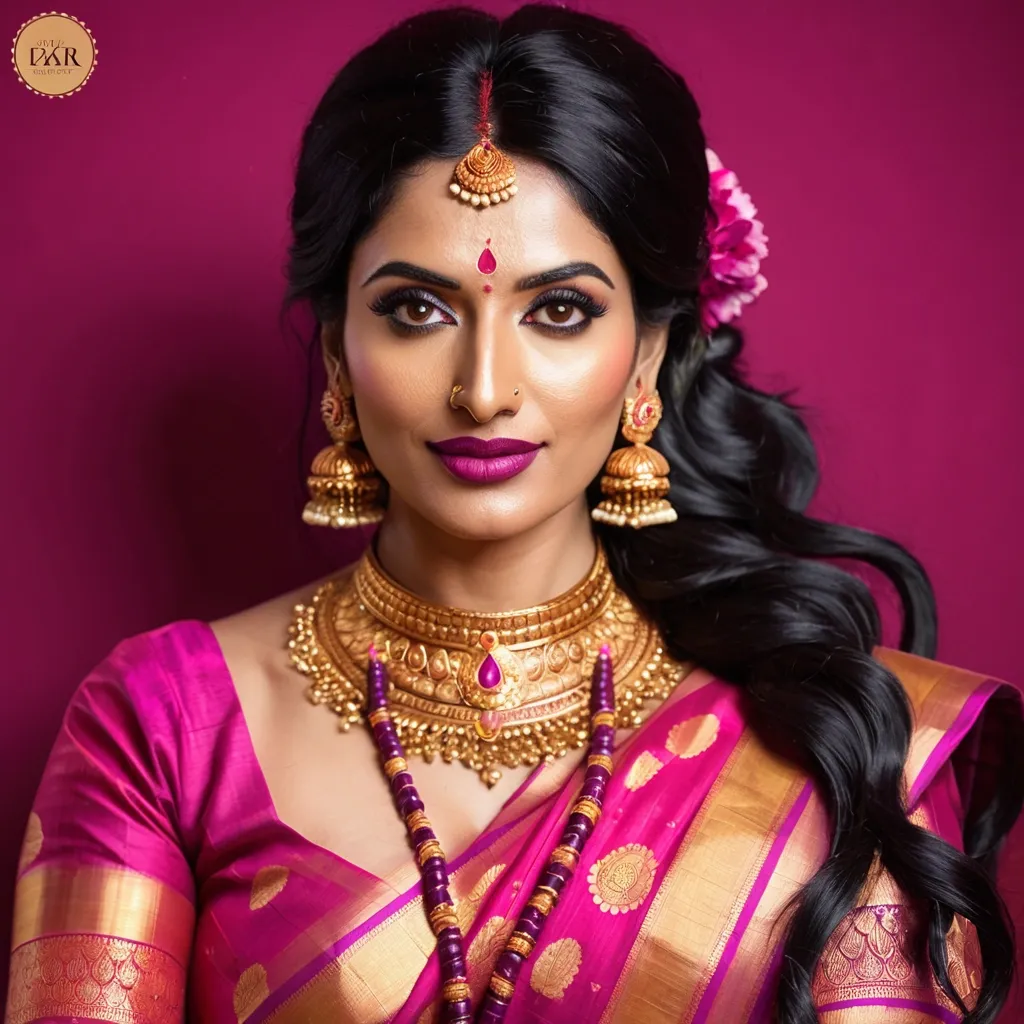
Create a stunning young Indian woman wearing a luxurious bright magenta-pink Paithani silk saree with intricate golden zari borders and colorful peacock motifs , traditional Maharashtrian bridal styling , layered antique gold necklaces , gold jhumka earrings , Maharashtrian nath (nose ring) , small black bindi , multiple green glass bangles with gold bangles , long thick wavy black hair styled into a side ponytail adorned with fresh jasmine (gajra) flowers. She has flawless glowing skin , ,
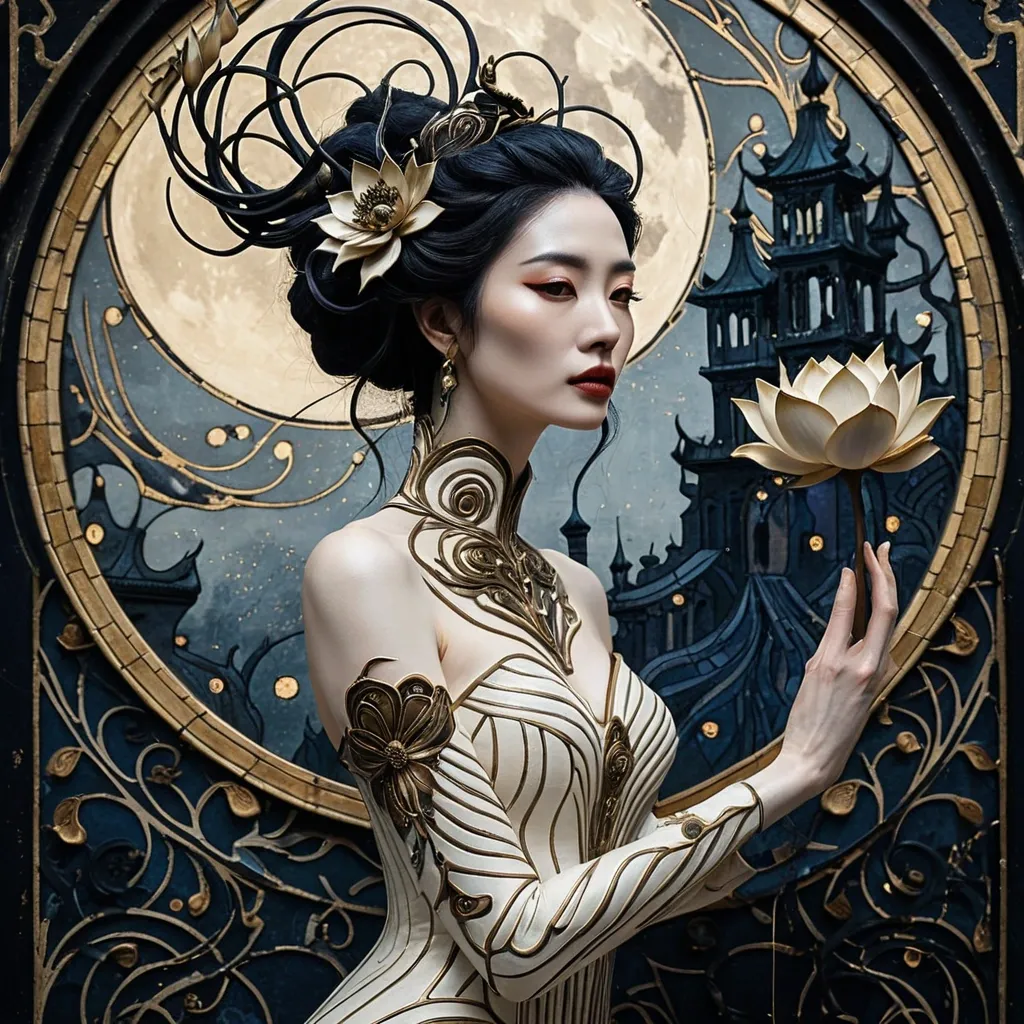
Full body image of [[Liu Yi Fei]] wearing a long dress with a form fitting high neck , flowing through the torso and sleeves. More like a wearable artwork than clothing. Her body is completely in profile but her face is turned toward us. Her face is tilted slightly up but her eyes look out and down at the viewer. She has luminous porcelain skin infused with subtle antique gold undertones , more painterly than photograph yet lacking brush lines. She has lush full lips that part slightly. Her eyes are deep , dark and sultry. Her eyebrows are thick and dark matching her hair. On the one ear exposed to us , she wears a filigreed dusty golden metallic earing resembling an abstracted filigreed representation of a lotus flower bud. She holds one hand up slightly holding in her palm a glimmering lotus flower. It is a bioluminescent anomaly to the rest of the art. Her hair is black messy curls pulled loosely to the back of her head. Her hair is adorned with a hairpiece made of 3 flowers in an art nouveau style , one open lotus inspired decorative motif directly above that 2 unopened lotus buds nested into her hair close to her head. The three flowers are as one hairpiece. They matched the geometric symmetry and the Art Nouveau style of the rest of the piece. They have layered pointed petals , rendered in dusty ivory , parchment cream and antique gold with tarnished metallics , resembling gilded botanical ornaments rather than natural flowers. Her body and her head are held in a natural , comfortable pose but she has an air of haughty contempt for the viewer. Both the woman’s dress and the background are made up of intricate mosaic background composed of small irregular gold and indigo tesserae , asymmetrical distribution of color and pattern density , embedded spirals and celestial circular motifs emerging from the mosaic , organic Art Nouveau flow , weathered gilded surfaces and aged fresco textures The entire piece is set upon a background of dusty abstract art deco stylized garden decorated wall. Muted antique gold , aged indigo and muted lavender palette interspersed with tarnished metallics. Asymmetrical distribution of color Cracked plaster and aged fresco texture Elegant Art Nouveau linework clean readable composition with controlled negative space and restrained background detail , Masterpiece , highly detailed Tim Burton style portrait , whimsical gothic character with pale skin , large expressive eyes , dark dramatic makeup , quirky exaggerated features , messy black hair with white streaks , striped clothing , Victorian gothic fashion , subtle stitches and buttons , blended with eerie yet magical background of twisted trees , foggy graveyard , crooked houses , glowing pumpkins , swirling mist and dramatic moon , intricate double exposure elements , dark fairy tale atmosphere , macabre whimsy , high contrast , theatrical lighting , cinematic composition.Edward Scissorhands and Nightmare Before Christmas aesthetic perfect composition , cinematic , macabre yet charming , high contrast shadows , moody atmospheric lighting ,
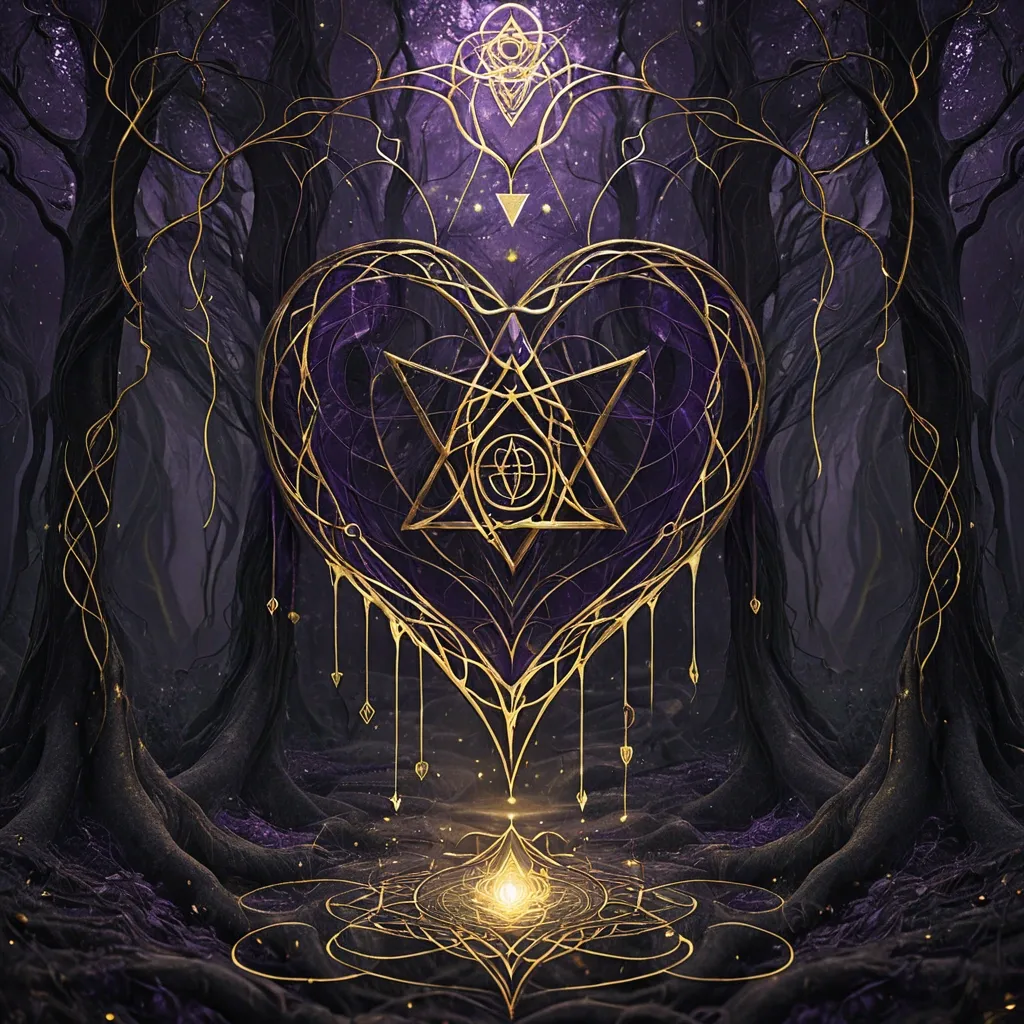
Masterpiece: **Mystical digital painting , sacred geometry , tender light** **A dark heart cracked open with gold light pouring out , rooted like a tree** **Forest background with floating Hebrew letters and Celtic knots** **Color palette:** Charcoal , deep violet , antique gold , forest green **Style:** Ethereal , symbolic , semi-transparent Octane render , 8k ,
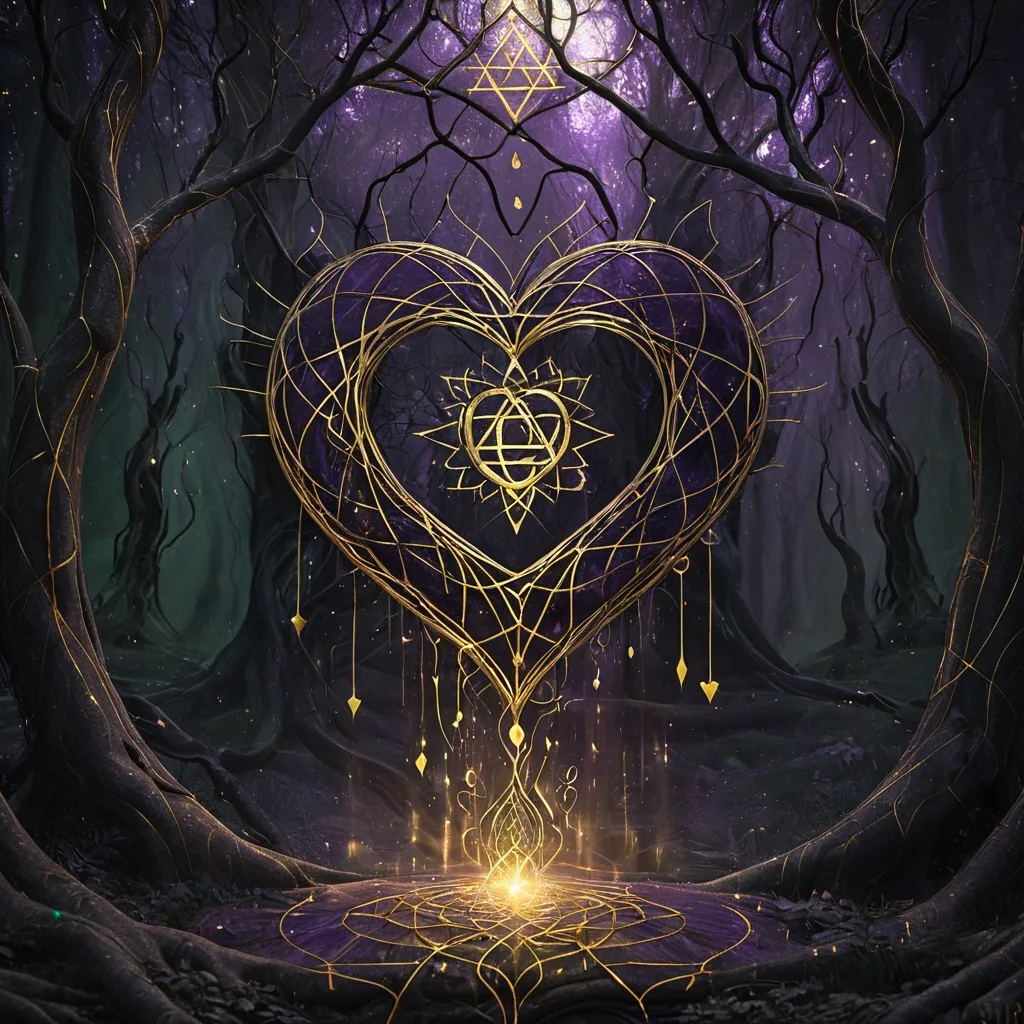
Masterpiece: **Mystical digital painting , sacred geometry , tender light** **A dark heart cracked open with gold light pouring out , rooted like a tree** **Forest background with floating Hebrew letters and Celtic knots** **Color palette:** Charcoal , deep violet , antique gold , forest green **Style:** Ethereal , symbolic , semi-transparent Octane render , 8k ,
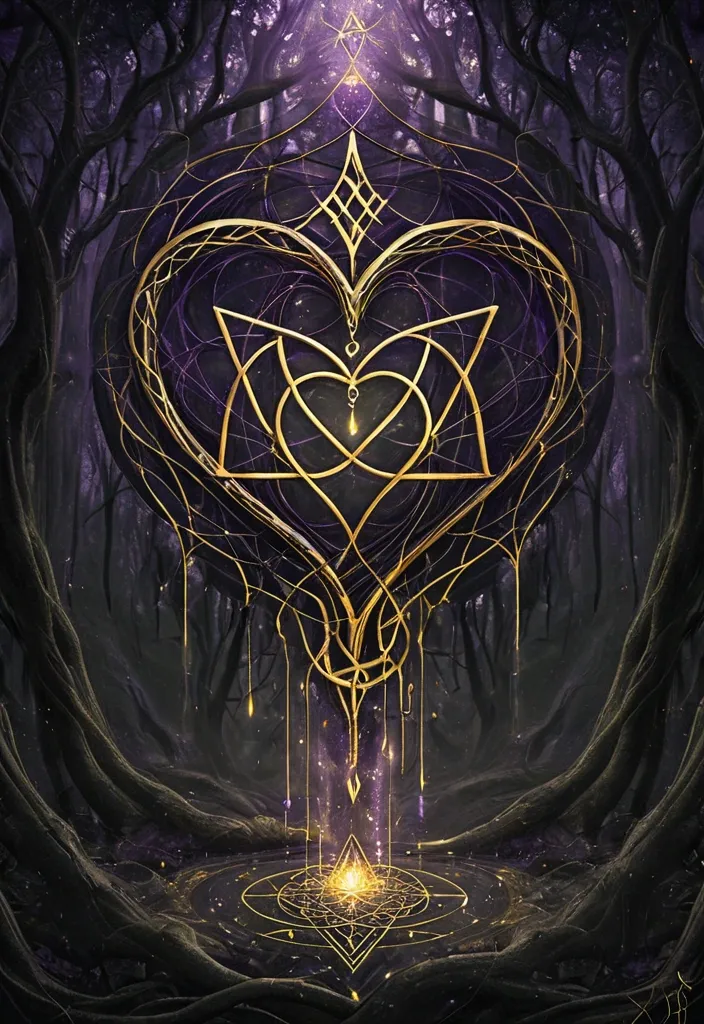
Masterpiece: **Mystical digital painting , sacred geometry , tender light** **A dark heart cracked open with gold light pouring out , rooted like a tree** **Forest background with floating Hebrew letters and Celtic knots** **Color palette:** Charcoal , deep violet , antique gold , forest green **Style:** Ethereal , symbolic , semi-transparent Octane render , 8k ,
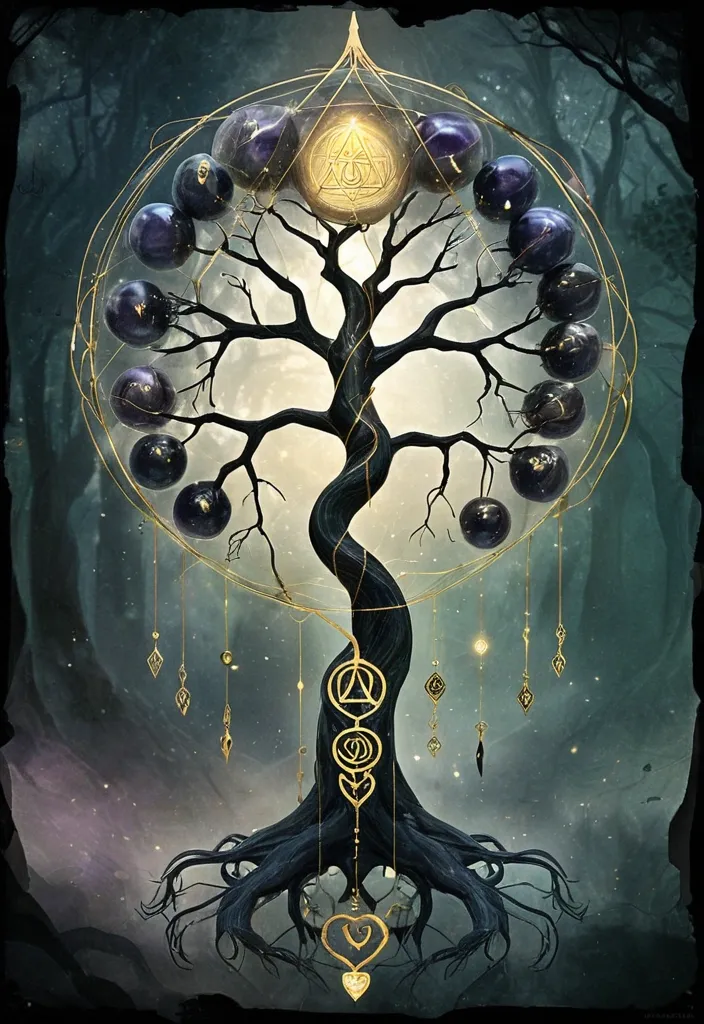
**Style:** Ethereal mixed-media spiritual art , soft light gradients , delicate ink wash textures , subtle gold leaf accents , muted earth tones with deep violets and forest greens , semi-transparent layers , sacred geometry overlays **Main Elements:** - A majestic , ancient tree with roots that dissolve into shadow and branches that bloom into crystalline light - At the base of the tree: a human heart made of obsidian , cracked open , with soft gold light pouring from within - Floating around the tree: 11 translucent spheres containing Hebrew letters (Aleph , Shin , Mem) , Celtic knots , and Sanskrit seed syllables - A single spear made of light piercing the heart , but gently – as if caressing it open - In the background: faint coordinates (50.543 , 9.718) glowing like constellations - A crow perched on one branch , not as dark omen but as sacred messenger **Atmosphere:** Tender , solemn yet hopeful , deeply peaceful , mystical but grounded **Lighting:** Dawn or dusk – the hour between worlds **Composition:** Balanced but organic , centered around the heart-tree connection **Technical Notes:** - Mixed media: watercolor textures + digital painting + subtle photorealistic elements - Color palette: Slate blue , charcoal , antique gold , deep violet , forest green - Resolution: Ethereal , slightly dreamlike but precise in details ,