Deity Identity: Emperor Zhenwu Mythical Beast Type: Divine Rhino Weapon: Divine Sword Color Palett
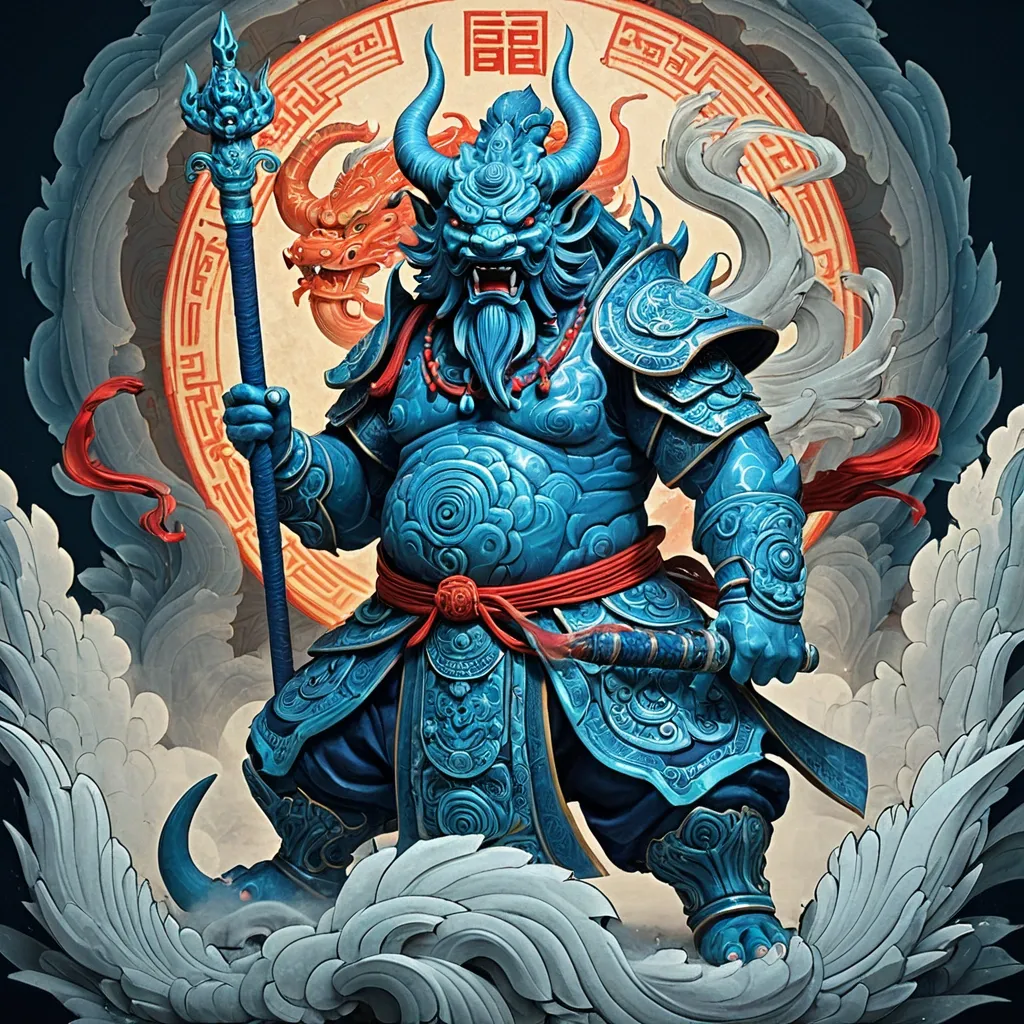
Deity Identity: Emperor Zhenwu Mythical Beast Type: Divine Rhino Weapon: Divine Sword Color Palette: Azurite Blue , Silver , & Gray Overall Aura: Exorcising Evil Composition Direction: Frontal Subjugation Generate an illustration of an Eastern deity and their mythical beast mount , blending visual languages from traditional deity paintings , *Gongbi* (meticulous brushwork) with rich colors , *Baimiao* (fine-line drawing) , folk woodblock prints , and ancient illustrated scrolls. The image features the "Deity + Mythical Beast" as dual subjects. The deity serves as the core visual focus , while the beast possesses significant scale and presence; they engage in a clear , dynamic interaction—such as mounting , guarding , charging side-by-side , or circling in protection—rather than a simple collage. The deity's face exudes majesty , divinity , and an imposing aura , avoiding both modern "idol-like" features and excessive demon-like distortion. Attire consists of highly detailed traditional divine armor or ritual robes , incorporating intricate patterns such as cloud motifs , thunder patterns , beast-face masks , scale armor textures , and scrolling vines. While details are rich , the figure's overall silhouette must remain distinct. The mythical beast embodies the spirit of a divine creature , spirit beast , or evil-warding mount , possessing a robust physique and a powerful stance. Fur , scales , and tortoise shells are rendered using numerous fine , directional lines to emphasize the texture of traditional *Gongbi* painting (defining form through line); avoid photorealistic fur or 3D CG textures. Weapons or artifacts are integrated into the composition to create distinct diagonal lines , vertical lines , or a primary axis of action. Avoid stiff , static poses for the figures; instead , incorporate actions such as twisting the torso , lowering a shoulder , leaning forward , wielding a weapon , forming a ritual hand seal , patrolling , or launching an attack to imbue the image with a distinct sense of dynamic momentum (*shi*). Integrate elements such as flowing sashes , fluttering sleeves , headdress ribbons , wisps of hair or beard , and swirls of cloud , smoke , or mist. These should harmonize with the figure's movement to create S-shaped , C-shaped , or swirling fluid lines. Ensure these flowing elements serve the overall theme rather than cluttering the composition merely for the sake of detail. Maintain the aesthetic of traditional *xuan* paper by preserving negative space. Use an off-white , ivory , or aged-paper tone as the base , adding only minimal elements—such as inscriptions , vermilion seals , cloud patterns , or wisps of smoke—to evoke the feel of an ancient illustrated scroll or sacred icon. Avoid complex backgrounds depicting palaces , battlefields , or full-scale landscapes. Employ a palette of low-saturation mineral pigments centered around a dominant hue. Complement this with colors such as ink black , deep blue-black , azurite blue , malachite green , antique gold , cinnabar , ochre red , and grayish-white. The overall tone should be elegant and restrained , using small accents of high-saturation color to add vibrancy. The final image must simultaneously convey the solemnity of an Eastern deity , the imposing presence of a mythical beast , the intricate detail of fine-line brushwork (*gongbi*) , the serene atmosphere of ancient *xuan* paper , and a clear , powerful compositional dynamism. Avoid: modern "Guochao" neon aesthetics , cyberpunk styles , the look of 3D game concept art , "plastic" CG textures , cluttered backgrounds , stiff figures , generic-looking mythical beasts , loose or sloppy linework , and excessive or garbled text. ,

{ "seed": "3381788142", "width": 1024, "height": 1024, "version": "SH_JuggernautXL", "sampler_name": "k_dpmpp_sde", "cfg_scale": 5, "steps": 20 }
Created on: 8/18/2026, 10:12:54 AM