Search Results for headdress
Explore AI generated designs, images, art and prompts by top community artists and designers.
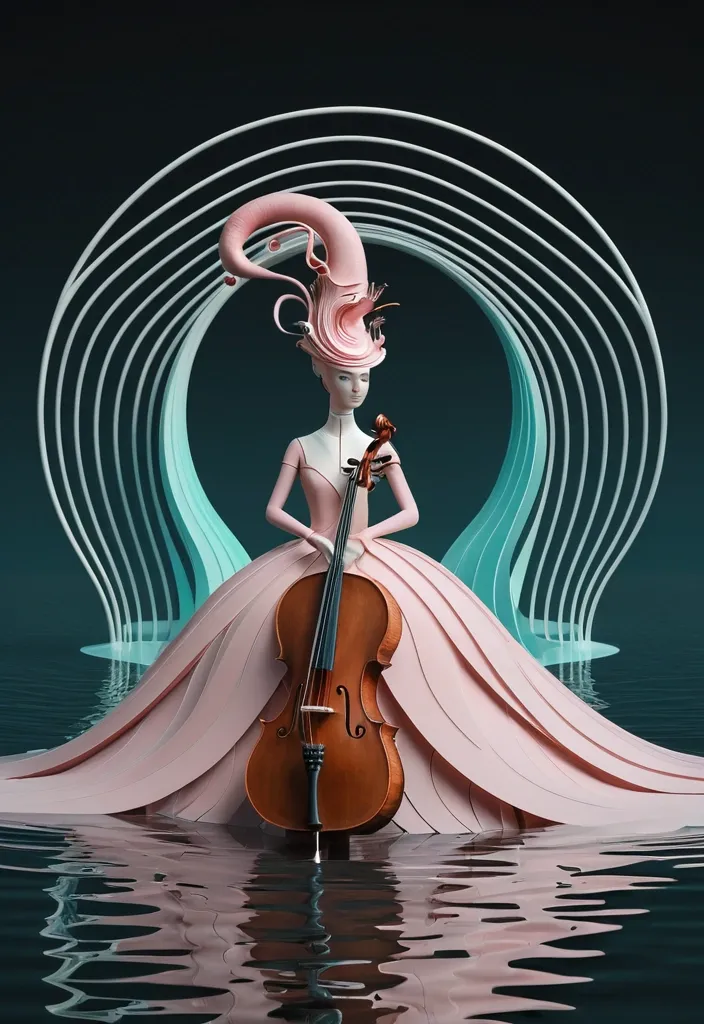

A single , spectral female with a flamingo-beak headdress , playing a large polished brown cello , wearing a flowing pink swirling gown seated at the center of a vast lake , surrounded by numerous flamingo standing around him at different distances and sizes. The cello stands upright between her knees , its neck rising toward the upper edge of the frame. A teal crescent arc rises behind. Thick pale fog blankets the middle distance , partially obscuring both the water and the far shoreline. Follow natural anatomical curves , preserving expressive eyes , defined facial features , and graceful proportions. Use varying line density to create depth and sculptural volume. Favor beautiful side or full-length. PARAMETRIC GEOMETRY Let the hair and body contours seamlessly transform into massive flowing structures inspired by the selected theme. Use precise curve-stitching geometry: countless thin , individually straight lines with gradually shifting endpoints , forming sweeping curved surfaces , layered folds , and intricate spatial patterns. Keep the line flow clean , continuous , and structurally coherent. VISUAL STYLE Pure near-black background , high-contrast colored filaments , and subtle ivory highlights. The portrait and geometric structures must feel like one unified artwork. Crisp vector-like precision , elegant mathematical complexity , and gallery-quality graphic design. ar 5:4. ,
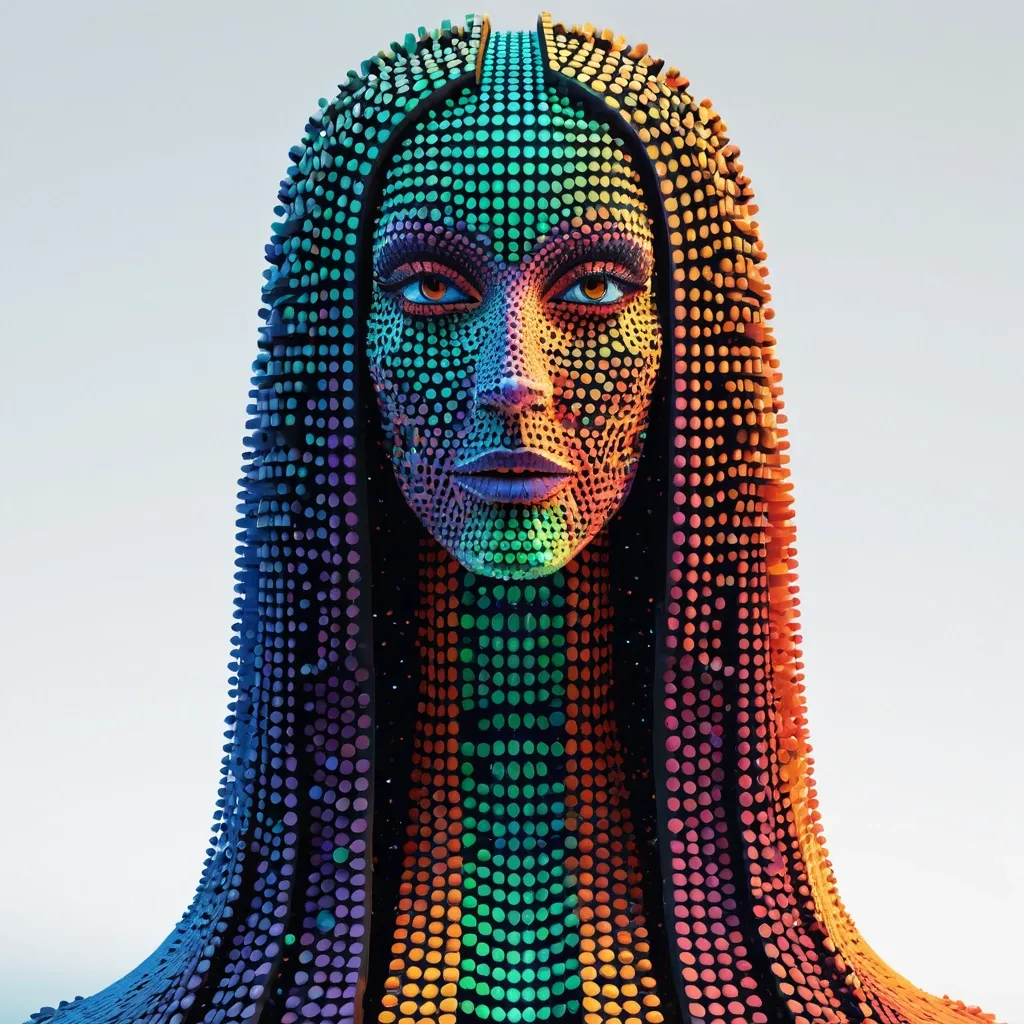
Create a experimental 3D image featuring a female , wears a towering headdress of frog's eyes , Her long , wavy brown hair flows beneath the dress. in flowing and rotating dots beneath the figure , but reconstruct its drops and structure from thousands of elongated dots and scales with varied lengths , depths , and scales. Let the dots follow the natural growth direction of the dots instead of becoming random drops. Build a strong spatial motion based on the selected direction in canopy shape , with denser and shorter dots near the visual core and longer waves extending toward the camera to create dramatic Z-axis depth , perspective , and a sense of motion. Use a controlled color system built around the chosen palette. Keep the main subject vivid and coherent , while deep shadows and dark gaps between the drops create strong negative space and dimensional contrast. Add only a small amount of accent color when needed. The final image should feel like a premium contemporary art poster: bold silhouette , strong thumbnail impact , rich spatial depth , refined lighting , and a clear balance between dense 3D geometry and minimal typography. Avoid Minecraft aesthetics , flat pixel art , random cubes , identical extrusion lengths , rainbow colors , excessive text , heavy neon , thick 3D lettering , meaningless placeholder copy , logos , numbering , watermarks , and cheap CGI materials. ,
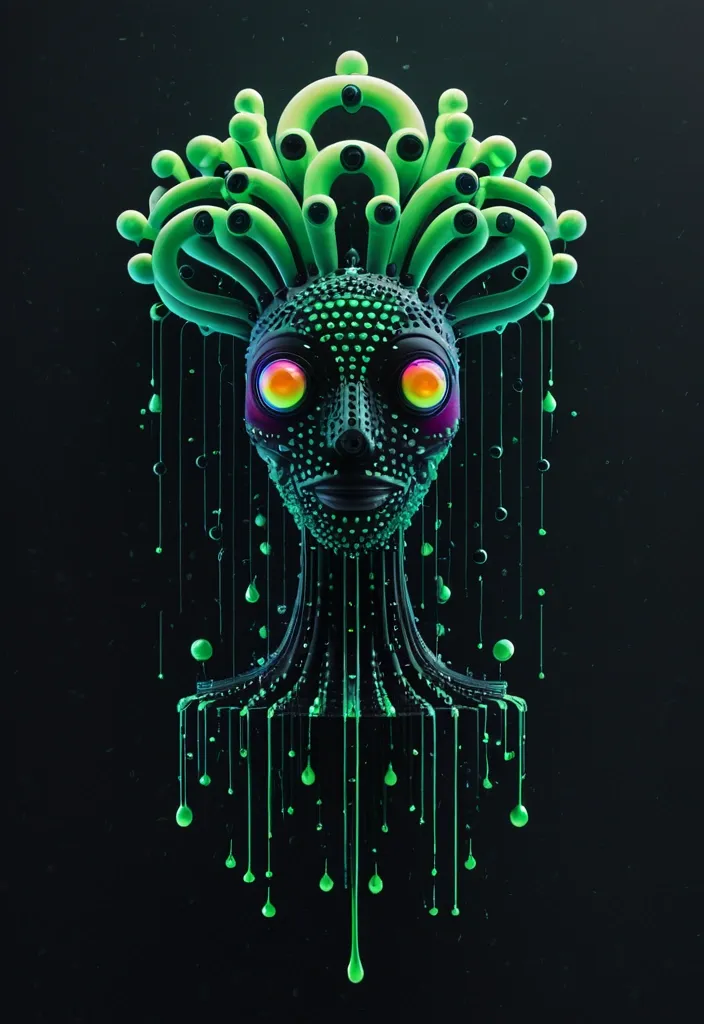
Title: TEDPOL Palette: water drop + green gradient Motion: spiral bloom Background: Black Create a 1:1 experimental 3D portrait poster featuring a alien , wears a towering headdress of frog's eyes , in swirls wax , and dark mechanical spirals , in flowing and rotating dots beneath the figure , but reconstruct its drops and structure from thousands of elongated drop dots and water drops with varied lengths , depths , and scales. Let the dots follow the natural growth direction of the dots instead of becoming random drops. Build a strong spatial motion based on the selected direction in heart shape , with denser and shorter dots near the visual core and longer waves extending toward the camera to create dramatic -Z-axis depth , perspective , and a sense of motion. Use a controlled color system built around the chosen palette. Keep the main subject vivid and coherent , while deep shadows and dark gaps between the drops create strong negative space and dimensional contrast. Add only a small amount of accent color when needed. The final image should feel like a premium contemporary art poster: bold silhouette , strong thumbnail impact , rich spatial depth , refined lighting , and a clear balance between dense 3D geometry and minimal typography. Avoid Minecraft aesthetics , flat pixel art , random cubes , identical extrusion lengths , rainbow colors , excessive text , heavy neon , thick 3D lettering , meaningless placeholder copy , logos , numbering , watermarks , and cheap CGI materials. ,
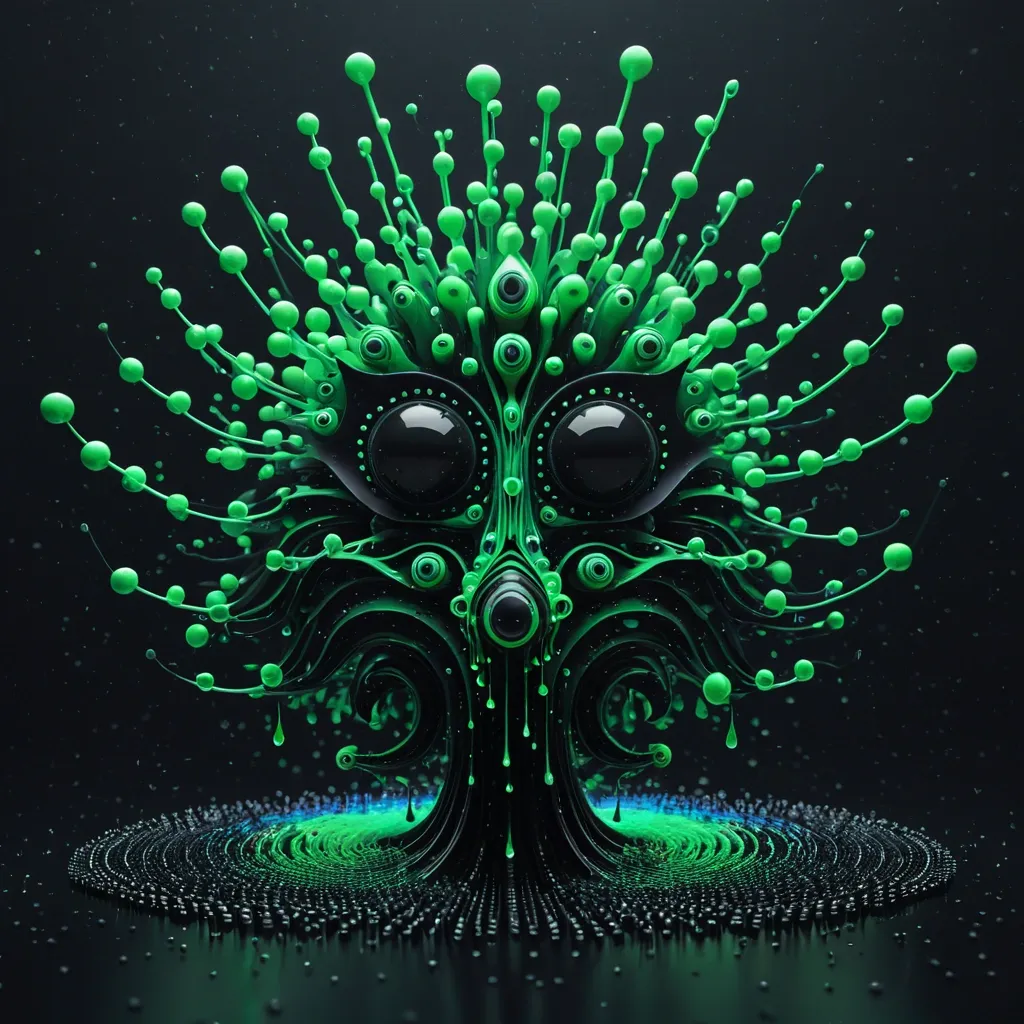
Title: TEDPOL Palette: water drop + green gradient Motion: spiral bloom Background: Black Create a experimental 3D portrait poster featuring a alien , wears a towering headdress of frog's eyes , in swirls wax , and dark mechanical spirals , in flowing and rotating dots beneath the figure , but reconstruct its drops and structure from thousands of elongated drop dots and water drops with varied lengths , depths , and scales. Let the dots follow the natural growth direction of the dots instead of becoming random drops. Build a strong spatial motion based on the selected direction in heart shape , with denser and shorter dots near the visual core and longer waves extending toward the camera to create dramatic -Z-axis depth , perspective , and a sense of motion. Use a controlled color system built around the chosen palette. Keep the main subject vivid and coherent , while deep shadows and dark gaps between the drops create strong negative space and dimensional contrast. Add only a small amount of accent color when needed. The final image should feel like a premium contemporary art poster: bold silhouette , strong thumbnail impact , rich spatial depth , refined lighting , and a clear balance between dense 3D geometry and minimal typography. Avoid Minecraft aesthetics , flat pixel art , random cubes , identical extrusion lengths , rainbow colors , excessive text , heavy neon , thick 3D lettering , meaningless placeholder copy , logos , numbering , watermarks , and cheap CGI materials. ,
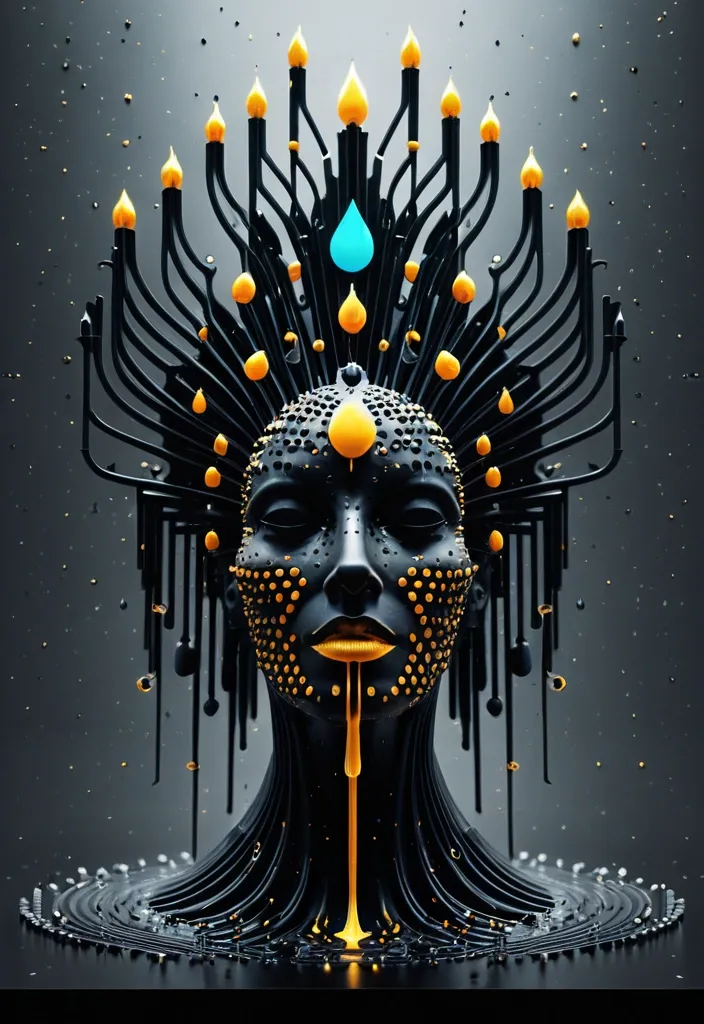
Title: TEDPOL Palette: water drop + gray Motion: winged spread Background: Black Create a experimental 3D portrait poster featuring a witch , wears a towering headdress of gold and Candles , in swirls wax , and dark mechanical spirals , in flowing and rotating dots beneath the figure , but reconstruct its drops and structure from thousands of elongated drop dots and water drops with varied lengths , depths , and scales. Let the dots follow the natural growth direction of the dots instead of becoming random drops. Build a strong spatial motion based on the selected direction in skull shape , with denser and shorter dots near the visual core and longer waves extending toward the camera to create dramatic -Z-axis depth , perspective , and a sense of motion. Use a controlled color system built around the chosen palette. Keep the main subject vivid and coherent , while deep shadows and dark gaps between the drops create strong negative space and dimensional contrast. Add only a small amount of accent color when needed. The final image should feel like a premium contemporary art poster: bold silhouette , strong thumbnail impact , rich spatial depth , refined lighting , and a clear balance between dense 3D geometry and minimal typography. Avoid Minecraft aesthetics , flat pixel art , random cubes , identical extrusion lengths , rainbow colors , excessive text , heavy neon , thick 3D lettering , meaningless placeholder copy , logos , numbering , watermarks , and cheap CGI materials. ,
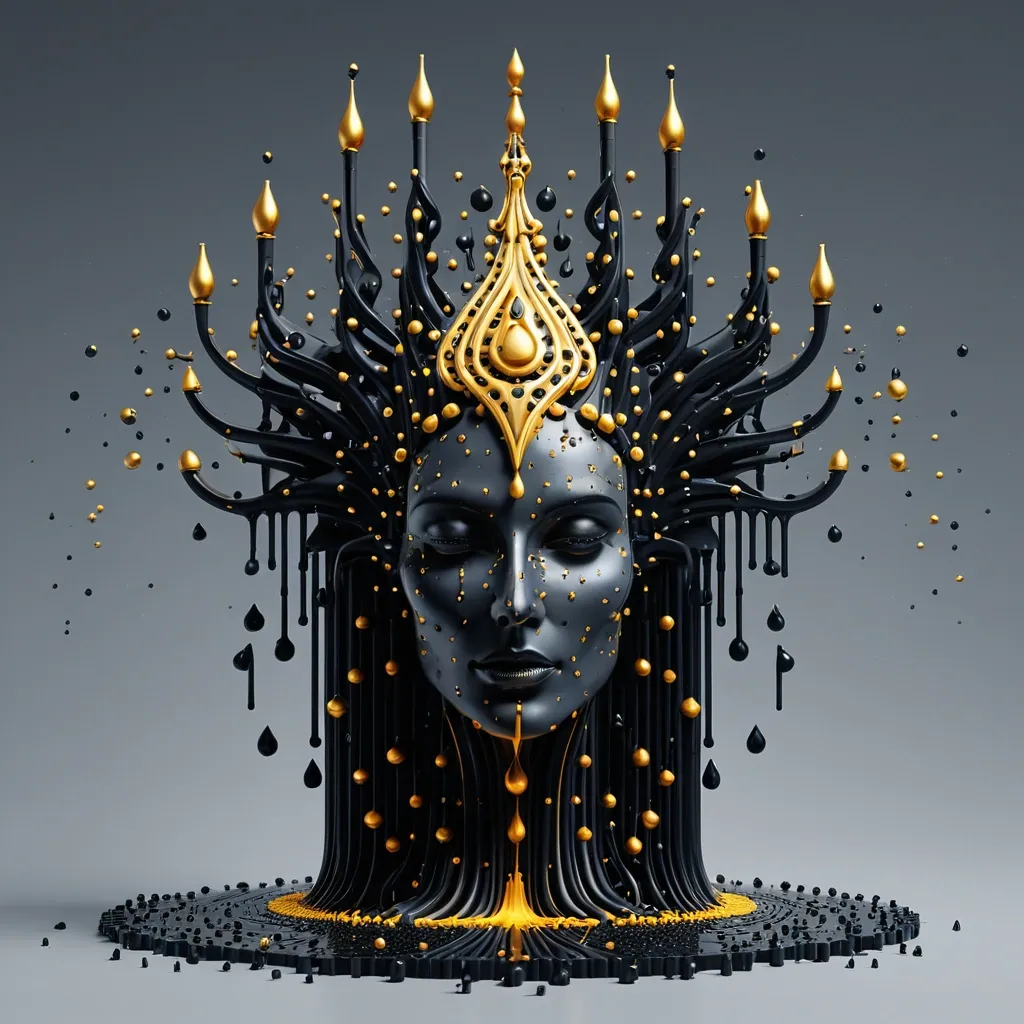
Palette: water drop + gray Motion: winged spread Background: Black Create a experimental 3D portrait poster featuring a witch , wears a towering headdress of gold and Candles , wax swirls , and dark mechanical spirals , in flowing and rotating dots beneath the figure , but reconstruct its drops and structure from thousands of elongated drop dots and water drops with varied lengths , depths , and scales. Let the dots follow the natural growth direction of the dots instead of becoming random drops. Build a strong spatial motion based on the selected direction in skull shape , with denser and shorter dots near the visual core and longer waves extending toward the camera to create dramatic -Z-axis depth , perspective , and a sense of motion. Use a controlled color system built around the chosen palette. Keep the main subject vivid and coherent , while deep shadows and dark gaps between the drops create strong negative space and dimensional contrast. Add only a small amount of accent color when needed. The final image should feel like a premium contemporary art poster: bold silhouette , strong thumbnail impact , rich spatial depth , refined lighting , and a clear balance between dense 3D geometry and minimal typography. Avoid Minecraft aesthetics , flat pixel art , random cubes , identical extrusion lengths , rainbow colors , excessive text , heavy neon , thick 3D lettering , meaningless placeholder copy , logos , numbering , watermarks , and cheap CGI materials. ,
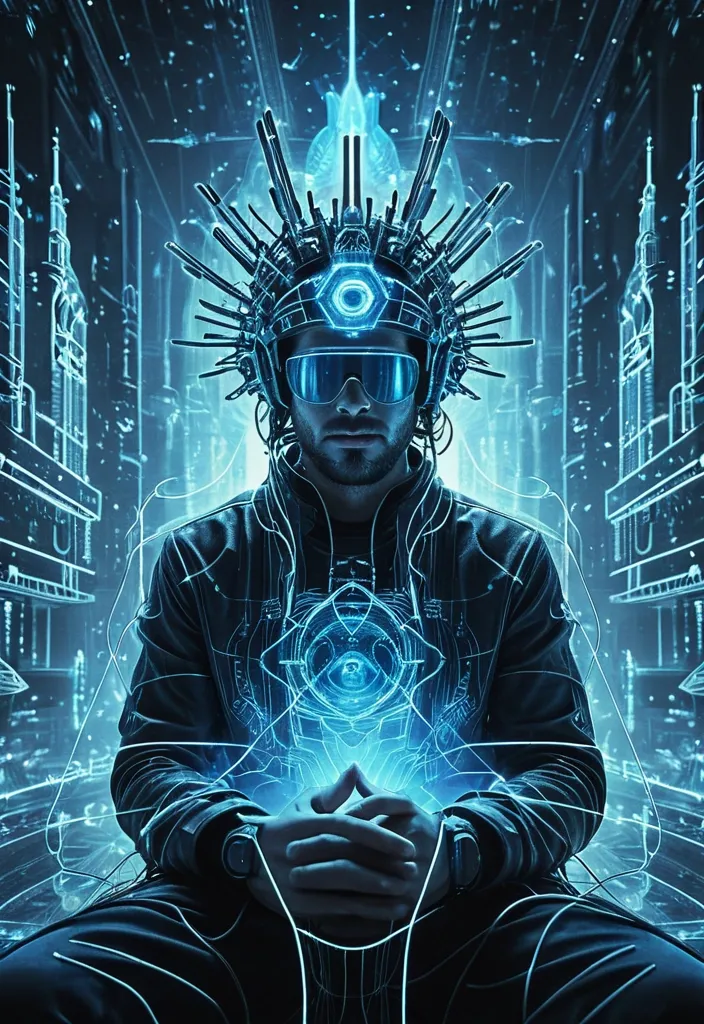
A beautiful double exposure that combines a elaborate Photons visor style glasses with a slatted design , the central figure has a dark , textured body of organic cords and cables , wearing an intricate , radiating spiked metal headdress. a glowing blue neon polygon vortex a halo behind his. He is seated on glowing blue neon throne with floating in a nebula of swirling cosmic dust , intricate glyphs carved into its surface pulsing with soft , internal light. Below , a silent , deserted city is bathed in the ethereal glow , Flying vehicles glide between buildings , their lights reflecting off metallic surfaces , with its details incorporated into the figure , crisp lines , The background is monochrome , sharp focus , double exposure , by yukisakura , awesome full color , high quality , 8K Ultra HD. ,
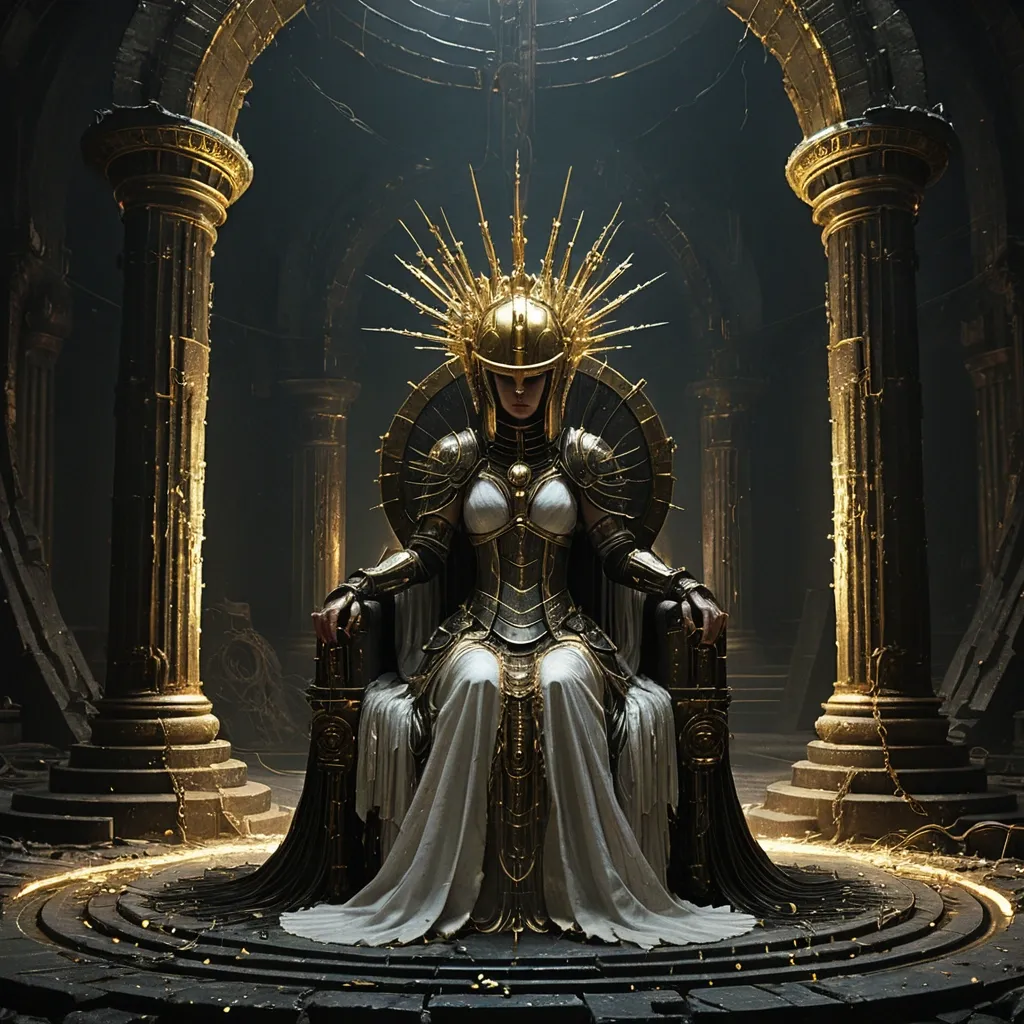
A dark , atmospheric digital painting of a wearing an elaborate golden helmet with a vertical slatted visor and integrated headphone like structures. the helmet has intricate metallic detailing and a thin golden chain with a tassel hanging from the left side , enthroned in a ruined , gothic chamber. the central figure has a dark , textured body of organic cords and cables , wearing an intricate , radiating spiked metal headdress. a glowing pink neon ring forms a halo behind her. she is seated on a massive , dark throne draped in textured white collar and a white pleated garment with gold foil accents. the background consists of textured , decaying stone pillars , with bright golden particles and embers scattered across the dark floor , rising into the air. the scene is lit from behind , casting the figure in shadow and highlighting the details of her crown and the surrounding ruins. ,
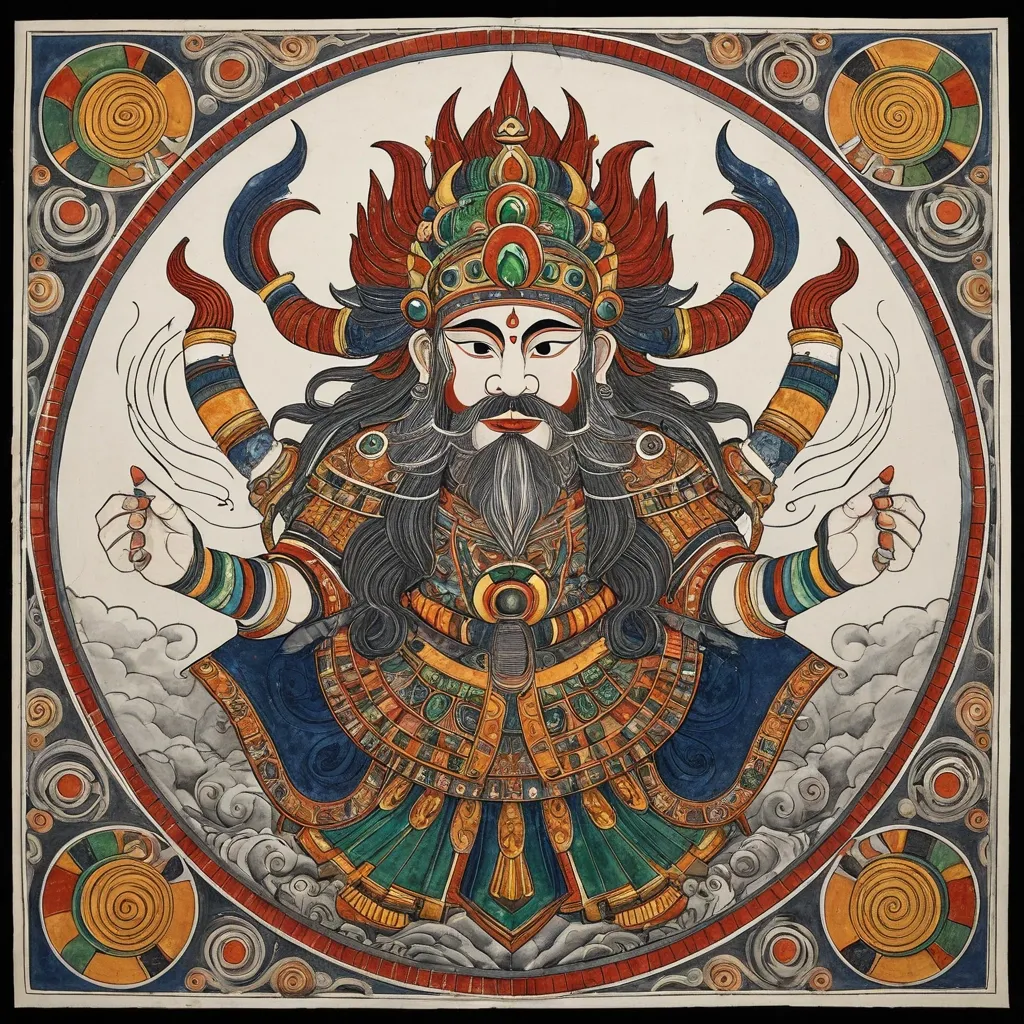
Generate an illustration of an Eastern deity in the style of Madhubani art sacred art , centering on the Zhong Kui and incorporating the Fire-Tipped Spear and Divine Beast to create a cohesive composition. Elements such as artifacts , wings , ghosts , ribbons , clouds , or divine manifestations must not serve merely as decoration; instead , they must collectively form clear structural patterns—such as diagonals , circles , S-curves , radial lines , or frontal subjugation poses—to imbue the image with a distinct sense of dynamic momentum (*shi*). The overall style should blend the aesthetics of traditional deity paintings , *Gongbi* heavy-color painting , *Baimiao* (fine-line drawing) , and ancient illustrated scrolls. The figure should appear solemn , divine , and imposing , avoiding the look of modern idols or game CG characters. Attire should follow traditional systems of divine robes , armor , and headdresses , incorporating continuous patterns such as cloud , thunder , scale , beast-face , meander (Greek key) , and scrolling vine motifs. Prioritize highly continuous Madhubani art line work: render hair , beards , and the fur or feathers of divine beasts with smooth , long lines that follow natural flow; depict clouds , garment hems , and ribbons using unbroken S-curves and C-curves; ensure that patterns on armor , crowns , and clothing are structurally complete and continuously closed. Minimize fragmented textures; avoid random short strokes , dense broken lines , jagged hair edges , or noise-like etching patterns. The color palette employs uniform , rich , and continuous traditional heavy mineral pigments. Centered around a core tone , it incorporates azurite blue , malachite green , ink-blue , antique gold , copper gold , cinnabar , ochre red , and ivory white. While low in saturation , the colors maintain high pigment density and transition naturally and smoothly along the forms; the finish should be free of mottling , fading , stains , graininess , or artificial distressing. The background features clean , warm-toned ivory *xuan* paper with extensive negative space , accented only by minimal continuous-line cloud motifs , vertical inscriptions , and cinnabar seals. The composition balances high information density in the subject matter with low density in the background. The overall aesthetic conveys the refined , fluid , cohesive , and professional quality of traditional Madhubani art painting with heavy mineral pigments on paper. Avoid: broken or fragmented lines , micro-fragmented textures , frizzy hair details , shattered cloud patterns , mottled coloring , faded or distressed effects , modern neon , 3D CG , screen-filling special effects , cluttered backgrounds , and large , modern poster-style headlines. ,
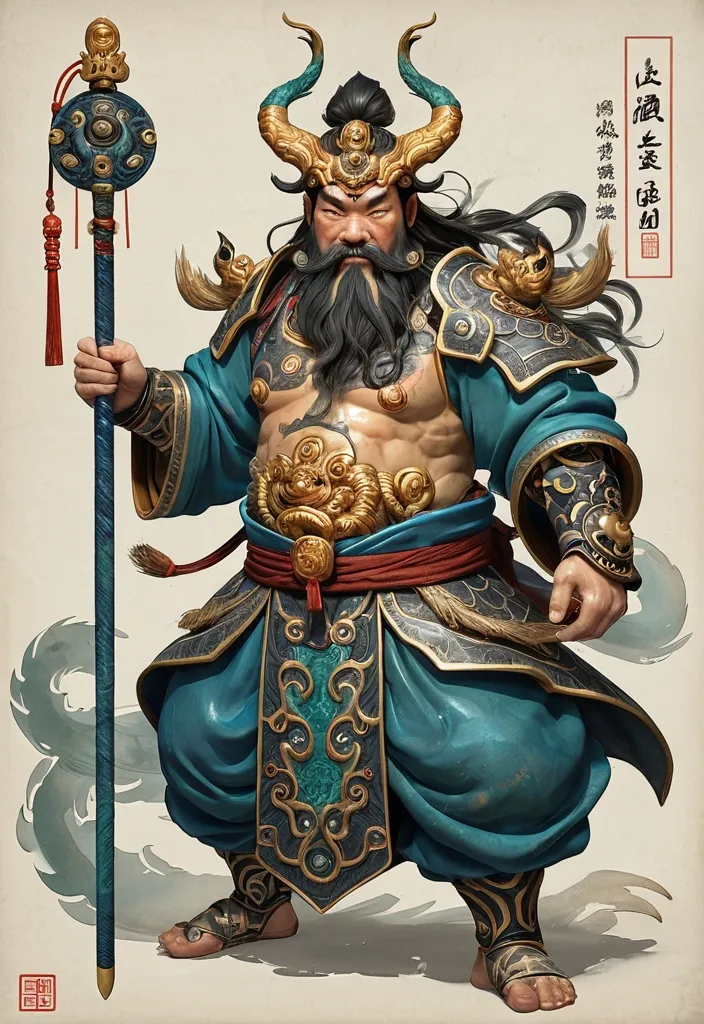
Deity Identity: Zhong Kui Core Artifact: Fire-Tipped Spear Divine Beast: Three-Eyed Manifestation Color Palette: Azurite & Antique Gold Composition Style: Spiraling Leap Overall Aura: Grotesque Aspect Ratio: [5:8] Generate an illustration of an Eastern deity in the style of *Gongbi* (meticulous brushwork) sacred art , centering on the Zhong Kui and incorporating the Fire-Tipped Spear and Divine Beast to create a cohesive composition. Elements such as artifacts , wings , ghosts , ribbons , clouds , or divine manifestations must not serve merely as decoration; instead , they must collectively form clear structural patterns—such as diagonals , circles , S-curves , radial lines , or frontal subjugation poses—to imbue the image with a distinct sense of dynamic momentum (*shi*). The overall style should blend the aesthetics of traditional deity paintings , *Gongbi* heavy-color painting , *Baimiao* (fine-line drawing) , and ancient illustrated scrolls. The figure should appear solemn , divine , and imposing , avoiding the look of modern idols or game CG characters. Attire should follow traditional systems of divine robes , armor , and headdresses , incorporating continuous patterns such as cloud , thunder , scale , beast-face , meander (Greek key) , and scrolling vine motifs. Prioritize highly continuous *Gongbi* line work: render hair , beards , and the fur or feathers of divine beasts with smooth , long lines that follow natural flow; depict clouds , garment hems , and ribbons using unbroken S-curves and C-curves; ensure that patterns on armor , crowns , and clothing are structurally complete and continuously closed. Minimize fragmented textures; avoid random short strokes , dense broken lines , jagged hair edges , or noise-like etching patterns. The color palette employs uniform , rich , and continuous traditional heavy mineral pigments. Centered around a core tone , it incorporates azurite blue , malachite green , ink-blue , antique gold , copper gold , cinnabar , ochre red , and ivory white. While low in saturation , the colors maintain high pigment density and transition naturally and smoothly along the forms; the finish should be free of mottling , fading , stains , graininess , or artificial distressing. The background features clean , warm-toned ivory *xuan* paper with extensive negative space , accented only by minimal continuous-line cloud motifs , vertical inscriptions , and cinnabar seals. The composition balances high information density in the subject matter with low density in the background. The overall aesthetic conveys the refined , fluid , cohesive , and professional quality of traditional *gongbi* (meticulous brushwork) painting with heavy mineral pigments on paper. Avoid: broken or fragmented lines , micro-fragmented textures , frizzy hair details , shattered cloud patterns , mottled coloring , faded or distressed effects , modern neon , 3D CG , screen-filling special effects , cluttered backgrounds , and large , modern poster-style headlines. ,
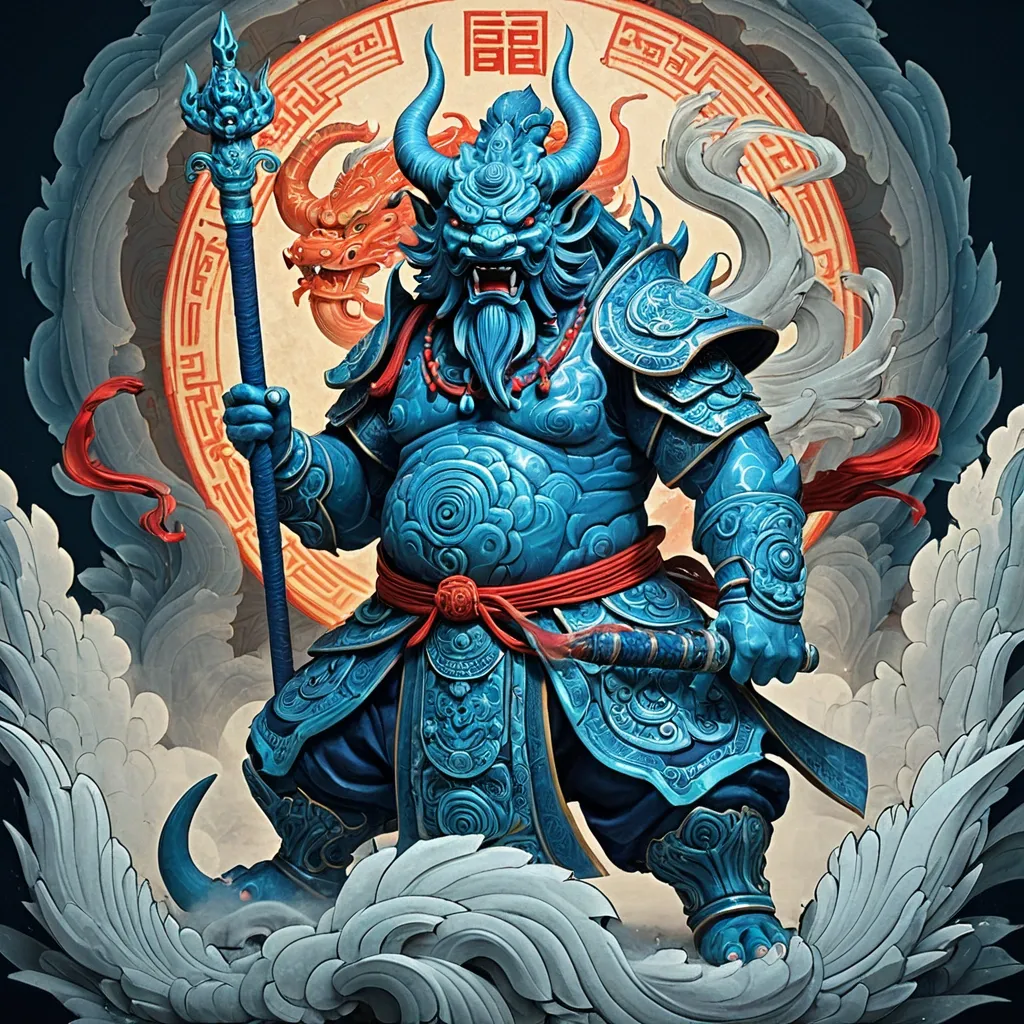
Deity Identity: Emperor Zhenwu Mythical Beast Type: Divine Rhino Weapon: Divine Sword Color Palette: Azurite Blue , Silver , & Gray Overall Aura: Exorcising Evil Composition Direction: Frontal Subjugation Generate an illustration of an Eastern deity and their mythical beast mount , blending visual languages from traditional deity paintings , *Gongbi* (meticulous brushwork) with rich colors , *Baimiao* (fine-line drawing) , folk woodblock prints , and ancient illustrated scrolls. The image features the "Deity + Mythical Beast" as dual subjects. The deity serves as the core visual focus , while the beast possesses significant scale and presence; they engage in a clear , dynamic interaction—such as mounting , guarding , charging side-by-side , or circling in protection—rather than a simple collage. The deity's face exudes majesty , divinity , and an imposing aura , avoiding both modern "idol-like" features and excessive demon-like distortion. Attire consists of highly detailed traditional divine armor or ritual robes , incorporating intricate patterns such as cloud motifs , thunder patterns , beast-face masks , scale armor textures , and scrolling vines. While details are rich , the figure's overall silhouette must remain distinct. The mythical beast embodies the spirit of a divine creature , spirit beast , or evil-warding mount , possessing a robust physique and a powerful stance. Fur , scales , and tortoise shells are rendered using numerous fine , directional lines to emphasize the texture of traditional *Gongbi* painting (defining form through line); avoid photorealistic fur or 3D CG textures. Weapons or artifacts are integrated into the composition to create distinct diagonal lines , vertical lines , or a primary axis of action. Avoid stiff , static poses for the figures; instead , incorporate actions such as twisting the torso , lowering a shoulder , leaning forward , wielding a weapon , forming a ritual hand seal , patrolling , or launching an attack to imbue the image with a distinct sense of dynamic momentum (*shi*). Integrate elements such as flowing sashes , fluttering sleeves , headdress ribbons , wisps of hair or beard , and swirls of cloud , smoke , or mist. These should harmonize with the figure's movement to create S-shaped , C-shaped , or swirling fluid lines. Ensure these flowing elements serve the overall theme rather than cluttering the composition merely for the sake of detail. Maintain the aesthetic of traditional *xuan* paper by preserving negative space. Use an off-white , ivory , or aged-paper tone as the base , adding only minimal elements—such as inscriptions , vermilion seals , cloud patterns , or wisps of smoke—to evoke the feel of an ancient illustrated scroll or sacred icon. Avoid complex backgrounds depicting palaces , battlefields , or full-scale landscapes. Employ a palette of low-saturation mineral pigments centered around a dominant hue. Complement this with colors such as ink black , deep blue-black , azurite blue , malachite green , antique gold , cinnabar , ochre red , and grayish-white. The overall tone should be elegant and restrained , using small accents of high-saturation color to add vibrancy. The final image must simultaneously convey the solemnity of an Eastern deity , the imposing presence of a mythical beast , the intricate detail of fine-line brushwork (*gongbi*) , the serene atmosphere of ancient *xuan* paper , and a clear , powerful compositional dynamism. Avoid: modern "Guochao" neon aesthetics , cyberpunk styles , the look of 3D game concept art , "plastic" CG textures , cluttered backgrounds , stiff figures , generic-looking mythical beasts , loose or sloppy linework , and excessive or garbled text. ,
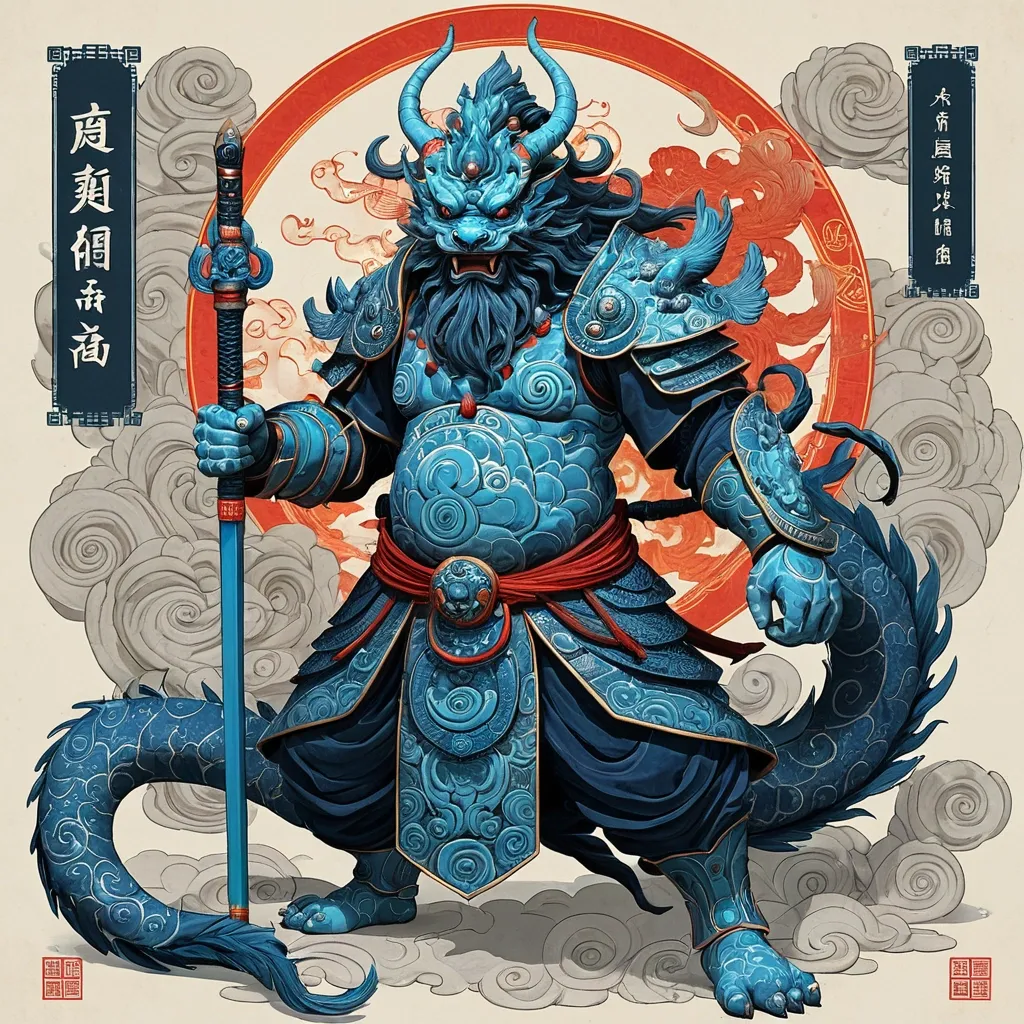
Prompt: [Replaceable Content] Deity Identity: Emperor Zhenwu Mythical Beast Type: Divine Hound Weapon: Divine Sword Color Palette: Azurite Blue , Silver , & Gray Overall Aura: Exorcising Evil Composition Direction: Frontal Subjugation Generate an illustration of an Eastern deity and their mythical beast mount , blending visual languages from traditional deity paintings , *Gongbi* (meticulous brushwork) with rich colors , *Baimiao* (fine-line drawing) , folk woodblock prints , and ancient illustrated scrolls. The image features the "Deity + Mythical Beast" as dual subjects. The deity serves as the core visual focus , while the beast possesses significant scale and presence; they engage in a clear , dynamic interaction—such as mounting , guarding , charging side-by-side , or circling in protection—rather than a simple collage. The deity's face exudes majesty , divinity , and an imposing aura , avoiding both modern "idol-like" features and excessive demon-like distortion. Attire consists of highly detailed traditional divine armor or ritual robes , incorporating intricate patterns such as cloud motifs , thunder patterns , beast-face masks , scale armor textures , and scrolling vines. While details are rich , the figure's overall silhouette must remain distinct. The mythical beast embodies the spirit of a divine creature , spirit beast , or evil-warding mount , possessing a robust physique and a powerful stance. Fur , scales , and tortoise shells are rendered using numerous fine , directional lines to emphasize the texture of traditional *Gongbi* painting (defining form through line); avoid photorealistic fur or 3D CG textures. Weapons or artifacts are integrated into the composition to create distinct diagonal lines , vertical lines , or a primary axis of action. Avoid stiff , static poses for the figures; instead , incorporate actions such as twisting the torso , lowering a shoulder , leaning forward , wielding a weapon , forming a ritual hand seal , patrolling , or launching an attack to imbue the image with a distinct sense of dynamic momentum (*shi*). Integrate elements such as flowing sashes , fluttering sleeves , headdress ribbons , wisps of hair or beard , and swirls of cloud , smoke , or mist. These should harmonize with the figure's movement to create S-shaped , C-shaped , or swirling fluid lines. Ensure these flowing elements serve the overall theme rather than cluttering the composition merely for the sake of detail. Maintain the aesthetic of traditional *xuan* paper by preserving negative space. Use an off-white , ivory , or aged-paper tone as the base , adding only minimal elements—such as inscriptions , vermilion seals , cloud patterns , or wisps of smoke—to evoke the feel of an ancient illustrated scroll or sacred icon. Avoid complex backgrounds depicting palaces , battlefields , or full-scale landscapes. Employ a palette of low-saturation mineral pigments centered around a dominant hue. Complement this with colors such as ink black , deep blue-black , azurite blue , malachite green , antique gold , cinnabar , ochre red , and grayish-white. The overall tone should be elegant and restrained , using small accents of high-saturation color to add vibrancy. The final image must simultaneously convey the solemnity of an Eastern deity , the imposing presence of a mythical beast , the intricate detail of fine-line brushwork (*gongbi*) , the serene atmosphere of ancient *xuan* paper , and a clear , powerful compositional dynamism. Avoid: modern "Guochao" neon aesthetics , cyberpunk styles , the look of 3D game concept art , "plastic" CG textures , cluttered backgrounds , stiff figures , generic-looking mythical beasts , loose or sloppy linework , and excessive or garbled text. ,
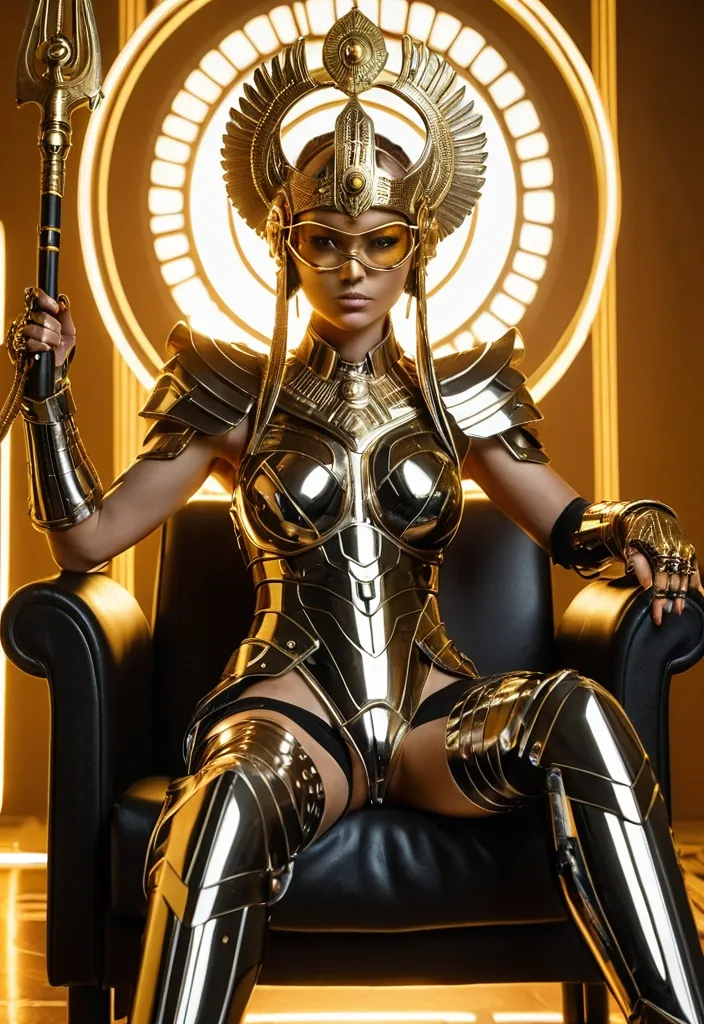
A striking , high-definition photograph capturing a powerful female soldier. She is seated in a commanding pose on a modern , futuristic armchair , with one leg crossed over the other. She is wearing an intricate , highly detailed exoskeleton suit made entirely of polished black and reflective chrome plates , which form armor , thigh-high boots , arm gauntlets , and a structured bodice. Her head is adorned with an elaborate , Egyptian-inspired golden headdress that frames her face , and she wears sleek , integrated metallic eyewear or a mask. In her left hand , she holds a slender , ornate metallic staff. a large gold halo or ring is behind her head and shoulders , with golden light radiating from it. the background is a mix of gold and orange light with abstract brushstrokes. ,
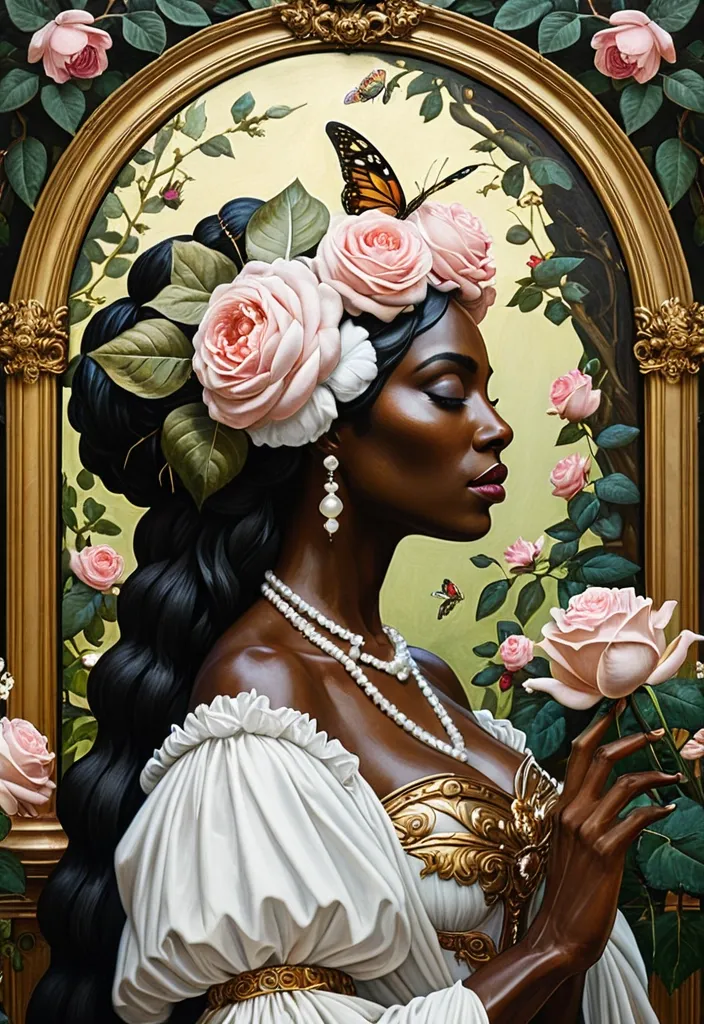
An oil painting of a dark-skinned youth in profile touching a white rose. They wear a large headdress of pink and white roses hosting a monarch butterfly , alongside a pearl necklace. An ornate gold-leaf Art Nouveau halo frames their head. The foreground and background feature a dense thicket of oversized roses , deep green leaves , and a hovering hummingbird. The visual style merges classical hyper-realism with opulent floral decorative arts. ,
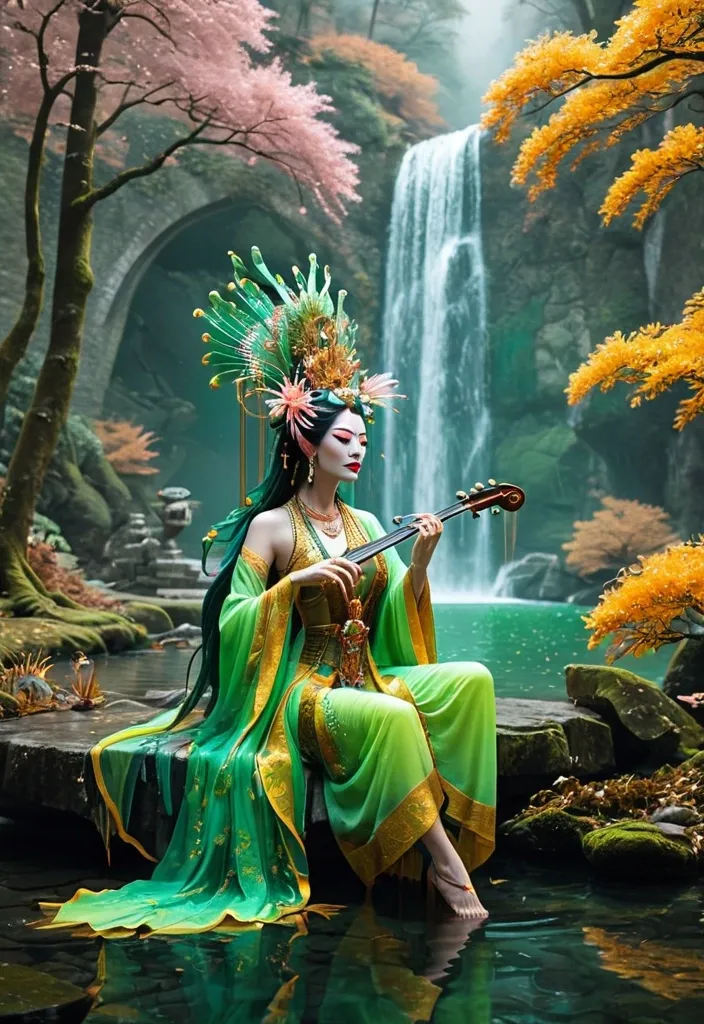
A light-pink-skinned woman transforming into a frog face , in layered fluorescent green kimono. Her hair ornaments become tiny kingfisher crests sits on a rock among amber-leafed trees. A tall waterfall drops from a misty cliff into a still pool at the right. One hand lifts , She playing the antique Cli Lyre and wears gold jewelry and a dark feathered headdress. The overall mood is serene and contemplative , showcasing the meticulous nature of stippling art. ,
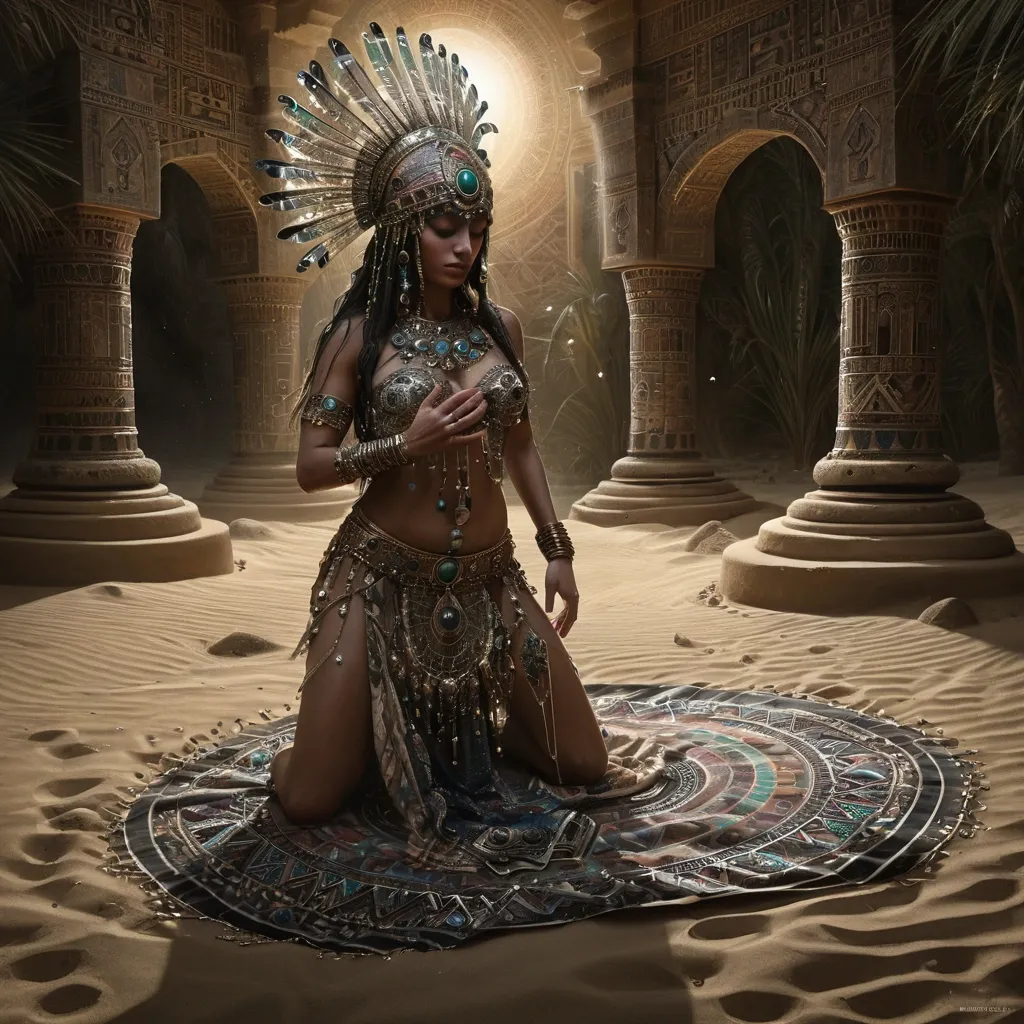
A mysterious Belly dancer , Aztec-inspired headdress and a fitted , shrouded in intricately patterned silk and jewels , performing an ancient ritual within a hidden oasis. The moonlight casts ethereal patterns on the sand. This artwork captures the essence of enchanting mystery through hyper-realistic detail and a touch of the mystical , focusing on fluid motion and rich textures. Influences include classical Orientalist paintings and hyperrealist sculptors. ,
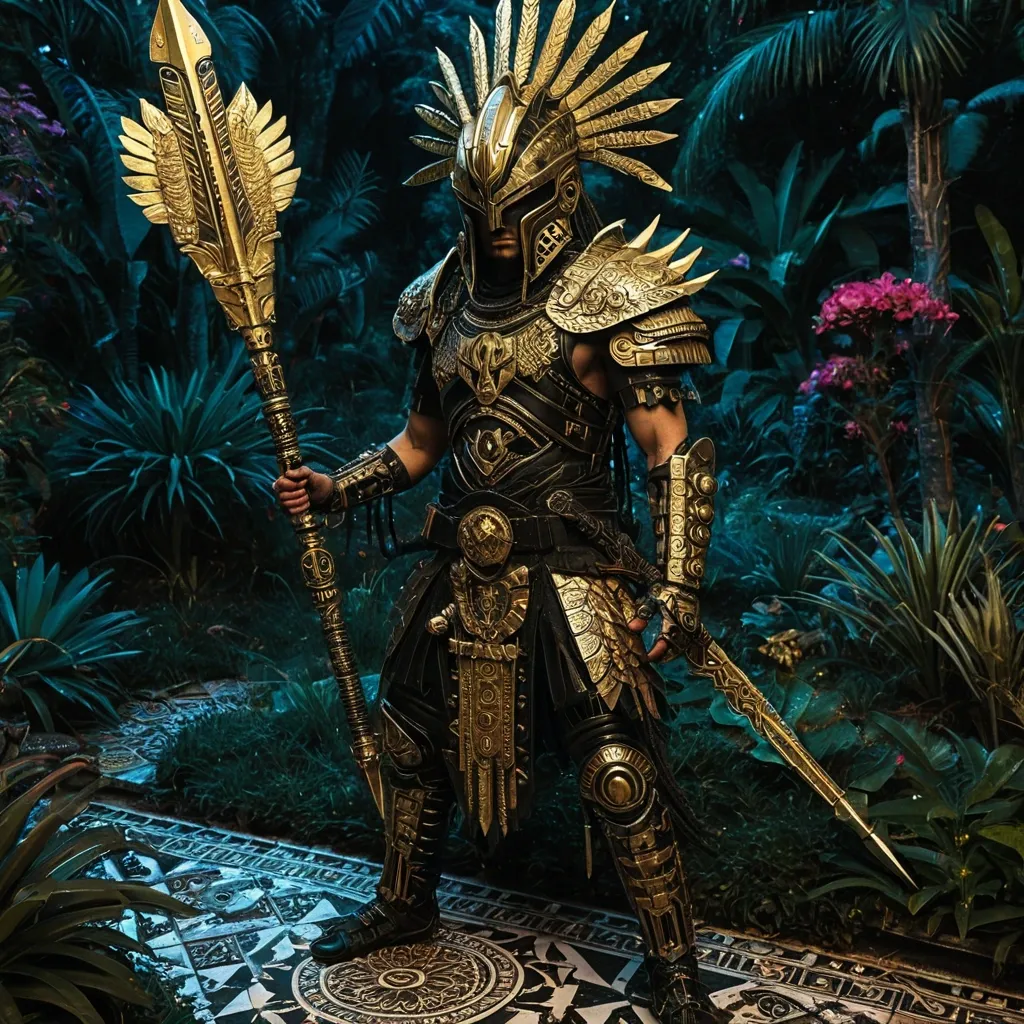
A Xenomorph male warrior , adorned in a lavish , Aztec-inspired headdress and a fitted , battle-worn cyberpunk armor , gold leaf embroidery , carrying a massive bow and arrow on his hand , posing on a moonlit , spring evening , surrounded by lush , vibrant flora , amidst a backdrop of ornate , patterned tiles , evoking the mystique of classic film noir and vintage warrior glamour , with a hint of fantasy and symbolism , in the style of the dramatic. ,
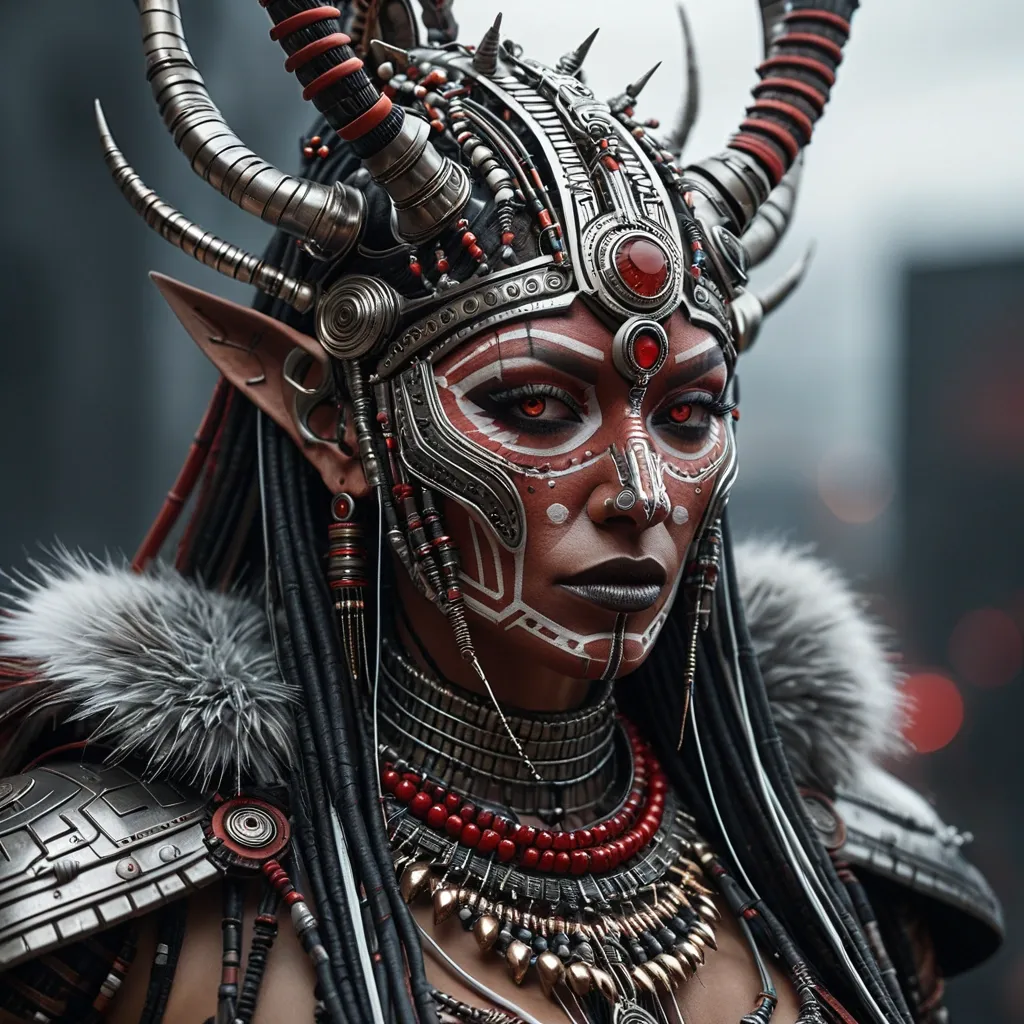
ultra detailed photo-realistic portrait of a tribal warrior with a cyber-organic aesthetic. she wears an elaborate horned headdress made of bone and aged metal , decorated with beads and hanging ornaments. her skin is extremely realistic: visible pores , imperfections , natural texture , no CGI look. subtle cybernetic details on the face: thin metallic lines and micro implants. her neck is clearly cybernetic: exposed mechanical structure with articulated metal segments , cables and connectors , realistically integrated with the skin. outfit: tribal and futuristic mix with fur cloak , layered necklaces and a central red gemstone. color palette: muted tones , bone white , aged metal , soft greys , with red and gold accents. lighting: soft natural light , realistic shadows emphasizing skin and metal. style: cinematic photography , 85mm lens , shallow depth of field , ultra realistic , no cartoon ,
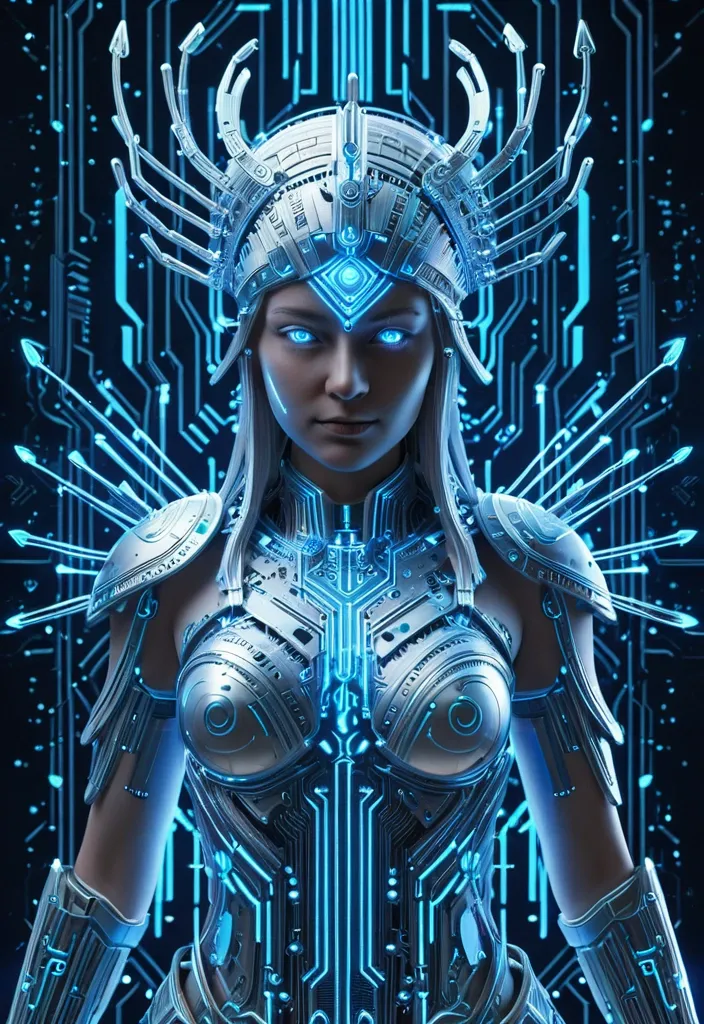
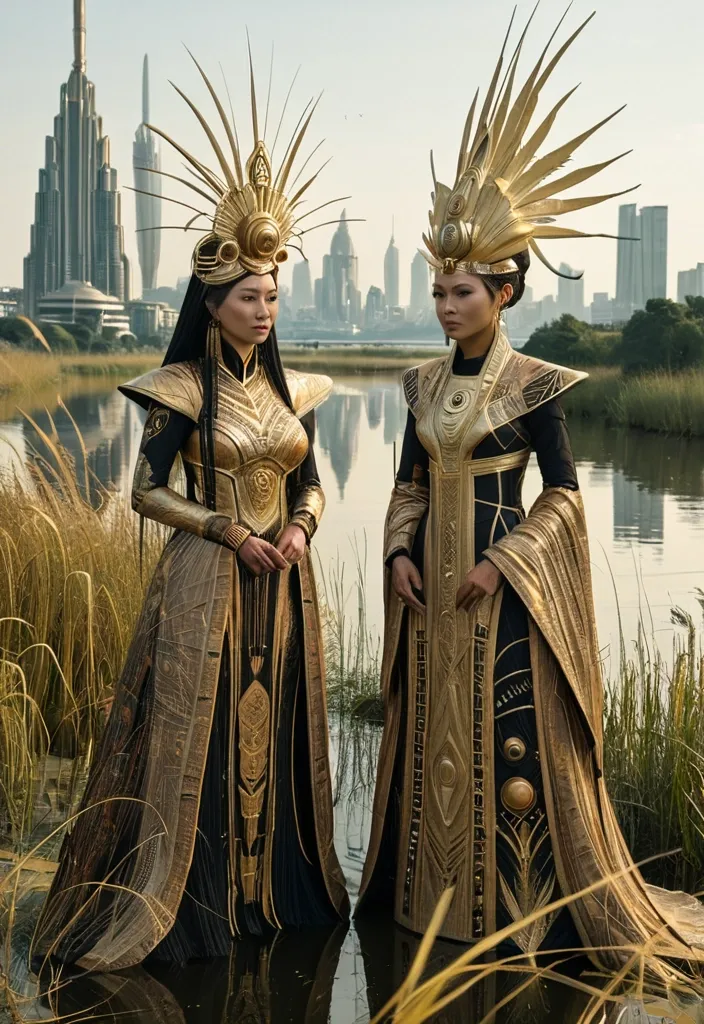
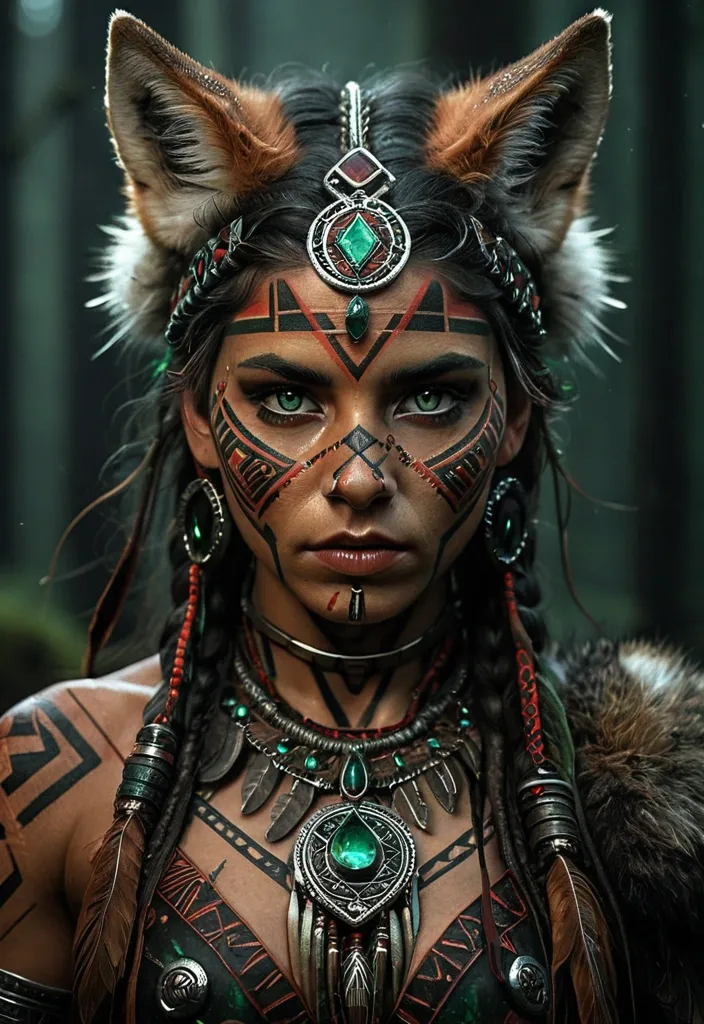
Hyper realistic portrait of a tribal warrior woman with an intense , piercing gaze and emerald green eyes that shine like gemstones. Her face is adorned with ritual paint in black and red tones , featuring geometric patterns and runic symbols that evoke ancestral power. Her hair is braided and interwoven with metallic rings , and she wears a fur-textured crown or headdress resembling wolf or fox pelt , reinforcing her connection to nature and her spirit animal. The lighting highlights the makeup details and skin texture , creating a dramatic and mystical atmosphere. The background is dark and blurred , drawing full attention to her face , which radiates strength , wisdom , and determination. Artistic style: magical realism with influences from Nordic tribal art and epic cinematography. ,
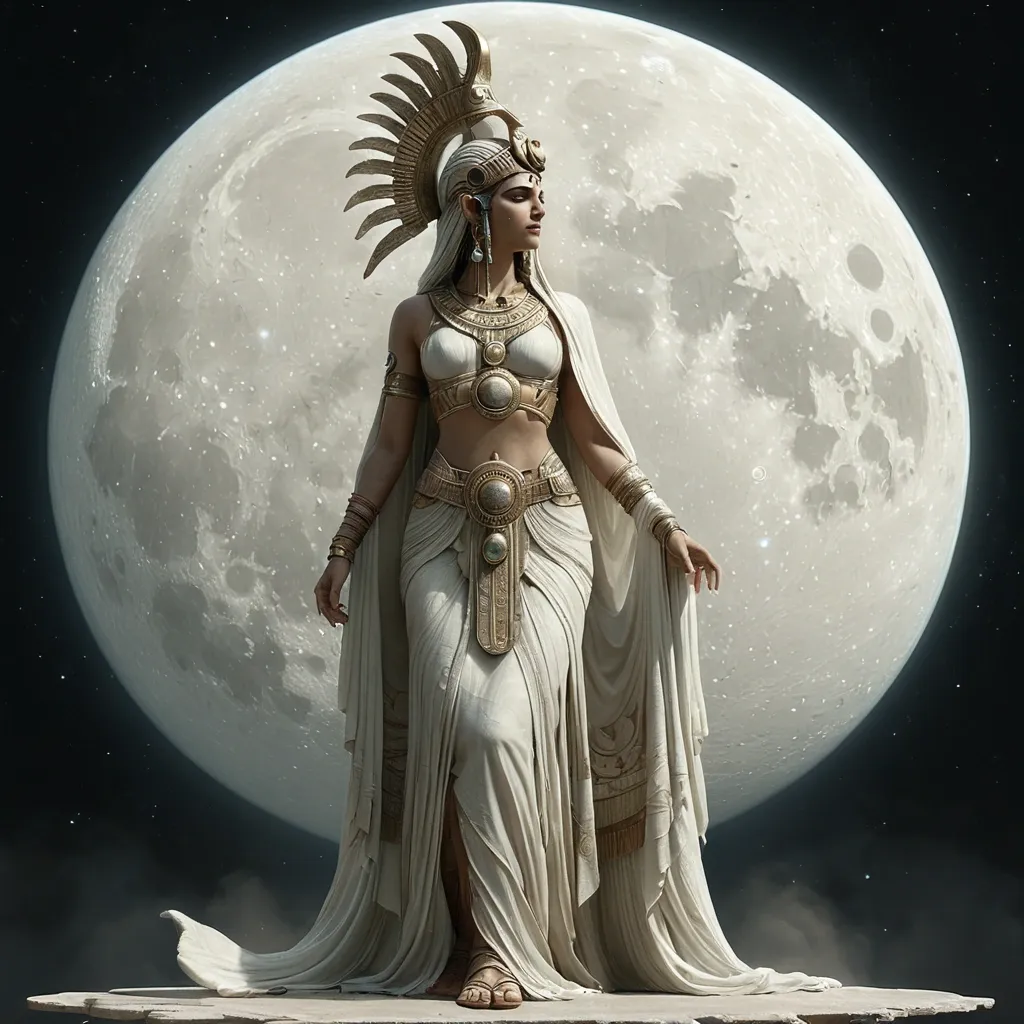
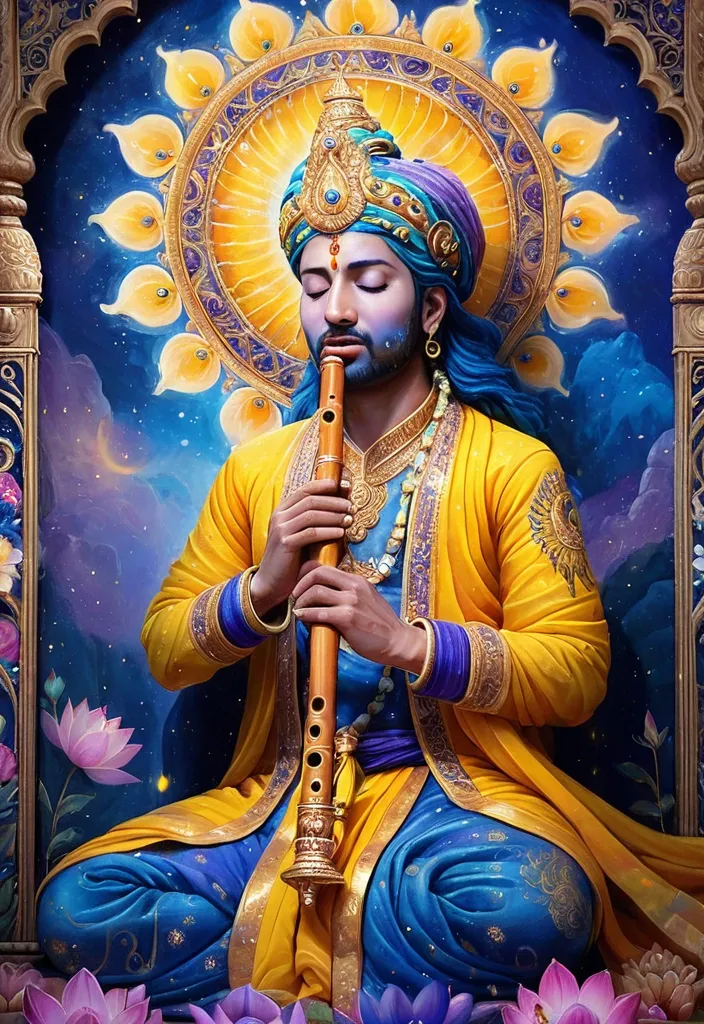
A divine depiction of Krishan Bhagwan playing a wooden flute , eyes closed in blissful serenity. He is adorned in traditional royal attire with rich blue and golden-yellow garments , embellished with intricate jewelry and a floral headdress. The background is filled with soft , ethereal floral patterns in shades of blue , purple , and pink , evoking a celestial garden. The atmosphere is peaceful and spiritual , with glowing accents and painterly details that highlight the divine aura. Style: highly detailed , vibrant , spiritual , and culturally rich. ,
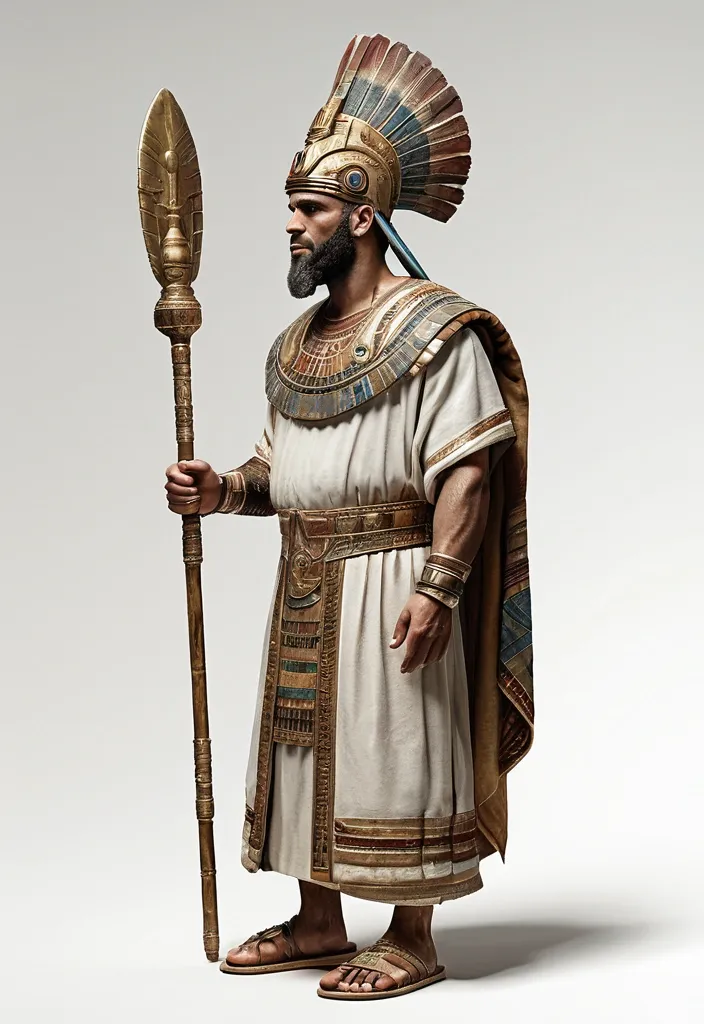
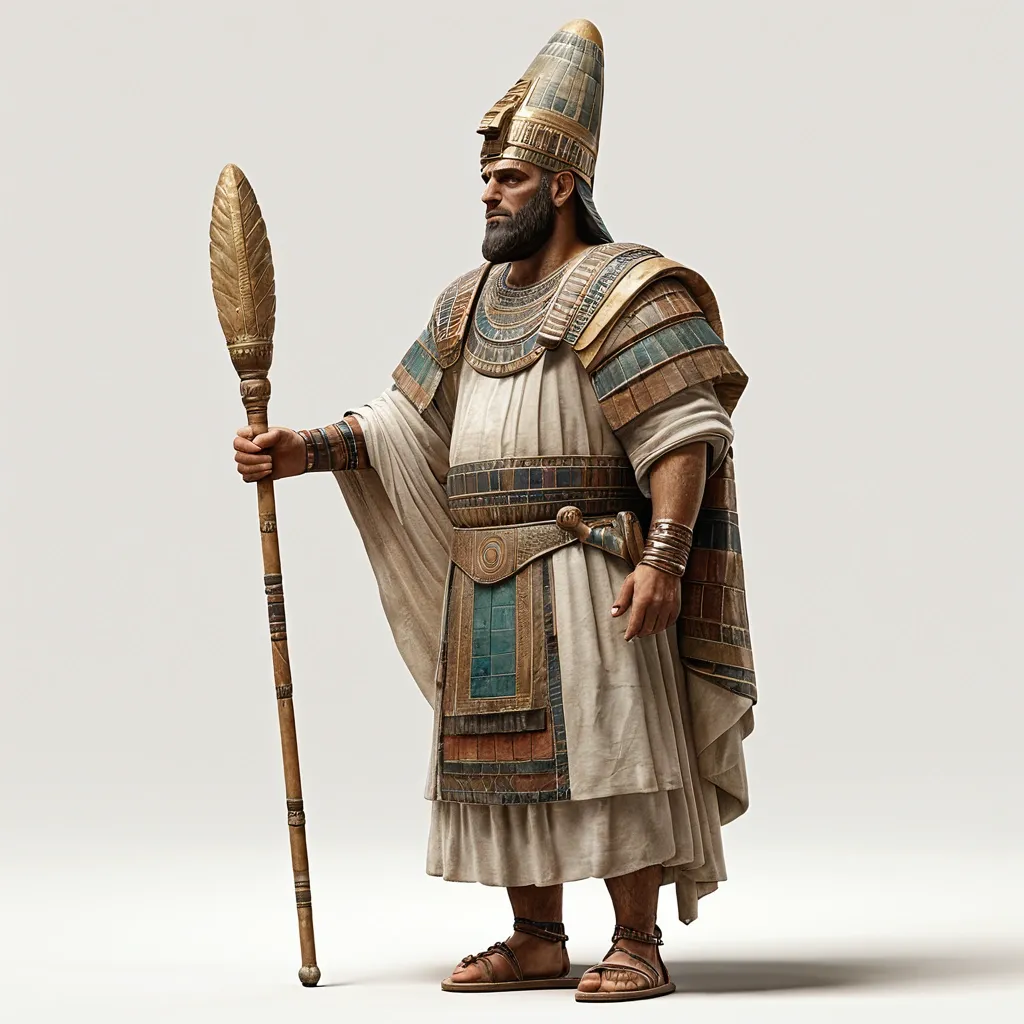
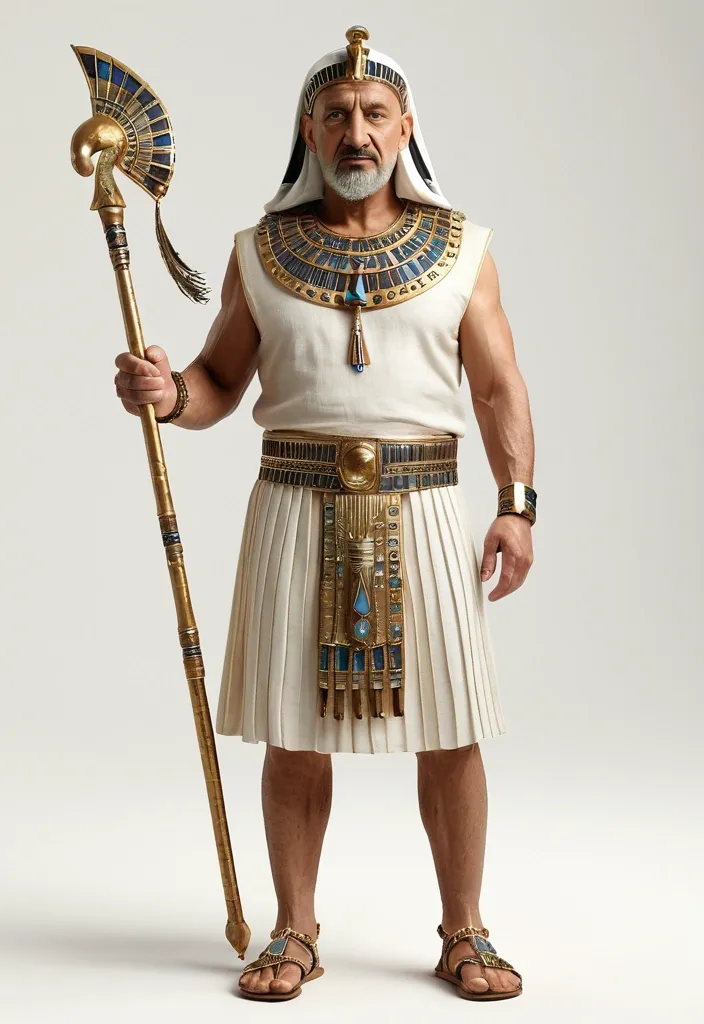
Gudea , stocky Sumerian ruler in traditional robes and a conical headdress , Style: hyperrealistic with a painterly texture , reminiscent of historical reconstruction art , detailed and atmospheric , Full body , Sandals , Side View , 4K , White or Transparent Background. Matches sex of LeBron James. ,
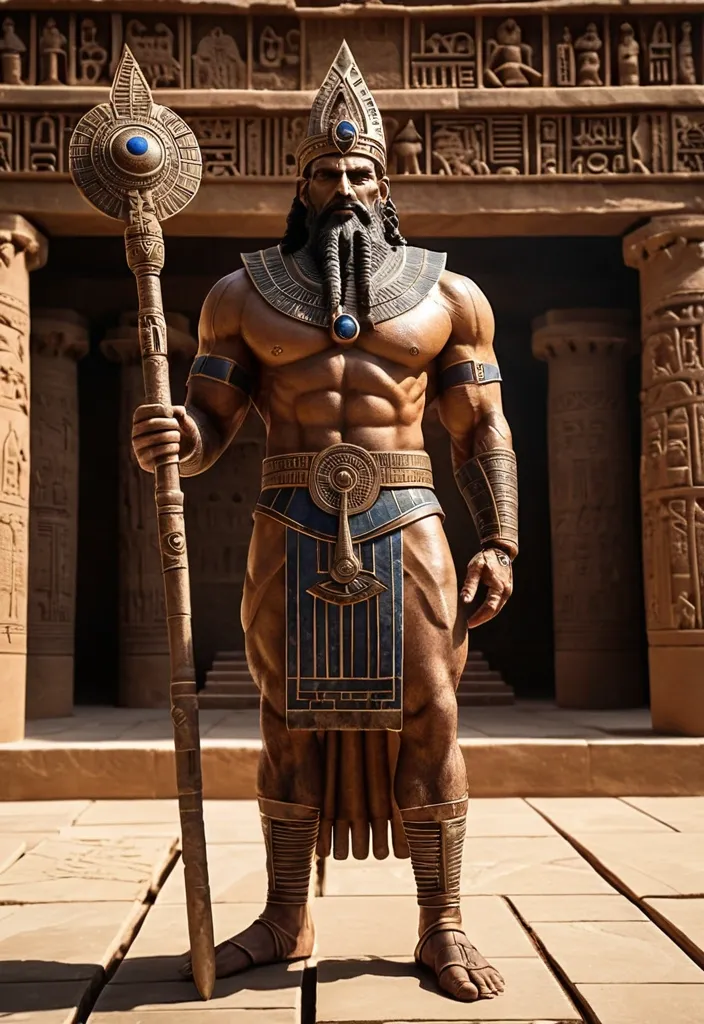
Ekimu of Sumerian Myth A mythologically accurate depiction of Ekimu , a divine artisan and guardian spirit from ancient Sumerian belief , as he would appear in his natural environment around 2500 BCE in southern Mesopotamia. Ekimu is portrayed as a tall , regal , and otherworldly figure — part divine craftsman , part elemental being of earth and flame. His body is adorned in smooth , burnished bronze-like skin etched with cuneiform sigils of creation and protection. Muscular and imposing , his physique reflects both the strength of a builder and the grace of a priest. He wears a layered ceremonial kilt of linen and gold-threaded fabric , girded with lapis lazuli inlays and a belt of hammered copper. His eyes glow faintly with the inner fire of divine inspiration. In one hand he holds a stylus and a clay tablet inscribed with the sacred plans of the gods; in the other , a small hammer used to shape both metal and destiny. His headdress is high and flared , reminiscent of early priestly crowns , engraved with motifs of the sun , moon , and river. Ekimu stands within a temple courtyard at dusk , the ziggurat of a great city rising behind him , while the light of oil lamps flickers against sandstone walls. Dust motes drift in the warm , amber air as he breathes life into divine craftsmanship. The atmosphere evokes the mythic calm of early civilization — a moment between mortal labor and divine creation. White or transparent background. 4K. Hyperrealistic , cinematic quality. ,