Search Results for only
Explore AI generated designs, images, art and prompts by top community artists and designers.
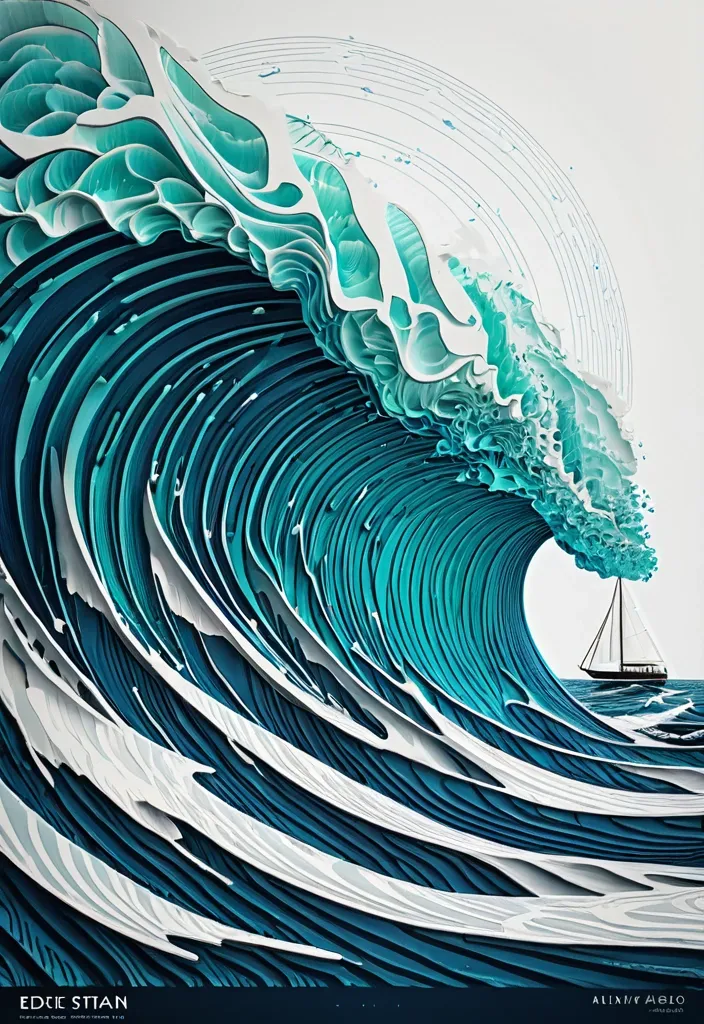

Create a refined art poster that transforms the landscape into an abstract **contour-ocean world**. Build the terrain primarily from long , smooth , continuous ocean that follow its waves , direction , elevation , and movement. The oceanshould become the landscape itself , not simply decorate its surface. Use one clear structural system and strong waves-density variation , with dense waves around major forms and more breathing room in calmer areas. Use ocean related colors and let the colors flow naturally along the contour structure. Keep the ocean projection scene unfolds with a tiny sailboat and use only one tiny scale anchor. High-end exhibition-poster aesthetic , abstract ocean feeling , strong thumbnail readability , large graphic forms , controlled negative space , and highly visible contour-line structure. Avoid realistic photography , random swirls , tree , noisy textures , generic CGI , watermarks , logos , and copyright text. ,

Create a refined art poster that transforms the landscape into an abstract **contour-snow world**. Build the terrain primarily from long , smooth , continuous ground that follow its volume , direction , elevation , and movement. The ground should become the landscape itself , not simply decorate its surface. Use one clear structural system and strong line-density variation , with dense lines around major forms and more breathing room in calmer areas. Use Snow related colors and let the colors flow naturally along the contour structure. Keep the landscape projection scene unfolds with a tiny robed figure holding a staff stands on a narrow stone arch bridge , facing an enormous snow horned demon with burning orange eyes and folded red wings and use only one tiny scale anchor. High-end exhibition-poster aesthetic , abstract Eastern landscape feeling , strong thumbnail readability , large graphic forms , controlled negative space , and highly visible contour-line structure. Avoid realistic photography , random swirls , noisy textures , generic CGI , watermarks , logos , and copyright text. ,

Create a refined art poster that transforms the landscape into an abstract **contour-line world**. Build the terrain primarily from long , smooth , continuous ground that follow its volume , direction , elevation , and movement. The ground should become the landscape itself , not simply decorate its surface. Use one clear structural system and strong line-density variation , with dense lines around major forms and more breathing room in calmer areas. Use Snow related colors and let the colors flow naturally along the contour structure. Keep the landscape projection scene unfolds with a tiny female warrior standing gracefully on a shimmering , ice-like Whirl-staircase and use only one tiny scale anchor. High-end exhibition-poster aesthetic , abstract Eastern landscape feeling , strong thumbnail readability , large graphic forms , controlled negative space , and highly visible contour-line structure. Avoid realistic photography , random swirls , noisy textures , generic CGI , watermarks , logos , and copyright text. ,

Create a refined vertical art poster that transforms the landscape into an abstract **contour-line world**. Build the terrain primarily from long , smooth , continuous lines that follow its volume , direction , elevation , and movement. The lines should become the landscape itself , not simply decorate its surface. Use one clear structural system and strong line-density variation , with dense lines around major forms and more breathing room in calmer areas. Use 10-20 related colors and let the colors flow naturally along the contour structure. Keep the landscape monumental and use only one tiny scale anchor. Add minimal editorial typography: BABA KEDAR CHROMA VALLEYS High-end exhibition-poster aesthetic , abstract Eastern landscape feeling , strong thumbnail readability , large graphic forms , controlled negative space , and highly visible contour-line structure. Avoid realistic photography , random swirls , noisy textures , generic CGI , watermarks , logos , and copyright text. ,
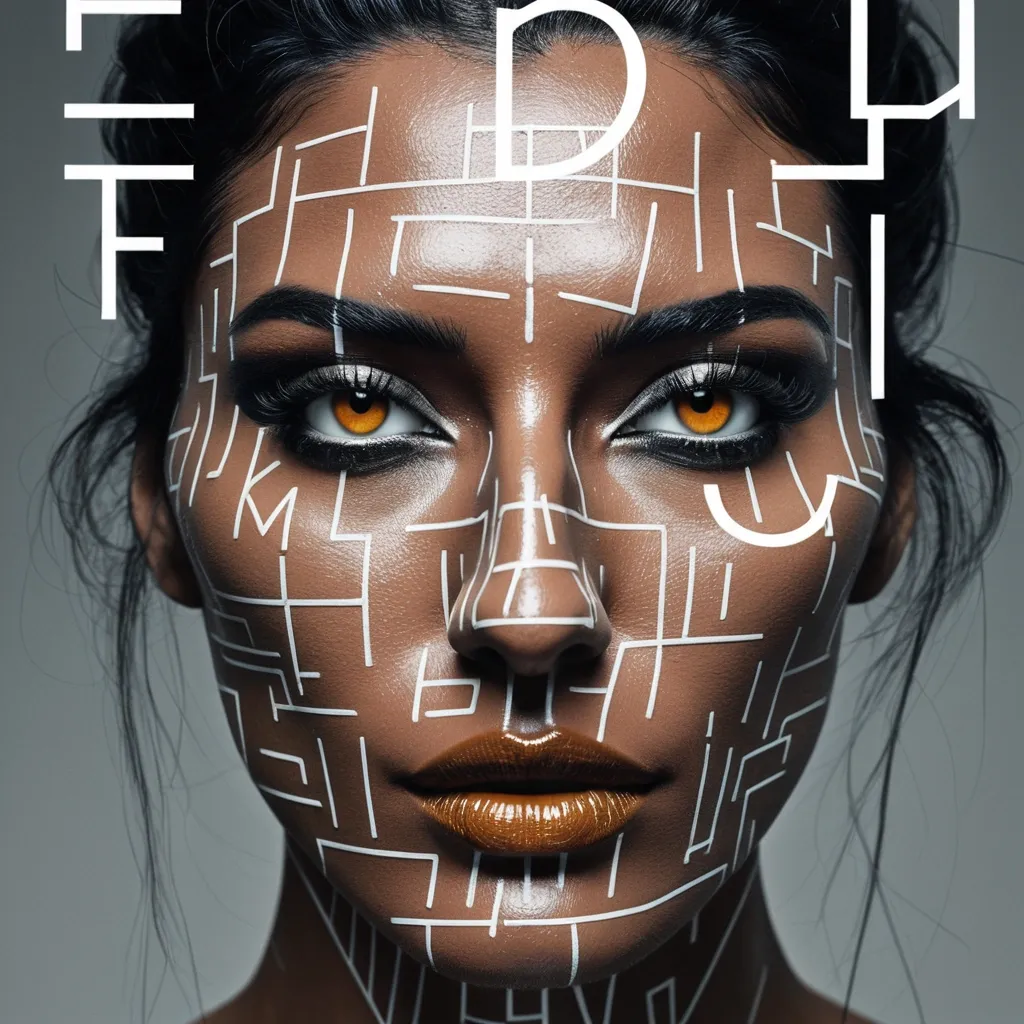
Create a sophisticated editorial portrait poster built around selective focus. Use a realistic photographic portrait with natural skin texture , pores , subtle imperfections , believable hair , and authentic facial structure. Avoid plastic skin , CGI smoothness , heavy beauty retouching , or generic commercial-model styling. Aspect Ratio: 9:16. Keep most of the portrait softly blurred , slightly motion-softened , desaturated , or reduced in detail. Only the selected horizontal sharp slice should return to sharp detail , natural skin tone , and clear texture. The sharp and blurred areas must remain perfectly aligned as the same person and the same photographic moment , with no duplicated eyes , second face , or pasted-photo effect. Choose one focus structure: a horizontal sharp band across the eyes , a small floating window isolating part of the face , a narrow offset focus frame through motion blur , or a larger offset frame that deliberately shifts attention away from the facial center. Use a restrained neutral palette of charcoal , gray , warm beige , off-white , and natural skin tones. Use rust orange as the only strong accent for the focus lines , main title , and a few key details. Keep the visual rule: Neutral Field + One Accent Color. Use mature magazine-style typography: a high-contrast editorial serif for MOTION , a condensed bold sans serif for RAJU , and a small neutral sans serif for secondary information. Include harp through motion as meaningful copy connected to the subject and concept , not random filler text. Keep the composition asymmetric with generous negative space. Let the portrait , typography , and focus geometry interact naturally. Add subtle film grain , light scan texture , and restrained print texture so the whole poster feels like one finished editorial piece. The final result should feel like a polished independent fashion , photography , music , or culture magazine poster , with blur and sharpness deliberately controlling where the viewer looks. Avoid cyberpunk HUDs , excessive UI graphics , neon gradients , gibberish text , logos , watermarks , numbering , sparkle symbols , harsh Gaussian blur , melted facial features , duplicated features , plastic skin , and over-retouching. ,

A dark , vertically framed fantasy-horror scene depicts a headless horseman seated on a massive black horse in the center of a ruined woodland crossing. The horse faces slightly toward the left , its long , tangled black mane falling across its face and neck. Dark leather reins , bridle straps , and a saddle blend into its glossy coat. Above it sits a tall rider dressed in layers of weathered black and charcoal clothing , including a long , ragged coat with broad shoulders , rows of metal buttons , gloves , boots , and a sword hanging near the saddle. Where the rider's head should be is only a deep , empty opening surrounded by the raised collar of the coat. In the rider's lowered right hand hangs a carved jack-o'-lantern with sharply angled eyes and a jagged , tooth-filled grin. Bright orange fire burns inside the pumpkin and erupts from its top , throwing sparks upward and providing the image's only vivid color. Behind the pair , a damaged wooden bridge or covered structure rises through gray mist , framed by bare and thinning trees. Wet ground , shallow water , fallen brown leaves , rough stonework , broken timbers , and drifting smoke create a cold , decaying autumn setting around the motionless rider and horse. ,

An aerosol Duotone , the whole frame a continuous soft haze with a fine even film grain over it and every form sprayed rather than drawn , the space a vertical drift of color running from near-blue at the top down to the cold hue at the bottom. Deep blue against chalky lilac-blue , the hot color the only chroma in the frame and the cold one staying milky and de-saturated throughout. A female face in left profile dissolves into swirling white clouds and crimson forms at its rear. Bare Pastel Cactus branches spread across a Pastel blue sky within the opened head. A tiny Pastel ship floats at the far horizon beneath a smoky amber glow , solid at its core and dissolving into the haze at its edges with a bright rim where it meets the dark. Four layers back to front: the dark upper field , the broad drift of the hot hue rising from the bottom , the figure's sprayed mass , then a fine top pass of film grain over everything. Mythic and ominous , an apparition inside an enormous hostile atmosphere , played completely straight. ,

reate a bold surreal editorial artwork inspired by Statue Of Unity (world's tallest statue , with a height of 182 metres , located in Narmada valley , near Kevadia) , Gujarat , India. Vertical 4:5 format. Select recognizable landmarks , local architecture , cultural details , and natural features specific to this city , then transform them into an imaginative dreamlike composition rather than a conventional cityscape. Make one iconic architectural element impossibly oversized and floating above the ground. Arrange miniature city details on suspended fragments of local terrain. Let a ribbon of the city’s natural landscape curve upward through the architecture , defying gravity. Turn a locally meaningful texture or pattern into a monumental sculptural form. Use unexpected scale contrasts , impossible spatial relationships , floating geometric planes , and carefully placed disconnected shadows. Keep every material photorealistic so the impossible scene feels convincingly tangible. Choose a distinctive harmonious palette inspired by the city. Rich colors , dramatic directional studio lighting , crisp shadows , tactile surfaces , subtle film grain , and delicate halftone texture. Minimal luxury editorial art direction. Use only a few powerful elements with generous breathing room. Keep the composition in the lower 65% , leaving the upper 35% as clean negative space. Preserve the recognizable identity of the selected city. Do not mix landmarks from other cities. One cohesive surreal scene , not a collage grid. No people , handbags , text , letters , logos , watermarks , or social media interface. ,

A flowing , Woman-Face , playing a golden ornate saxophone curves down into a huge seashell , dissolving into recursive spirals , where intricate patterns and self-similar structures take on an infrared-tinged quality , silhouette emerges from a violet and lime green in fine , repeating music notes to generate the vortex effect against a completely black background. The Genie is composed entirely of soft , fluid streaks that blend into one another: luminous white and fluorescent green at the head and shoulders , shifting into bright thousands of glowing dot keep changing their mind as the descends. The shapes twist and ripple as though made of painted smoke , giving the impression of constant , silent movement. The head tilts gently downward , defined only by subtle curves and shadows formed by the color transitions. ar 2:8. ,

A flowing , Woman-like (Jazz player in fictional character who appeared in Walt Disney Pictures' animated film) , a cobalt saxophone curves down into a huge gown's border , dissolving into recursive spirals , where intricate patterns and self-similar structures take on an infrared-tinged quality , silhouette emerges from a jet black and ivory white in blurry , repeating music notes to generate the vortex effect against a completely black background. A saxophone is composed entirely of soft , fluid streaks that blend into one another: luminous white and fluorescent green at the head and shoulders , shifting into bright thousands of glowing tiny star keep changing their mind as the descends. The shapes twist and ripple as though made of painted smoke , giving the impression of constant , silent movement. The head tilts gently downward , defined only by subtle curves and shadows formed by the color transitions --ar 2:3 --v 8.2 ,

A flowing , Woman-like Jazz player in black , a cobalt saxophone curves down into a huge ground , dissolving into recursive spirals , where intricate patterns and self-similar structures take on an infrared-tinged quality , silhouette emerges from a jet black and ivory white in fine , repeating music notes to generate the vortex effect against a completely black background. A saxophone is composed entirely of soft , fluid streaks that blend into one another: luminous white and fluorescent green at the head and shoulders , shifting into bright thousands of glowing tiny butterfly keep changing their mind as the descends. The shapes twist and ripple as though made of painted smoke , giving the impression of constant , silent movement. The head tilts gently downward , defined only by subtle curves and shadows formed by the color transitions. Aspect Ratio 9:16. ,

A flowing , Woman emerges against a dramatic backdrop , with her hair seamlessly transforming into a vibrant cascade of butterflies , holding a iPhone18 Pro Max take a selfie , silhouette emerges from a mass of swirling , spider webs against a completely black background. The Genie is composed entirely of soft , fluid streaks that blend into one another: luminous white and fluorescent green at the head and shoulders , shifting into bright thousands of glowing beads keep changing their mind as the descends. The shapes twist and ripple as though made of painted smoke , giving the impression of constant , silent movement. The head tilts gently downward , defined only by subtle curves and shadows formed by the color transitions. Aspect Ratio 9:16 ,

A flowing , Woman-like (a fictional character who appeared in Walt Disney Pictures' animated film) , holding a iPhone take a selfie , silhouette emerges from a mass of swirling , spider webs against a completely black background. The Genie is composed entirely of soft , fluid streaks that blend into one another: luminous white and pale green at the head and shoulders , shifting into bright thousands of glowing beads keep changing their mind as the descends. The shapes twist and ripple as though made of painted smoke , giving the impression of constant , silent movement. The head tilts gently downward , defined only by subtle curves and shadows formed by the color transitions. Aspect Ratio 9:16. ,

Create a big busty full-body realistic fashion editorial featuring an adult young East African woman with a refined K-pop-inspired look , kind expressive eyes , a voluptuous , silhouette , and thick big long muscular balanced big legs and glutes with big calves. Use the uploaded image as a pose reference only. The model stands directly on real staircase steps , not on a concrete block , ledge , pedestal , or parapet.One leg supports her weight naturally while the other bends backward , bringing the heel toward the body. One hand reaches back to lightly hold or adjust the heel , shoe opening , or ankle. This movement creates a natural twist through the waist and shoulders as she turns her head back toward the camera.Keep strong eye contact with an expressive mood — playful , cool , confident , sensual , or slightly provocative — rather than a blank model expression. Style the model with a fashion-forward mini dress or bodysuit featuring one clear design element , such as a deep-V neckline , sculpted bandeau , asymmetric shoulder , halter construction , or clean geometric cutout. Keep the outfit sharp and minimal rather than adding too many straps or decorative details.Use refined fashion hosiery with a clear product identity. Accurately render its transparency , yarn texture , subtle woven pattern , panel , rib , or jacquard structure. Keep the design elegant and visually clean , using fine textures and restrained patterns rather than dense florals , heavy fishnet , or complicated graphics. Use one consistent hosiery color with no gradient.The hosiery must naturally follow the thighs , knees , calves , ankles , and feet with believable stretch and tension.Place her in a real , ordinary , slightly worn concrete stairwell inside an apartment , office building , parking structure , or older urban building. Show rough gray concrete , worn stair edges , faint stains , scratches , patch repairs , pores , construction joints , and ordinary metal railings with visible use.The stairwell should feel raw , functional , and genuinely used — not like a pristine brutalist showroom or studio-built concrete set.Keep the skin genuinely photographic: visible pores , subtle tonal variation , tiny imperfections , slight natural redness , realistic knee and ankle tones , and natural lip texture. Hair should show individual strands , loose flyaways , and slight irregularity. Avoid poreless AI-beauty skin , waxy highlights , plastic smoothness , or excessive retouching.Use a slightly low 50–70mm fashion-photography perspective to emphasize the full-body silhouette and elongated leg lines without extreme distortion. Use natural stairwell window light with soft directional fill , realistic contact shadows , and uneven brightness across the concrete surfaces. ,

Theme: Ice Surface world: Ice-fort appears above the surface Hidden world: Cave gate is revealed underneath Key natural structure: Ice mass Main palette: Deep blue Title: Navro Subtitle: lishotta Create a premium 9:16 editorial poster from the WORLD SLICE series. Show a realistic natural landscape as if a section of the world has been physically cut open , revealing a much larger hidden structure beneath the visible surface. Keep the surface relatively simple and easy to read , while the hidden section becomes the main visual surprise. Use strong scale contrast , clear geological or ecological layers , realistic materials , believable depth , atmospheric perspective and cinematic natural light. The cutaway should not look like a glass box or aquarium. Treat it as a real piece of land , ocean , forest or ice physically sliced from the planet. Let parts of nature break beyond the geometric cutaway boundary: roots , rock formations , ice , water or terrain may extend outside the original shape to create stronger visual impact. Keep the central object around 55–70% of the poster width and preserve generous negative space. Avoid making the 3D cutaway too large. Integrate typography into the composition instead of adding many tiny labels. Use one bold main title , one short supporting line and only a few minimal editorial details. Allow natural elements to overlap , pass behind or partially cover the typography. Use a refined mix of modern serif and condensed sans-serif typography. The poster should feel like premium nature editorial design , contemporary art direction and photorealistic environmental visualization. Prioritize: strong thumbnail readability , one clear visual surprise , large recognizable forms , realistic natural textures , clean hierarchy , high-end editorial composition , and a strong contrast between the visible world and the hidden world. No logo , no watermark , no numbering , no excessive micro text , no HUD interface , no four-point sparkle symbols , no cheap CGI , no glass-container look. Make the final image feel like a complete finished poster , not a template. ,


Create a photorealistic high-traditional festival editorial using the uploaded reference image as the strict character reference. CHARACTER: Use the exact same Garba-model character from the reference image. Preserve her recognizable facial features , facial structure , black long Indian style , skin tone , body proportions , and overall visual identity. Do not redesign or replace the character. Only change her outfit , pose , accessories , and environment according to the scene below. POSE & COMPOSITION: Full-body low-angle festival photograph of Garba-model lounging horizontally across a minimalist cobalt-blue architectural ledge. She is reclining comfortably with her back supported by the structure , legs crossed naturally. Her head is slightly tilted back while she looks upward toward the camera with a calm , confident expression. One arm rests casually beside her near the mobile-pouch , while the other arm is relaxed along the ledge. The nearest leg and white sandal are slightly closer to the camera , creating a dramatic low-angle perspective. OUTFIT: - Purple White Pure Reyon Cotton Gamthi Work Navratri Chaniya Choli with Dupatta. ACCESSORIES: - Structured vibrant red fabric traditional mobile-pouch placed beside Garba-model on the blue ledge - Minimal jewelry - Keep accessories stylish and understated BACKGROUND & ENVIRONMENT: Surreal minimalist 3D tropical fashion setting. - Clear vivid blue sky - Stylized palm trees with blue-painted trunks - Green palm leaves - Geometric white and blue modern architectural buildings - Clean cobalt-blue platforms and ledges - Strong color-blocked architectural shapes - Minimal clutter - Luxury summer campaign atmosphere LIGHTING: Bright natural summer sunlight. Hard directional sunlight with crisp , clean shadows. High contrast between cobalt blue , white and red. Bright vibrant exposure with realistic skin highlights. Clear blue-sky atmosphere. CAMERA: Top-angle wide-lens fashion photography. Full-body framing. Dramatic perspective with the foreground sandal slightly larger due to lens perspective. Strong geometric composition. Professional luxury fashion campaign photography. Sharp focus on Wareen with subtle depth of field. STYLE: Photorealistic high-end festivals editorial. Pop-art inspired Navratri Special Traditional. Bold blue-and-white color-block style with a contrastingred fabric traditional mobile-pouch. Clean , sophisticated , vibrant and modern. Premium commercial fashion photography. IMPORTANT: Maintain the exact same Garba-model character identity throughout the image. Do not change her face , hairstyle , hair color , freckles , or recognizable features. No cartoon , no anime , no artificial-looking face , no distorted hands , no extra fingers , no duplicate limbs. ,

Create a photorealistic high-fashion summer editorial using the uploaded reference image as the strict character reference. CHARACTER: Use the exact same Garba-model character from the reference image. Preserve her recognizable facial features , facial structure , black long Indian style , freckles across the cheeks and nose , skin tone , body proportions , and overall visual identity. Do not redesign or replace the character. Only change her outfit , pose , accessories , and environment according to the scene below. POSE & COMPOSITION: Full-body low-angle fashion photograph of Garba-model lounging horizontally across a minimalist cobalt-blue architectural ledge. She is reclining comfortably with her back supported by the structure , knees raised and legs crossed naturally. Her head is slightly tilted back while she looks upward toward the camera with a calm , confident expression. One arm rests casually beside her near the handbag , while the other arm is relaxed along the ledge. The nearest leg and white sandal are slightly closer to the camera , creating a dramatic low-angle perspective. OUTFIT: - light yellow T-shirt and jeans ACCESSORIES: - Structured vibrant red fabric traditional mobile-pouch placed beside Garba-model on the blue ledge - Minimal jewelry - Keep accessories stylish and understated BACKGROUND & ENVIRONMENT: Surreal minimalist 3D tropical fashion setting. - Clear vivid blue sky - Stylized palm trees with blue-painted trunks - Green palm leaves - Geometric white and blue modern architectural buildings - Clean cobalt-blue platforms and ledges - Strong color-blocked architectural shapes - Minimal clutter - Luxury summer campaign atmosphere LIGHTING: Bright natural summer sunlight. Hard directional sunlight with crisp , clean shadows. High contrast between cobalt blue , white and red. Bright vibrant exposure with realistic skin highlights. Clear blue-sky atmosphere. CAMERA: Low-angle wide-lens fashion photography. Full-body framing. Dramatic perspective with the foreground sandal slightly larger due to lens perspective. Strong geometric composition. Professional luxury fashion campaign photography. Sharp focus on Wareen with subtle depth of field. STYLE: Photorealistic high-end festivals editorial. Pop-art inspired Navratri Special Traditional. Bold blue-and-white color-block style with a contrastingred fabric traditional mobile-pouch. Clean , sophisticated , vibrant and modern. Premium commercial fashion photography. QUALITY: Ultra-realistic , high resolution , realistic skin texture , natural anatomy , realistic hands and fingers , detailed fabric textures , accurate clothing folds , realistic sunglasses and handbag materials , natural shadows , cinematic depth , professional photography. IMPORTANT: Maintain the exact same Garba-model character identity throughout the image. Do not change her face , hairstyle , hair color , freckles , or recognizable features. No cartoon , no anime , no artificial-looking face , no distorted hands , no extra fingers , no duplicate limbs. ,

Create a finished sports-editorial campaign poster , 9:16 , full bleed. Lifelike action photography , monumental condensed typography , warm stone palette. One clear athletic moment becomes a sculptural focal point: a real body mid-action , directional hard light , deep sculpted shadow , believable skin , fabric and equipment texture. One headline in massive , heavy , ultra-narrow all-caps sans-serif , bone white. The type is a structural shape in the scene , not a caption: split , stacked or broken by the action. The athlete and headline physically interact: passing through , slicing between or overlapping the letters. Every character stays readable. Palette: warm taupe , stone , greige , bone white , charcoal shadow , with small rust-orange accents only. Strong scale contrast between body and type , with open color fields for breathing room. Headline: TAKE FLIGHT · board as underline · concrete skate bowl Skater at the peak of a high aerial above the bowl , cream windbreaker and dark trousers; the bowl's curved lip echoes the baseline. Type interaction: the board slices between TAKE and FLIGHT like a moving underline. No other text , no logos or brand marks , no watermark , no pseudo-lettering , no neon , no plastic skin , no fake distressed print , no effects that hide the action. ,
# GitHub Terms of Service <!-- markdownlint-disable search-replace --> Thank you for using GitHub! We're happy you're here. Please read this Terms of Service agreement carefully before accessing or using GitHub. Because it is such an important contract between us and our users , we have tried to make it as clear as possible. For your convenience , we have presented these terms in a short non-binding summary followed by the full legal terms. ## Summary | Section | What can you find there? | | -------------------------------------------------------------------------------- | ------------------------------------------------------------------------------------------------------------------------------------------------------------------------------------------------------------------------------------------ | | [A. Definitions](#a-definitions) | Some basic terms , defined in a way that will help you understand this agreement. Refer back up to this section for clarification. | | [B. Account Terms](#b-account-terms) | These are the basic requirements of having an Account on GitHub. | | [C. Acceptable Use](#c-acceptable-use) | These are the basic rules you must follow when using your GitHub Account. | | [D. User-Generated Content](#d-user-generated-content) | You own the content you post on GitHub. However , you have some responsibilities regarding it , and we ask you to grant us some rights so we can provide services to you. | | [E. Private Repositories](#e-private-repositories) | This section talks about how GitHub will treat content you post in private repositories. | | [F. Copyright & DMCA Policy](#f-copyright-infringement-and-dmca-policy) | This section talks about how GitHub will respond if you believe someone is infringing your copyrights on GitHub. | | [G. Intellectual Property Notice](#g-intellectual-property-notice) | This describes GitHub's rights in the website and service. | | [H. API Terms](#h-api-terms) | These are the rules for using GitHub's APIs , whether you are using the API for development or data collection. | | [I. Additional Product Terms](#i-github-additional-product-terms) | We have a few specific rules for GitHub's features and products. | | [J. AI Features , Training , and Your Data](#j-ai-features-training-and-your-data) | These are the terms that apply to GitHub Copilot and other AI features , including how your data may be used for development and improvement of the artificial intelligence and machine learning models , and the controls available to you. | | [K. Beta Previews](#k-beta-previews) | These are some of the additional terms that apply to GitHub's features that are still in development. | | [L. Payment](#l-payment) | You are responsible for payment. We are responsible for billing you accurately. | | [M. Cancellation and Termination](#m-cancellation-and-termination) | You may cancel this agreement and close your Account at any time. | | [N. Communications with GitHub](#n-communications-with-github) | We only use email and other electronic means to stay in touch with our users. We do not provide phone support. | | [O. Disclaimer of Warranties](#o-disclaimer-of-warranties) | We provide our service as is , and we make no promises or guarantees about this service. **Please read this section carefully; you should understand what to expect.** | | [P. Limitation of Liability](#p-limitation-of-liability) | We will not be liable for damages or losses arising from your use or inability to use the service or otherwise arising under this agreement. **Please read this section carefully; it limits our obligations to you.** | | [Q. Release and Indemnification](#q-release-and-indemnification) | You are fully responsible for your use of the service. | | [R. Changes to these Terms of Service](#r-changes-to-these-terms) | We may modify this agreement , but we will give you 30 days' notice of material changes. | | [S. Miscellaneous](#s-miscellaneous) | Please see this section for legal details including our choice of law. | ## The GitHub Terms of Service Effective date: April 27 , 2026 ## A. Definitions **Short version:** *We use these basic terms throughout the agreement , and they have specific meanings. You should know what we mean when we use each of the terms. There's not going to be a test on it , but it's still useful information.* 1. An "Account" represents your legal relationship with GitHub. A “Personal Account” represents an individual User’s authorization to log in to and use the Service and serves as a User’s identity on GitHub. “Organizations” are shared workspaces that may be associated with a single entity or with one or more Users where multiple Users can collaborate across many projects at once. A Personal Account can be a member of any number of Organizations. 2. The “Agreement” refers , collectively , to all the terms , conditions , notices contained or referenced in this document (the “Terms of Service” or the "Terms") and all other operating rules , policies (including the GitHub Privacy Statement , available at [github.com/site/privacy](https://github.com/site/privacy)) and procedures that we may publish from time to time on the Website. Most of our site policies are available at [docs.github.com/categories/site-policy](/en/site-policy). 3. "AI Feature" means any feature of GitHub or our Affiliates that uses machine learning or artificial intelligence to generate Output , including GitHub Copilot , Copilot Autofix , and any other feature identified as using machine learning or artificial intelligence in our documentation. 4. “Affiliate” means any entity that directly or indirectly controls , is controlled by , or is under common control with a party , where "control" means having more than fifty percent (50%) ownership or the right to direct the management of the entity. For the avoidance of doubt , Microsoft is an Affiliate of GitHub. 5. "Beta Previews" mean software , services , or features identified as alpha , beta , preview , early access , or evaluation , or words or phrases with similar meanings. 6. "Content" means code , text , data , documentation , images , graphics , software , packages , and other materials made available through the Service. 7. “GitHub , ” “We , ” and “Us” refer to GitHub , Inc. , as well as our directors , subsidiaries , contractors , licensors , officers , agents , and employees. 8. “Input” means any content or context provided to an AI Feature , including prompts , attachments , code in your workspace , and conversation history. 9. "Output" means responses and suggestions , including code or other material , generated by an AI Feature. 10. The “Service” refers to the applications , software , products , and services provided by GitHub , including through the Website and any Beta Previews. 11. “User , ” “You , ” and “Your” refer to the individual person , company , or organization that has visited or is using the Website or Service; that accesses or uses any part of the Account; or that directs the use of the Account in the performance of its functions. A User must be at least 13 years of age. Special terms may apply for business or government Accounts (See [Section B(5): Additional Terms](#5-additional-terms)). 12. "User-Generated Content" means Content that you or other users upload , submit , or create through the Service. 13. The “Website” refers to GitHub’s website located at [github.com](https://github.com/) , and all content , services , and products provided by GitHub at or through the Website. It also refers to GitHub-owned subdomains of github.com , such as [education.github.com](https://education.github.com/) and [pages.github.com](https://pages.github.com/). These Terms also govern GitHub’s conference websites , such as [githubuniverse.com](https://githubuniverse.com/) , and product websites , such as [electronjs.org](https://www.electronjs.org/). Occasionally , websites owned by GitHub may provide different or additional terms of service. If those additional terms conflict with this Agreement , the more specific terms apply to the relevant page or service. 14. "Your Content" means User-Generated Content that you upload , submit , or create , including your modifications to Content you have forked or cloned. It does not include the underlying Content created by others. ## B. Account Terms **Short version:** *Personal Accounts and Organizations have different administrative controls; a human must create your Account; you must be 13 or over; you must provide a valid email address; and you may not have more than one free Account. You alone are responsible for your Account and anything that happens while you are signed in to or using your Account. You are responsible for keeping your Account secure.* ### 1. Account Controls * Users. Subject to these Terms , you retain ultimate administrative control over your Personal Account and the Content within it. * Organizations. The "owner" of an Organization that was created under these Terms has ultimate administrative control over that Organization and the Content within it. Within the Service , an owner can manage User access to the Organization’s data and projects. An Organization may have multiple owners , but there must be at least one Personal Account designated as an owner of an Organization. If you are the owner of an Organization under these Terms , we consider you responsible for the actions that are performed on or through that Organization. ### 2. Required Information You must provide a valid email address in order to complete the signup process. Any other information requested , such as your real name , is optional , unless you are accepting these terms on behalf of a legal entity (in which case we need more information about the legal entity) or if you opt for a [paid Account](#l-payment) , in which case additional information will be necessary for billing purposes. ### 3. Account Requirements We have a few simple rules for Accounts on GitHub's Service. * You must be a human to create an Account. Accounts registered by "bots" or other automated methods are not permitted. We do permit machine accounts: * A machine account is an Account set up by an individual human who accepts the Terms on behalf of the Account , provides a valid email address , and is responsible for its actions. A machine account is used exclusively for performing automated tasks. Multiple users may direct the actions of a machine account , but the owner of the Account is ultimately responsible for the machine's actions. You may maintain no more than one free machine account in addition to your free Personal Account. * One person or legal entity may maintain no more than one free Account (if you choose to control a machine account as well , that's fine , but it can only be used for running a machine). * You must be age 13 or older. While we are thrilled to see brilliant young coders get excited by learning to program , we must comply with United States law. GitHub does not target our Service to children under 13 , and we do not permit any Users under 13 on our Service. If we learn of any User under the age of 13 , we will [terminate that User’s Account immediately](#m-cancellation-and-termination). If you are a resident of a country outside the United States , your country’s minimum age may be older; in such a case , you are responsible for complying with your country’s laws. * Your login may only be used by one person — i.e. , a single login may not be shared by multiple people. A paid Organization may only provide access to as many Personal Accounts as your subscription allows. * You may not use GitHub in violation of export control or sanctions laws of the United States or any other applicable jurisdiction. You may not use GitHub if you are or are working on behalf of a [Specially Designated National (SDN)](https://www.treasury.gov/resource-center/sanctions/SDN-List/Pages/default.aspx) or a person subject to similar blocking or denied party prohibitions administered by a U.S. government agency. GitHub may allow persons in certain sanctioned countries or territories to access certain GitHub services pursuant to U.S. government authorizations. For more information , please see our [Export Controls policy](/en/site-policy/other-site-policies/github-and-trade-controls). ### 4. Account Security You are responsible for keeping your Account secure while you use our Service. We offer tools such as two-factor authentication to help you maintain your Account's security , but the content of your Account and its security are up to you. * You are responsible for all content posted and activity that occurs under your Account (even when content is posted by others who have Accounts under your Account). * You are responsible for maintaining the security of your Account and password. GitHub cannot and will not be liable for any loss or damage from your failure to comply with this security obligation. * You will promptly notify GitHub by contacting us through the [GitHub Support portal](https://support.github.com/) if you become aware of any unauthorized use of , or access to , our Service through your Account , including any unauthorized use of your password or Account. ### 5. Additional Terms In some situations , third parties' terms may apply to your use of GitHub. For example , you may be a member of an organization on GitHub with its own terms or license agreements; you may download an application that integrates with GitHub; or you may use GitHub to authenticate to another service. Please be aware that while these Terms are our full agreement with you , other parties' terms govern their relationships with you. If you are a government User or otherwise accessing or using any GitHub Service in a government capacity , this [Government Amendment to GitHub Terms of Service](/en/site-policy/site-policy-deprecated/amendment-to-github-terms-of-service-applicable-to-us-federal-government-users) applies to you , and you agree to its provisions. If you have signed up for GitHub Enterprise Cloud , the [Enterprise Cloud Addendum](/en/site-policy/site-policy-deprecated/github-enterprise-service-level-agreement) applies to you , and you agree to its provisions. ## C. Acceptable Use **Short version:** *GitHub hosts a wide variety of collaborative projects from all over the world , and that collaboration only works when our users are able to work together in good faith. While using the service , you must follow the terms of this section , which include some restrictions on content you can post , conduct on the service , and other limitations. In short , be excellent to each other.* Your use of the Website and Service must not violate any applicable laws , including copyright or trademark laws , export control or sanctions laws , or other laws in your jurisdiction. You are responsible for making sure that your use of the Service is in compliance with laws and any applicable regulations. You agree that you will not under any circumstances violate our [Acceptable Use Policies](/en/site-policy/acceptable-use-policies/github-acceptable-use-policies) or [Community Guidelines](/en/site-policy/github-terms/github-community-guidelines). ## D. User-Generated Content **Short version:** *You own content you create , but you allow us certain rights to it , so that we can display and share the content you post. You still have control over your content , and responsibility for it , and the rights you grant us are limited to those we need to provide the service. We have the right to remove content or close Accounts if we need to.* ### 1. Responsibility for User-Generated Content You are responsible for Your Content and any harm resulting from it. This includes Content you post , upload , or make available through the Service. We are not responsible for any public display or misuse of Your Content. ### 2. GitHub May Remove Content We may refuse or remove User-Generated Content that violates applicable law or our terms and policies. We access private repositories only as described in Section E. Content displayed on GitHub Mobile may be subject to app store terms. ### 3. Ownership and License Grants You own Your Content. If you post Content you did not create , you are responsible for ensuring you have the right to post it and for complying with any applicable licenses. You grant us and other Users the licenses in Sections D.4–D.8. These licenses apply to Your Content. If Your Content already includes a license granting us the permissions we need , no additional license is required. You will not receive payment for these rights. These licenses end when you remove Your Content , unless other Users have forked it. ### 4. License Grant to Us You grant GitHub and our Affiliates the right to store , host , archive , parse , display , and make copies of Your Content as necessary to provide , develop , and improve the Service , including by training AI Features , and for the purpose of training , developing , and improving artificial intelligence and machine learning models and technologies of our Affiliates. This license includes the right to do things like copy it to our database and make backups; show it to you and other Users; parse it into a search index or otherwise analyze it on our servers; share it with other Users; and perform it , in case Your Content is something like music or video. For the avoidance of doubt , use of Your Content to develop , train , and improve artificial intelligence and machine learning models and technologies of GitHub and our Affiliates is within the scope of this license and does not constitute a sale or other restricted transfer of Your Content. ### 5. License Grant to Other Users Your Content that you post publicly , including issues , comments , and contributions to other Users' repositories , may be viewed by others. By setting your repositories to be viewed publicly , you agree to allow others to view and "fork" your repositories (this means that others may make their own copies within the Service in repositories they control). By making a repository public , you grant other Users a nonexclusive , worldwide license to use , display , perform and reproduce (by forking) Your Content through the Service as permitted by GitHub's functionality. You may grant additional rights by [adopting a license](/en/communities/setting-up-your-project-for-healthy-contributions/adding-a-license-to-a-repository#including-an-open-source-license-in-your-repository). If you post Content you did not create or own , you are responsible for ensuring it is licensed under terms that permit these uses. ### 6. Contributions Under Repository License Whenever you add Content to a repository containing notice of a license , you license that Content under the same terms , and you agree that you have the right to license that Content under those terms. If you have a separate agreement to license that Content under different terms , such as a contributor license agreement , that agreement will supersede. Isn't this just how it works already? Yep. This is widely accepted as the norm in the open-source community; it's commonly referred to by the shorthand "inbound=outbound". We're just making it explicit. ### 7. Moral Rights You retain all moral rights to Your Content that you upload , publish , or submit to any part of the Service , including the rights of integrity and attribution. However , you waive these rights and agree not to assert them against us or our Affiliates , to enable GitHub and our Affiliates to reasonably exercise the rights granted in Section D.4 , but not otherwise. To the extent this agreement is not enforceable by applicable law , you grant GitHub the rights we need to use Your Content without attribution and to make reasonable adaptations of Your Content as necessary to render the Website and provide the Service. ### 8. Public Repositories and Lawful Access By choosing to contribute Content to a public repository , you are choosing to and directing us to make such Content accessible to everyone on the internet. Unless specifically set forth herein , these Terms do not restrict lawful access to or use of the contents of public repositories by third parties , or by GitHub or its Affiliates. ### 9. Access Reciprocity By using automated means to access , collect , or otherwise use (“Access”) any publicly accessible Content from the Service for the purpose of developing or training any commercially available artificial intelligence model , machine learning system , or similar technology (a "Commercial AI System") , you hereby waive any and all policies , terms , conditions , or contractual provisions governing products , services , websites or datasets you own or operate that would otherwise prohibit , restrict , or place conditions upon GitHub's Access to any publicly accessible data , information or content associated with your products or services , including for the purpose of developing or training any Commercial AI System. You further agree not to impose technical or other targeted measures to restrict or retaliate against such Access. This Section D.9 does not apply to Access solely for the purpose of academic research or if , on the date you Access the Content , the number of monthly active users of the products or services made available by you is less than 700 million in the preceding calendar month. For the purposes of this Section , "you" shall refer to you and any entity that directly or indirectly controls , is controlled by , or is under common control with you (affiliates). ## E. Private Repositories **Short version:** *We treat the content of private repositories as confidential , and we only access it as described in Section E.3 below—for security purposes , to assist the repository owner with a support matter , to maintain the integrity of the Service , to comply with our legal obligations , if we have reason to believe the contents are in violation of the law , or with your consent.* ### 1. Control of Private Repositories Some Accounts may have private repositories , which allow the User to control access to Content. ### 2. Confidentiality of Private Repositories GitHub considers the contents of private repositories to be confidential to you. GitHub will protect the contents of private repositories from unauthorized use , access , or disclosure in the same manner that we would use to protect our own confidential information of a similar nature and in no event with less than a reasonable degree of care. ### 3. Access You control access to the content of your private repositories. GitHub considers the contents of private repositories to be confidential to you , as set forth in Section E.2 , and GitHub personnel will not access private repository content without your consent except in the following circumstances: * for security purposes; * for automated scanning or manual review for known vulnerabilities , active malware , or other content known to violate our Terms of Service; * to assist the repository owner with a support matter; * to maintain the integrity of the Service; or * to comply with our legal obligations if we have reason to believe the contents are in violation of the law. You may choose to enable additional access to your private repositories. For example: * You may enable various GitHub services or features that require additional rights to Your Content in private repositories. These rights may vary depending on the service or feature , but GitHub will continue to treat your private repository Content as confidential. If those services or features require rights in addition to those we need to provide the GitHub Service , we will provide an explanation of those rights. * If you provide your private repository content as Input to AI Features , we may use that Input to provide , develop , train , and improve the Service , including AI Features. Your ability to opt out under [Section J.3](#3-development-and-improvement-using-your-input-and-output) applies to this use of private repository content. We will not otherwise use your private repository contents to develop or improve the Service. Additionally , we may be [compelled by law](/en/site-policy/privacy-policies/github-general-privacy-statement#sharing-of-personal-data) to disclose the contents of your private repositories. GitHub will provide notice regarding our access to private repository content , unless [for legal disclosure](/en/site-policy/privacy-policies/github-general-privacy-statement) , to comply with our legal obligations , or where otherwise bound by requirements under law , for automated scanning , or if in response to a security threat or other risk to security. ## F. Copyright Infringement and DMCA Policy If you believe that content on our website violates your copyright , please contact us in accordance with our [Digital Millennium Copyright Act Policy](/en/site-policy/content-removal-policies/dmca-takedown-policy). If you are a copyright owner and you believe that content on GitHub violates your rights , please contact us via [our convenient DMCA form](https://github.com/contact/dmca) or by emailing <copyright@github.com>. There may be legal consequences for sending a false or frivolous takedown notice. Before sending a takedown request , you must consider legal uses such as fair use and licensed uses. We will terminate the Accounts of [repeat infringers](/en/site-policy/content-removal-policies/dmca-takedown-policy#f-repeated-infringement) of this policy. ## G. Intellectual Property Notice **Short version:** *We own the service and all of our content. In order for you to use our content , we give you certain rights to it , but you may only use our content in the way we have allowed.* ### 1. GitHub's Rights to Content GitHub and our licensors , vendors , agents , and/or our content providers retain ownership of all intellectual property rights of any kind related to the Website and Service. We reserve all rights that are not expressly granted to you under this Agreement or by law. The look and feel of the Website and Service is copyright © GitHub , Inc. All rights reserved. You may not duplicate , copy , or reuse any portion of the HTML/CSS , JavaScript , or visual design elements or concepts without express written permission from GitHub. ### 2. GitHub Trademarks and Logos If you’d like to use GitHub’s trademarks , you must follow all of our trademark guidelines , including those on our logos page: <https://github.com/logos>. ### 3. License to GitHub Policies This Agreement is licensed under this [Creative Commons Zero license](https://creativecommons.org/publicdomain/zero/1.0/). For details , see our [site-policy repository](https://github.com/github/site-policy#license). ## H. API Terms **Short version:** *You agree to these Terms of Service , plus this Section H , when using any of GitHub's APIs (Application Programming Interface) , including use of the API through a third party product that accesses GitHub.* Abuse or excessively frequent requests to GitHub via the API may result in the temporary or permanent suspension of your Account's access to the API. GitHub , in our sole discretion , will determine abuse or excessive usage of the API. We will make a reasonable attempt to warn you via email prior to suspension. You may not share API tokens to exceed GitHub's rate limitations. You may not use the API to download data or Content from GitHub for spamming purposes , including for the purposes of selling GitHub users' personal information , such as to recruiters , headhunters , and job boards. All use of the GitHub API is subject to these Terms of Service and the [GitHub Privacy Statement](https://github.com/site/privacy). GitHub may offer subscription-based access to our API for those Users who require high-throughput access or access that would result in resale of GitHub's Service. ## I. GitHub Additional Product Terms **Short version:** *You need to follow certain specific terms and conditions for GitHub's various features and products , and you agree to the Supplemental Terms and Conditions when you agree to this Agreement.* Some Service features may be subject to additional terms specific to that feature or product as set forth in the GitHub Additional Product Terms. By accessing or using the Services , you also agree to the [GitHub Additional Product Terms](/en/site-policy/github-terms/github-terms-for-additional-products-and-features). ## J. AI Features , Training , and Your Data ### 1. Applicability This section applies to all AI Features unless a specific feature has additional terms that expressly modify them. The training and data-use provisions in Section J.3 apply only to individual licenses. If your use of the Service is governed by a GitHub Customer Agreement or volume licensing agreement , those agreements govern the use of your data in connection with AI Features and Section J.3 does not apply to you. ### 2. Ownership GitHub does not claim ownership of your Input or Output. Output may contain material that resembles code or content in the model's training data or that is subject to third-party copyrights or open source license terms. You are responsible for determining whether your use of Output requires a third-party license and for complying with any such license. ### 3. Development and Improvement Using Your Input and Output We use your Inputs to generate Outputs and provide the AI Features. You also grant GitHub and its Affiliates a license to collect and use your Inputs and Outputs to develop , train and improve artificial intelligence and machine learning models and technologies including those that power AI Features , unless (a) you opt out through your account settings , or (b) your use of the Service is governed by a GitHub Customer Agreement or volume licensing agreement. If you opt out , GitHub will not collect or use your Inputs and Outputs for the purposes described in this paragraph from the effective date of your opt-out going forward. Unless you opt out , GitHub's Affiliates may use your Inputs and Outputs under this license in accordance with their applicable privacy and contractual obligations. This license does not , however , permit GitHub or its Affiliates to share your Inputs or Outputs with third-party AI model providers for their own independent model training purposes. The license in this Section J.3 is in addition to , and does not limit , the rights granted to GitHub and its Affiliates under Sections D.4 and D.8. This license does not extend to Your Content stored in repositories that are not provided as Input to an AI Feature. The opt-out right described in this section applies solely to the use of your Inputs and Outputs as described in this section , and does not apply to the license granted in Sections D.4-D.8 or to any Content that does not constitute Input or Output (including Content stored in public repositories). ### 4. Disclaimers Output is provided "as-is" and subject to the disclaimers in Section O. Without limiting Section O: Output may be inaccurate , incomplete , or non-functional. Output may resemble third-party code , including code under open source licenses. We do not guarantee that Output is free of errors , vulnerabilities , or intellectual property claims. You are responsible for reviewing , testing , and validating any Output before use. ### 5. Your Responsibility and Indemnity You are responsible for your use of Output , including ensuring it complies with applicable law and does not infringe third-party rights. Your indemnity obligations in Section Q apply to your use of AI Features and Output , including claims arising from Output you incorporate into your products or services. ## K. Beta Previews **Short version:** *Beta Previews may not be supported or may change at any time. You may receive confidential information through those programs that must remain confidential while the program is private. We'd love your feedback to make our Beta Previews better.* ### 1. Subject to Change Beta Previews may not be supported and may be changed at any time without notice. In addition , Beta Previews are not subject to the same security measures and auditing to which the Service has been and is subject. **By using a Beta Preview , you use it at your own risk.** ### 2. Confidentiality As a user of Beta Previews , you may get access to special information that isn’t available to the rest of the world. Due to the sensitive nature of this information , it’s important for us to make sure that you keep that information secret. **Confidentiality Obligations.** You agree that any non-public Beta Preview information we give you , such as information about a private Beta Preview , will be considered GitHub’s confidential information (collectively , “Confidential Information”) , regardless of whether it is marked or identified as such. You agree to only use such Confidential Information for the express purpose of testing and evaluating the Beta Preview (the “Purpose”) , and not for any other purpose. You should use the same degree of care as you would with your own confidential information , but no less than reasonable precautions to prevent any unauthorized use , disclosure , publication , or dissemination of our Confidential Information. You promise not to disclose , publish , or disseminate any Confidential Information to any third party , unless we don’t otherwise prohibit or restrict such disclosure (for example , you might be part of a GitHub-organized group discussion about a private Beta Preview feature). **Exceptions.** Confidential Information will not include information that is: (a) or becomes publicly available without breach of this Agreement through no act or inaction on your part (such as when a private Beta Preview becomes a public Beta Preview); (b) known to you before we disclose it to you; (c) independently developed by you without breach of any confidentiality obligation to us or any third party; or (d) disclosed with permission from GitHub. You will not violate the terms of this Agreement if you are required to disclose Confidential Information pursuant to operation of law , provided GitHub has been given reasonable advance written notice to object , unless prohibited by law. ### 3. Feedback We’re always trying to improve our products and services , and your feedback as a Beta Preview user will help us do that. If you choose to give us any ideas , know-how , algorithms , code contributions , suggestions , enhancement requests , recommendations or any other feedback for our products or services (collectively , “Feedback”) , you acknowledge and agree that GitHub will have a royalty-free , fully paid-up , worldwide , transferable , sub-licensable , irrevocable and perpetual license to implement , use , modify , commercially exploit and/or incorporate the Feedback into our products , services , and documentation. ## L. Payment **Short version:** *You are responsible for any fees associated with your use of GitHub. We are responsible for communicating those fees to you clearly and accurately , and letting you know well in advance if those prices change.* ### 1. Pricing Our pricing and payment terms are available at [github.com/pricing](https://github.com/pricing). If you agree to a subscription price , that will remain your price for the duration of the payment term; however , prices are subject to change at the end of a payment term. ### 2. Upgrades , Downgrades , and Changes * We will immediately bill you when you upgrade from the free plan to any paying plan. * If you change from a monthly billing plan to a yearly billing plan , GitHub will bill you for a full year at the next monthly billing date. * If you upgrade to a higher level of service , we will bill you for the upgraded plan immediately. * You may change your level of service at any time by [choosing a plan option](https://github.com/pricing) or going into your [Billing settings](https://github.com/settings/billing). If you choose to downgrade your Account , you may lose access to Content , features , or capacity of your Account. Please see our section on [Cancellation](#m-cancellation-and-termination) for information on getting a copy of that Content. ### 3. Billing Schedule; No Refunds **Payment Based on Plan** For monthly or yearly payment plans , the Service is billed in advance on a monthly or yearly basis respectively and is non-refundable. There will be no refunds or credits for partial months of service , downgrade refunds , or refunds for months unused with an open Account; however , the service will remain active for the length of the paid billing period. In order to treat everyone equally , no exceptions will be made. **Payment Based on Usage** Some Service features are billed based on your usage. A limited quantity of these Service features may be included in your plan for a limited term without additional charge. If you choose to use paid Service features beyond the quantity included in your plan , you pay for those Service features based on your actual usage in the preceding month. Monthly payment for these purchases will be charged on a periodic basis in arrears. See [GitHub Additional Product Terms for Details](/en/site-policy/github-terms/github-terms-for-additional-products-and-features). **Invoicing** For invoiced Users , User agrees to pay the fees in full , up front without deduction or setoff of any kind , in U.S. Dollars. User must pay the fees within thirty (30) days of the GitHub invoice date. Amounts payable under this Agreement are non-refundable , except as otherwise provided in this Agreement. If User fails to pay any fees on time , GitHub reserves the right , in addition to taking any other action at law or equity , to (i) charge interest on past due amounts at 1.0% per month or the highest interest rate allowed by law , whichever is less , and to charge all expenses of recovery , and (ii) terminate the applicable order form. User is solely responsible for all taxes , fees , duties and governmental assessments (except for taxes based on GitHub's net income) that are imposed or become due in connection with this Agreement. ### 4. Authorization By agreeing to these Terms , you are giving us permission to charge your on-file credit card , PayPal account , or other approved methods of payment for fees that you authorize for GitHub. ### 5. Responsibility for Payment You are responsible for all fees , including taxes , associated with your use of the Service. By using the Service , you agree to pay GitHub any charge incurred in connection with your use of the Service. If you dispute the matter , contact us through the [GitHub Support portal](https://support.github.com/). You are responsible for providing us with a valid means of payment for paid Accounts. Free Accounts are not required to provide payment information. ## M. Cancellation and Termination **Short version:** *You may close your Account at any time. If you do , we'll treat your information responsibly.* ### 1. Account Cancellation It is your responsibility to properly cancel your Account with GitHub. You can [cancel your Account at any time](/en/billing/how-tos/manage-plan-and-licenses/downgrade-plan) by going into your Settings in the global navigation bar at the top of the screen. The Account screen provides a simple , no questions asked cancellation link. We are not able to cancel Accounts in response to an email or phone request. ### 2. Upon Cancellation We will retain and use your information as necessary to comply with our legal obligations , resolve disputes , and enforce our agreements , but barring legal requirements , we will delete your full profile and the Content of your repositories within 90 days of cancellation or termination (though some information may remain in encrypted backups). This information cannot be recovered once your Account is canceled. We will not delete Content that you have contributed to other Users' repositories or that other Users have forked. Upon request , we will make a reasonable effort to provide an Account owner with a copy of your lawful , non-infringing Account contents after Account cancellation , termination , or downgrade. You must make this request within 90 days of cancellation , termination , or downgrade. ### 3. GitHub May Terminate GitHub has the right to suspend or terminate your access to all or any part of the Website at any time , with or without cause , with or without notice , effective immediately. GitHub reserves the right to refuse service to anyone for any reason at any time. ### 4. Survival All provisions of this Agreement which , by their nature , should survive termination *will* survive termination — including , without limitation: ownership provisions , warranty disclaimers , indemnity , and limitations of liability. ## N. Communications with GitHub **Short version:** *We use email and other electronic means to stay in touch with our users.* ### 1. Electronic Communication Required For contractual purposes , you (1) consent to receive communications from us in an electronic form via the email address you have submitted or via the Service; and (2) agree that all Terms of Service , agreements , notices , disclosures , and other communications that we provide to you electronically satisfy any legal requirement that those communications would satisfy if they were on paper. This section does not affect your non-waivable rights. ### 2. Legal Notice to GitHub Must Be in Writing Communications made through email or GitHub Support's messaging system will not constitute legal notice to GitHub or any of its officers , employees , agents or representatives in any situation where notice to GitHub is required by contract or any law or regulation. Legal notice to GitHub must be in writing and [served on GitHub's legal agent](/en/site-policy/other-site-policies/guidelines-for-legal-requests-of-user-data#submitting-requests). ### 3. No Phone Support GitHub only offers support via email , in-Service communications , and electronic messages. We do not offer telephone support. ## O. Disclaimer of Warranties **Short version:** *We provide our service as is , and we make no promises or guarantees about this service. Please read this section carefully; you should understand what to expect.* GitHub provides the Website and the Service “as is” and “as available , ” without warranty of any kind. Without limiting this , we expressly disclaim all warranties , whether express , implied or statutory , regarding the Website and the Service including without limitation any warranty of merchantability , fitness for a particular purpose , title , security , accuracy and non-infringement. GitHub does not warrant that the Service will meet your requirements; that the Service will be uninterrupted , timely , secure , or error-free; that the information provided through the Service is accurate , reliable or correct; that any defects or errors will be corrected; that the Service will be available at any particular time or location; or that the Service is free of viruses or other harmful components. You assume full responsibility and risk of loss resulting from your downloading and/or use of files , information , content or other material obtained from the Service. ## P. Limitation of Liability **Short version:** *We will not be liable for damages or losses arising from your use or inability to use the service or otherwise arising under this agreement. Please read this section carefully; it limits our obligations to you.* You understand and agree that we will not be liable to you or any third party for any loss of profits , use , goodwill , or data , or for any incidental , indirect , special , consequential or exemplary damages , however arising , that result from <!-- markdownlint-disable GHD034 --> * the use , disclosure , or display of your User-Generated Content; * your use or inability to use the Service; * any modification , price change , suspension or discontinuance of the Service; * the Service generally or the software or systems that make the Service available; * unauthorized access to or alterations of your transmissions or data; * statements or conduct of any third party on the Service; * any other user interactions that you input or receive through your use of the Service; or * any other matter relating to the Service. <!-- markdownlint-enable GHD034 --> Our liability is limited whether or not we have been informed of the possibility of such damages , and even if a remedy set forth in this Agreement is found to have failed of its essential purpose. We will have no liability for any failure or delay due to matters beyond our reasonable control. ## Q. Release and Indemnification **Short version:** *You are responsible for your use of the service. If you harm someone else or get into a dispute with someone else , we will not be involved.* If you have a dispute with one or more Users , you agree to release GitHub from any and all claims , demands and damages (actual and consequential) of every kind and nature , known and unknown , arising out of or in any way connected with such disputes. You agree to indemnify us , defend us , and hold us harmless from and against any and all claims , liabilities , and expenses , including attorneys’ fees , arising out of your use of the Website and the Service , including but not limited to your violation of this Agreement , provided that GitHub (1) promptly gives you written notice of the claim , demand , suit or proceeding; (2) gives you sole control of the defense and settlement of the claim , demand , suit or proceeding (provided that you may not settle any claim , demand , suit or proceeding unless the settlement unconditionally releases GitHub of all liability); and (3) provides to you all reasonable assistance , at your expense. ## R. Changes to These Terms **Short version:** *We want our users to be informed of important changes to our terms , but some changes aren't that important — we don't want to bother you every time we fix a typo. So while we may modify this agreement at any time , we will notify users of any material changes and give you time to adjust to them.* We reserve the right , at our sole discretion , to amend these Terms of Service at any time and will update these Terms of Service in the event of any such amendments. We will notify our Users of material changes to this Agreement , such as price increases , at least 30 days prior to the change taking effect by posting a notice on our Website or sending email to the primary email address specified in your GitHub account. Customer's continued use of the Service after those 30 days constitutes agreement to those revisions of this Agreement. For any other modifications , your continued use of the Website constitutes agreement to our revisions of these Terms of Service. You can view all changes to these Terms in our [Site Policy](https://github.com/github/site-policy) repository. We reserve the right at any time and from time to time to modify or discontinue , temporarily or permanently , the Website (or any part of it) with or without notice. ## S. Miscellaneous ### 1. Governing Law Except to the extent applicable law provides otherwise , this Agreement between you and GitHub and any access to or use of the Website or the Service are governed by the federal laws of the United States of America and the laws of the State of California , without regard to conflict of law provisions. You and GitHub agree to submit to the exclusive jurisdiction and venue of the courts located in the City and County of San Francisco , California. However , any claim for injunctive relief with respect to a violation of section D.9 may be brought in any jurisdiction. ### 2. Non-Assignability GitHub may assign or delegate these Terms of Service and/or the [GitHub Privacy Statement](https://github.com/site/privacy) , in whole or in part , to any person or entity at any time with or without your consent , including the license grant in Section D.4. You may not assign or delegate any rights or obligations under the Terms of Service or Privacy Statement without our prior written consent , and any unauthorized assignment and delegation by you is void. ### 3. Section Headings and Summaries Throughout this Agreement , each section includes titles and brief summaries of the following terms and conditions. These section titles and brief summaries are not legally binding. ### 4. Severability , No Waiver , and Survival If any part of this Agreement is held invalid or unenforceable , that portion of the Agreement will be construed to reflect the parties’ original intent. The remaining portions will remain in full force and effect. Any failure on the part of GitHub to enforce any provision of this Agreement will not be considered a waiver of our right to enforce such provision. Our rights under this Agreement will survive any termination of this Agreement. ### 5. Amendments; Complete Agreement This Agreement may only be modified by a written amendment signed by an authorized representative of GitHub , or by the posting by GitHub of a revised version in accordance with [Section R. Changes to These Terms](#r-changes-to-these-terms). These Terms of Service , together with the GitHub Privacy Statement , represent the complete and exclusive statement of the agreement between you and us. This Agreement supersedes any proposal or prior agreement oral or written , and any other communications between you and GitHub relating to the subject matter of these terms including any confidentiality or nondisclosure agreements. ### 6. Questions Questions about the Terms of Service? Contact us through the [GitHub Support portal](https://support.github.com/). ,
# GitHub Terms of Service <!-- markdownlint-disable search-replace --> Thank you for using GitHub! We're happy you're here. Please read this Terms of Service agreement carefully before accessing or using GitHub. Because it is such an important contract between us and our users , we have tried to make it as clear as possible. For your convenience , we have presented these terms in a short non-binding summary followed by the full legal terms. ## Summary | Section | What can you find there? | | -------------------------------------------------------------------------------- | ------------------------------------------------------------------------------------------------------------------------------------------------------------------------------------------------------------------------------------------ | | [A. Definitions](#a-definitions) | Some basic terms , defined in a way that will help you understand this agreement. Refer back up to this section for clarification. | | [B. Account Terms](#b-account-terms) | These are the basic requirements of having an Account on GitHub. | | [C. Acceptable Use](#c-acceptable-use) | These are the basic rules you must follow when using your GitHub Account. | | [D. User-Generated Content](#d-user-generated-content) | You own the content you post on GitHub. However , you have some responsibilities regarding it , and we ask you to grant us some rights so we can provide services to you. | | [E. Private Repositories](#e-private-repositories) | This section talks about how GitHub will treat content you post in private repositories. | | [F. Copyright & DMCA Policy](#f-copyright-infringement-and-dmca-policy) | This section talks about how GitHub will respond if you believe someone is infringing your copyrights on GitHub. | | [G. Intellectual Property Notice](#g-intellectual-property-notice) | This describes GitHub's rights in the website and service. | | [H. API Terms](#h-api-terms) | These are the rules for using GitHub's APIs , whether you are using the API for development or data collection. | | [I. Additional Product Terms](#i-github-additional-product-terms) | We have a few specific rules for GitHub's features and products. | | [J. AI Features , Training , and Your Data](#j-ai-features-training-and-your-data) | These are the terms that apply to GitHub Copilot and other AI features , including how your data may be used for development and improvement of the artificial intelligence and machine learning models , and the controls available to you. | | [K. Beta Previews](#k-beta-previews) | These are some of the additional terms that apply to GitHub's features that are still in development. | | [L. Payment](#l-payment) | You are responsible for payment. We are responsible for billing you accurately. | | [M. Cancellation and Termination](#m-cancellation-and-termination) | You may cancel this agreement and close your Account at any time. | | [N. Communications with GitHub](#n-communications-with-github) | We only use email and other electronic means to stay in touch with our users. We do not provide phone support. | | [O. Disclaimer of Warranties](#o-disclaimer-of-warranties) | We provide our service as is , and we make no promises or guarantees about this service. **Please read this section carefully; you should understand what to expect.** | | [P. Limitation of Liability](#p-limitation-of-liability) | We will not be liable for damages or losses arising from your use or inability to use the service or otherwise arising under this agreement. **Please read this section carefully; it limits our obligations to you.** | | [Q. Release and Indemnification](#q-release-and-indemnification) | You are fully responsible for your use of the service. | | [R. Changes to these Terms of Service](#r-changes-to-these-terms) | We may modify this agreement , but we will give you 30 days' notice of material changes. | | [S. Miscellaneous](#s-miscellaneous) | Please see this section for legal details including our choice of law. | ## The GitHub Terms of Service Effective date: April 27 , 2026 ## A. Definitions **Short version:** *We use these basic terms throughout the agreement , and they have specific meanings. You should know what we mean when we use each of the terms. There's not going to be a test on it , but it's still useful information.* 1. An "Account" represents your legal relationship with GitHub. A “Personal Account” represents an individual User’s authorization to log in to and use the Service and serves as a User’s identity on GitHub. “Organizations” are shared workspaces that may be associated with a single entity or with one or more Users where multiple Users can collaborate across many projects at once. A Personal Account can be a member of any number of Organizations. 2. The “Agreement” refers , collectively , to all the terms , conditions , notices contained or referenced in this document (the “Terms of Service” or the "Terms") and all other operating rules , policies (including the GitHub Privacy Statement , available at [github.com/site/privacy](https://github.com/site/privacy)) and procedures that we may publish from time to time on the Website. Most of our site policies are available at [docs.github.com/categories/site-policy](/en/site-policy). 3. "AI Feature" means any feature of GitHub or our Affiliates that uses machine learning or artificial intelligence to generate Output , including GitHub Copilot , Copilot Autofix , and any other feature identified as using machine learning or artificial intelligence in our documentation. 4. “Affiliate” means any entity that directly or indirectly controls , is controlled by , or is under common control with a party , where "control" means having more than fifty percent (50%) ownership or the right to direct the management of the entity. For the avoidance of doubt , Microsoft is an Affiliate of GitHub. 5. "Beta Previews" mean software , services , or features identified as alpha , beta , preview , early access , or evaluation , or words or phrases with similar meanings. 6. "Content" means code , text , data , documentation , images , graphics , software , packages , and other materials made available through the Service. 7. “GitHub , ” “We , ” and “Us” refer to GitHub , Inc. , as well as our directors , subsidiaries , contractors , licensors , officers , agents , and employees. 8. “Input” means any content or context provided to an AI Feature , including prompts , attachments , code in your workspace , and conversation history. 9. "Output" means responses and suggestions , including code or other material , generated by an AI Feature. 10. The “Service” refers to the applications , software , products , and services provided by GitHub , including through the Website and any Beta Previews. 11. “User , ” “You , ” and “Your” refer to the individual person , company , or organization that has visited or is using the Website or Service; that accesses or uses any part of the Account; or that directs the use of the Account in the performance of its functions. A User must be at least 13 years of age. Special terms may apply for business or government Accounts (See [Section B(5): Additional Terms](#5-additional-terms)). 12. "User-Generated Content" means Content that you or other users upload , submit , or create through the Service. 13. The “Website” refers to GitHub’s website located at [github.com](https://github.com/) , and all content , services , and products provided by GitHub at or through the Website. It also refers to GitHub-owned subdomains of github.com , such as [education.github.com](https://education.github.com/) and [pages.github.com](https://pages.github.com/). These Terms also govern GitHub’s conference websites , such as [githubuniverse.com](https://githubuniverse.com/) , and product websites , such as [electronjs.org](https://www.electronjs.org/). Occasionally , websites owned by GitHub may provide different or additional terms of service. If those additional terms conflict with this Agreement , the more specific terms apply to the relevant page or service. 14. "Your Content" means User-Generated Content that you upload , submit , or create , including your modifications to Content you have forked or cloned. It does not include the underlying Content created by others. ## B. Account Terms **Short version:** *Personal Accounts and Organizations have different administrative controls; a human must create your Account; you must be 13 or over; you must provide a valid email address; and you may not have more than one free Account. You alone are responsible for your Account and anything that happens while you are signed in to or using your Account. You are responsible for keeping your Account secure.* ### 1. Account Controls * Users. Subject to these Terms , you retain ultimate administrative control over your Personal Account and the Content within it. * Organizations. The "owner" of an Organization that was created under these Terms has ultimate administrative control over that Organization and the Content within it. Within the Service , an owner can manage User access to the Organization’s data and projects. An Organization may have multiple owners , but there must be at least one Personal Account designated as an owner of an Organization. If you are the owner of an Organization under these Terms , we consider you responsible for the actions that are performed on or through that Organization. ### 2. Required Information You must provide a valid email address in order to complete the signup process. Any other information requested , such as your real name , is optional , unless you are accepting these terms on behalf of a legal entity (in which case we need more information about the legal entity) or if you opt for a [paid Account](#l-payment) , in which case additional information will be necessary for billing purposes. ### 3. Account Requirements We have a few simple rules for Accounts on GitHub's Service. * You must be a human to create an Account. Accounts registered by "bots" or other automated methods are not permitted. We do permit machine accounts: * A machine account is an Account set up by an individual human who accepts the Terms on behalf of the Account , provides a valid email address , and is responsible for its actions. A machine account is used exclusively for performing automated tasks. Multiple users may direct the actions of a machine account , but the owner of the Account is ultimately responsible for the machine's actions. You may maintain no more than one free machine account in addition to your free Personal Account. * One person or legal entity may maintain no more than one free Account (if you choose to control a machine account as well , that's fine , but it can only be used for running a machine). * You must be age 13 or older. While we are thrilled to see brilliant young coders get excited by learning to program , we must comply with United States law. GitHub does not target our Service to children under 13 , and we do not permit any Users under 13 on our Service. If we learn of any User under the age of 13 , we will [terminate that User’s Account immediately](#m-cancellation-and-termination). If you are a resident of a country outside the United States , your country’s minimum age may be older; in such a case , you are responsible for complying with your country’s laws. * Your login may only be used by one person — i.e. , a single login may not be shared by multiple people. A paid Organization may only provide access to as many Personal Accounts as your subscription allows. * You may not use GitHub in violation of export control or sanctions laws of the United States or any other applicable jurisdiction. You may not use GitHub if you are or are working on behalf of a [Specially Designated National (SDN)](https://www.treasury.gov/resource-center/sanctions/SDN-List/Pages/default.aspx) or a person subject to similar blocking or denied party prohibitions administered by a U.S. government agency. GitHub may allow persons in certain sanctioned countries or territories to access certain GitHub services pursuant to U.S. government authorizations. For more information , please see our [Export Controls policy](/en/site-policy/other-site-policies/github-and-trade-controls). ### 4. Account Security You are responsible for keeping your Account secure while you use our Service. We offer tools such as two-factor authentication to help you maintain your Account's security , but the content of your Account and its security are up to you. * You are responsible for all content posted and activity that occurs under your Account (even when content is posted by others who have Accounts under your Account). * You are responsible for maintaining the security of your Account and password. GitHub cannot and will not be liable for any loss or damage from your failure to comply with this security obligation. * You will promptly notify GitHub by contacting us through the [GitHub Support portal](https://support.github.com/) if you become aware of any unauthorized use of , or access to , our Service through your Account , including any unauthorized use of your password or Account. ### 5. Additional Terms In some situations , third parties' terms may apply to your use of GitHub. For example , you may be a member of an organization on GitHub with its own terms or license agreements; you may download an application that integrates with GitHub; or you may use GitHub to authenticate to another service. Please be aware that while these Terms are our full agreement with you , other parties' terms govern their relationships with you. If you are a government User or otherwise accessing or using any GitHub Service in a government capacity , this [Government Amendment to GitHub Terms of Service](/en/site-policy/site-policy-deprecated/amendment-to-github-terms-of-service-applicable-to-us-federal-government-users) applies to you , and you agree to its provisions. If you have signed up for GitHub Enterprise Cloud , the [Enterprise Cloud Addendum](/en/site-policy/site-policy-deprecated/github-enterprise-service-level-agreement) applies to you , and you agree to its provisions. ## C. Acceptable Use **Short version:** *GitHub hosts a wide variety of collaborative projects from all over the world , and that collaboration only works when our users are able to work together in good faith. While using the service , you must follow the terms of this section , which include some restrictions on content you can post , conduct on the service , and other limitations. In short , be excellent to each other.* Your use of the Website and Service must not violate any applicable laws , including copyright or trademark laws , export control or sanctions laws , or other laws in your jurisdiction. You are responsible for making sure that your use of the Service is in compliance with laws and any applicable regulations. You agree that you will not under any circumstances violate our [Acceptable Use Policies](/en/site-policy/acceptable-use-policies/github-acceptable-use-policies) or [Community Guidelines](/en/site-policy/github-terms/github-community-guidelines). ## D. User-Generated Content **Short version:** *You own content you create , but you allow us certain rights to it , so that we can display and share the content you post. You still have control over your content , and responsibility for it , and the rights you grant us are limited to those we need to provide the service. We have the right to remove content or close Accounts if we need to.* ### 1. Responsibility for User-Generated Content You are responsible for Your Content and any harm resulting from it. This includes Content you post , upload , or make available through the Service. We are not responsible for any public display or misuse of Your Content. ### 2. GitHub May Remove Content We may refuse or remove User-Generated Content that violates applicable law or our terms and policies. We access private repositories only as described in Section E. Content displayed on GitHub Mobile may be subject to app store terms. ### 3. Ownership and License Grants You own Your Content. If you post Content you did not create , you are responsible for ensuring you have the right to post it and for complying with any applicable licenses. You grant us and other Users the licenses in Sections D.4–D.8. These licenses apply to Your Content. If Your Content already includes a license granting us the permissions we need , no additional license is required. You will not receive payment for these rights. These licenses end when you remove Your Content , unless other Users have forked it. ### 4. License Grant to Us You grant GitHub and our Affiliates the right to store , host , archive , parse , display , and make copies of Your Content as necessary to provide , develop , and improve the Service , including by training AI Features , and for the purpose of training , developing , and improving artificial intelligence and machine learning models and technologies of our Affiliates. This license includes the right to do things like copy it to our database and make backups; show it to you and other Users; parse it into a search index or otherwise analyze it on our servers; share it with other Users; and perform it , in case Your Content is something like music or video. For the avoidance of doubt , use of Your Content to develop , train , and improve artificial intelligence and machine learning models and technologies of GitHub and our Affiliates is within the scope of this license and does not constitute a sale or other restricted transfer of Your Content. ### 5. License Grant to Other Users Your Content that you post publicly , including issues , comments , and contributions to other Users' repositories , may be viewed by others. By setting your repositories to be viewed publicly , you agree to allow others to view and "fork" your repositories (this means that others may make their own copies within the Service in repositories they control). By making a repository public , you grant other Users a nonexclusive , worldwide license to use , display , perform and reproduce (by forking) Your Content through the Service as permitted by GitHub's functionality. You may grant additional rights by [adopting a license](/en/communities/setting-up-your-project-for-healthy-contributions/adding-a-license-to-a-repository#including-an-open-source-license-in-your-repository). If you post Content you did not create or own , you are responsible for ensuring it is licensed under terms that permit these uses. ### 6. Contributions Under Repository License Whenever you add Content to a repository containing notice of a license , you license that Content under the same terms , and you agree that you have the right to license that Content under those terms. If you have a separate agreement to license that Content under different terms , such as a contributor license agreement , that agreement will supersede. Isn't this just how it works already? Yep. This is widely accepted as the norm in the open-source community; it's commonly referred to by the shorthand "inbound=outbound". We're just making it explicit. ### 7. Moral Rights You retain all moral rights to Your Content that you upload , publish , or submit to any part of the Service , including the rights of integrity and attribution. However , you waive these rights and agree not to assert them against us or our Affiliates , to enable GitHub and our Affiliates to reasonably exercise the rights granted in Section D.4 , but not otherwise. To the extent this agreement is not enforceable by applicable law , you grant GitHub the rights we need to use Your Content without attribution and to make reasonable adaptations of Your Content as necessary to render the Website and provide the Service. ### 8. Public Repositories and Lawful Access By choosing to contribute Content to a public repository , you are choosing to and directing us to make such Content accessible to everyone on the internet. Unless specifically set forth herein , these Terms do not restrict lawful access to or use of the contents of public repositories by third parties , or by GitHub or its Affiliates. ### 9. Access Reciprocity By using automated means to access , collect , or otherwise use (“Access”) any publicly accessible Content from the Service for the purpose of developing or training any commercially available artificial intelligence model , machine learning system , or similar technology (a "Commercial AI System") , you hereby waive any and all policies , terms , conditions , or contractual provisions governing products , services , websites or datasets you own or operate that would otherwise prohibit , restrict , or place conditions upon GitHub's Access to any publicly accessible data , information or content associated with your products or services , including for the purpose of developing or training any Commercial AI System. You further agree not to impose technical or other targeted measures to restrict or retaliate against such Access. This Section D.9 does not apply to Access solely for the purpose of academic research or if , on the date you Access the Content , the number of monthly active users of the products or services made available by you is less than 700 million in the preceding calendar month. For the purposes of this Section , "you" shall refer to you and any entity that directly or indirectly controls , is controlled by , or is under common control with you (affiliates). ## E. Private Repositories **Short version:** *We treat the content of private repositories as confidential , and we only access it as described in Section E.3 below—for security purposes , to assist the repository owner with a support matter , to maintain the integrity of the Service , to comply with our legal obligations , if we have reason to believe the contents are in violation of the law , or with your consent.* ### 1. Control of Private Repositories Some Accounts may have private repositories , which allow the User to control access to Content. ### 2. Confidentiality of Private Repositories GitHub considers the contents of private repositories to be confidential to you. GitHub will protect the contents of private repositories from unauthorized use , access , or disclosure in the same manner that we would use to protect our own confidential information of a similar nature and in no event with less than a reasonable degree of care. ### 3. Access You control access to the content of your private repositories. GitHub considers the contents of private repositories to be confidential to you , as set forth in Section E.2 , and GitHub personnel will not access private repository content without your consent except in the following circumstances: * for security purposes; * for automated scanning or manual review for known vulnerabilities , active malware , or other content known to violate our Terms of Service; * to assist the repository owner with a support matter; * to maintain the integrity of the Service; or * to comply with our legal obligations if we have reason to believe the contents are in violation of the law. You may choose to enable additional access to your private repositories. For example: * You may enable various GitHub services or features that require additional rights to Your Content in private repositories. These rights may vary depending on the service or feature , but GitHub will continue to treat your private repository Content as confidential. If those services or features require rights in addition to those we need to provide the GitHub Service , we will provide an explanation of those rights. * If you provide your private repository content as Input to AI Features , we may use that Input to provide , develop , train , and improve the Service , including AI Features. Your ability to opt out under [Section J.3](#3-development-and-improvement-using-your-input-and-output) applies to this use of private repository content. We will not otherwise use your private repository contents to develop or improve the Service. Additionally , we may be [compelled by law](/en/site-policy/privacy-policies/github-general-privacy-statement#sharing-of-personal-data) to disclose the contents of your private repositories. GitHub will provide notice regarding our access to private repository content , unless [for legal disclosure](/en/site-policy/privacy-policies/github-general-privacy-statement) , to comply with our legal obligations , or where otherwise bound by requirements under law , for automated scanning , or if in response to a security threat or other risk to security. ## F. Copyright Infringement and DMCA Policy If you believe that content on our website violates your copyright , please contact us in accordance with our [Digital Millennium Copyright Act Policy](/en/site-policy/content-removal-policies/dmca-takedown-policy). If you are a copyright owner and you believe that content on GitHub violates your rights , please contact us via [our convenient DMCA form](https://github.com/contact/dmca) or by emailing <copyright@github.com>. There may be legal consequences for sending a false or frivolous takedown notice. Before sending a takedown request , you must consider legal uses such as fair use and licensed uses. We will terminate the Accounts of [repeat infringers](/en/site-policy/content-removal-policies/dmca-takedown-policy#f-repeated-infringement) of this policy. ## G. Intellectual Property Notice **Short version:** *We own the service and all of our content. In order for you to use our content , we give you certain rights to it , but you may only use our content in the way we have allowed.* ### 1. GitHub's Rights to Content GitHub and our licensors , vendors , agents , and/or our content providers retain ownership of all intellectual property rights of any kind related to the Website and Service. We reserve all rights that are not expressly granted to you under this Agreement or by law. The look and feel of the Website and Service is copyright © GitHub , Inc. All rights reserved. You may not duplicate , copy , or reuse any portion of the HTML/CSS , JavaScript , or visual design elements or concepts without express written permission from GitHub. ### 2. GitHub Trademarks and Logos If you’d like to use GitHub’s trademarks , you must follow all of our trademark guidelines , including those on our logos page: <https://github.com/logos>. ### 3. License to GitHub Policies This Agreement is licensed under this [Creative Commons Zero license](https://creativecommons.org/publicdomain/zero/1.0/). For details , see our [site-policy repository](https://github.com/github/site-policy#license). ## H. API Terms **Short version:** *You agree to these Terms of Service , plus this Section H , when using any of GitHub's APIs (Application Programming Interface) , including use of the API through a third party product that accesses GitHub.* Abuse or excessively frequent requests to GitHub via the API may result in the temporary or permanent suspension of your Account's access to the API. GitHub , in our sole discretion , will determine abuse or excessive usage of the API. We will make a reasonable attempt to warn you via email prior to suspension. You may not share API tokens to exceed GitHub's rate limitations. You may not use the API to download data or Content from GitHub for spamming purposes , including for the purposes of selling GitHub users' personal information , such as to recruiters , headhunters , and job boards. All use of the GitHub API is subject to these Terms of Service and the [GitHub Privacy Statement](https://github.com/site/privacy). GitHub may offer subscription-based access to our API for those Users who require high-throughput access or access that would result in resale of GitHub's Service. ## I. GitHub Additional Product Terms **Short version:** *You need to follow certain specific terms and conditions for GitHub's various features and products , and you agree to the Supplemental Terms and Conditions when you agree to this Agreement.* Some Service features may be subject to additional terms specific to that feature or product as set forth in the GitHub Additional Product Terms. By accessing or using the Services , you also agree to the [GitHub Additional Product Terms](/en/site-policy/github-terms/github-terms-for-additional-products-and-features). ## J. AI Features , Training , and Your Data ### 1. Applicability This section applies to all AI Features unless a specific feature has additional terms that expressly modify them. The training and data-use provisions in Section J.3 apply only to individual licenses. If your use of the Service is governed by a GitHub Customer Agreement or volume licensing agreement , those agreements govern the use of your data in connection with AI Features and Section J.3 does not apply to you. ### 2. Ownership GitHub does not claim ownership of your Input or Output. Output may contain material that resembles code or content in the model's training data or that is subject to third-party copyrights or open source license terms. You are responsible for determining whether your use of Output requires a third-party license and for complying with any such license. ### 3. Development and Improvement Using Your Input and Output We use your Inputs to generate Outputs and provide the AI Features. You also grant GitHub and its Affiliates a license to collect and use your Inputs and Outputs to develop , train and improve artificial intelligence and machine learning models and technologies including those that power AI Features , unless (a) you opt out through your account settings , or (b) your use of the Service is governed by a GitHub Customer Agreement or volume licensing agreement. If you opt out , GitHub will not collect or use your Inputs and Outputs for the purposes described in this paragraph from the effective date of your opt-out going forward. Unless you opt out , GitHub's Affiliates may use your Inputs and Outputs under this license in accordance with their applicable privacy and contractual obligations. This license does not , however , permit GitHub or its Affiliates to share your Inputs or Outputs with third-party AI model providers for their own independent model training purposes. The license in this Section J.3 is in addition to , and does not limit , the rights granted to GitHub and its Affiliates under Sections D.4 and D.8. This license does not extend to Your Content stored in repositories that are not provided as Input to an AI Feature. The opt-out right described in this section applies solely to the use of your Inputs and Outputs as described in this section , and does not apply to the license granted in Sections D.4-D.8 or to any Content that does not constitute Input or Output (including Content stored in public repositories). ### 4. Disclaimers Output is provided "as-is" and subject to the disclaimers in Section O. Without limiting Section O: Output may be inaccurate , incomplete , or non-functional. Output may resemble third-party code , including code under open source licenses. We do not guarantee that Output is free of errors , vulnerabilities , or intellectual property claims. You are responsible for reviewing , testing , and validating any Output before use. ### 5. Your Responsibility and Indemnity You are responsible for your use of Output , including ensuring it complies with applicable law and does not infringe third-party rights. Your indemnity obligations in Section Q apply to your use of AI Features and Output , including claims arising from Output you incorporate into your products or services. ## K. Beta Previews **Short version:** *Beta Previews may not be supported or may change at any time. You may receive confidential information through those programs that must remain confidential while the program is private. We'd love your feedback to make our Beta Previews better.* ### 1. Subject to Change Beta Previews may not be supported and may be changed at any time without notice. In addition , Beta Previews are not subject to the same security measures and auditing to which the Service has been and is subject. **By using a Beta Preview , you use it at your own risk.** ### 2. Confidentiality As a user of Beta Previews , you may get access to special information that isn’t available to the rest of the world. Due to the sensitive nature of this information , it’s important for us to make sure that you keep that information secret. **Confidentiality Obligations.** You agree that any non-public Beta Preview information we give you , such as information about a private Beta Preview , will be considered GitHub’s confidential information (collectively , “Confidential Information”) , regardless of whether it is marked or identified as such. You agree to only use such Confidential Information for the express purpose of testing and evaluating the Beta Preview (the “Purpose”) , and not for any other purpose. You should use the same degree of care as you would with your own confidential information , but no less than reasonable precautions to prevent any unauthorized use , disclosure , publication , or dissemination of our Confidential Information. You promise not to disclose , publish , or disseminate any Confidential Information to any third party , unless we don’t otherwise prohibit or restrict such disclosure (for example , you might be part of a GitHub-organized group discussion about a private Beta Preview feature). **Exceptions.** Confidential Information will not include information that is: (a) or becomes publicly available without breach of this Agreement through no act or inaction on your part (such as when a private Beta Preview becomes a public Beta Preview); (b) known to you before we disclose it to you; (c) independently developed by you without breach of any confidentiality obligation to us or any third party; or (d) disclosed with permission from GitHub. You will not violate the terms of this Agreement if you are required to disclose Confidential Information pursuant to operation of law , provided GitHub has been given reasonable advance written notice to object , unless prohibited by law. ### 3. Feedback We’re always trying to improve our products and services , and your feedback as a Beta Preview user will help us do that. If you choose to give us any ideas , know-how , algorithms , code contributions , suggestions , enhancement requests , recommendations or any other feedback for our products or services (collectively , “Feedback”) , you acknowledge and agree that GitHub will have a royalty-free , fully paid-up , worldwide , transferable , sub-licensable , irrevocable and perpetual license to implement , use , modify , commercially exploit and/or incorporate the Feedback into our products , services , and documentation. ## L. Payment **Short version:** *You are responsible for any fees associated with your use of GitHub. We are responsible for communicating those fees to you clearly and accurately , and letting you know well in advance if those prices change.* ### 1. Pricing Our pricing and payment terms are available at [github.com/pricing](https://github.com/pricing). If you agree to a subscription price , that will remain your price for the duration of the payment term; however , prices are subject to change at the end of a payment term. ### 2. Upgrades , Downgrades , and Changes * We will immediately bill you when you upgrade from the free plan to any paying plan. * If you change from a monthly billing plan to a yearly billing plan , GitHub will bill you for a full year at the next monthly billing date. * If you upgrade to a higher level of service , we will bill you for the upgraded plan immediately. * You may change your level of service at any time by [choosing a plan option](https://github.com/pricing) or going into your [Billing settings](https://github.com/settings/billing). If you choose to downgrade your Account , you may lose access to Content , features , or capacity of your Account. Please see our section on [Cancellation](#m-cancellation-and-termination) for information on getting a copy of that Content. ### 3. Billing Schedule; No Refunds **Payment Based on Plan** For monthly or yearly payment plans , the Service is billed in advance on a monthly or yearly basis respectively and is non-refundable. There will be no refunds or credits for partial months of service , downgrade refunds , or refunds for months unused with an open Account; however , the service will remain active for the length of the paid billing period. In order to treat everyone equally , no exceptions will be made. **Payment Based on Usage** Some Service features are billed based on your usage. A limited quantity of these Service features may be included in your plan for a limited term without additional charge. If you choose to use paid Service features beyond the quantity included in your plan , you pay for those Service features based on your actual usage in the preceding month. Monthly payment for these purchases will be charged on a periodic basis in arrears. See [GitHub Additional Product Terms for Details](/en/site-policy/github-terms/github-terms-for-additional-products-and-features). **Invoicing** For invoiced Users , User agrees to pay the fees in full , up front without deduction or setoff of any kind , in U.S. Dollars. User must pay the fees within thirty (30) days of the GitHub invoice date. Amounts payable under this Agreement are non-refundable , except as otherwise provided in this Agreement. If User fails to pay any fees on time , GitHub reserves the right , in addition to taking any other action at law or equity , to (i) charge interest on past due amounts at 1.0% per month or the highest interest rate allowed by law , whichever is less , and to charge all expenses of recovery , and (ii) terminate the applicable order form. User is solely responsible for all taxes , fees , duties and governmental assessments (except for taxes based on GitHub's net income) that are imposed or become due in connection with this Agreement. ### 4. Authorization By agreeing to these Terms , you are giving us permission to charge your on-file credit card , PayPal account , or other approved methods of payment for fees that you authorize for GitHub. ### 5. Responsibility for Payment You are responsible for all fees , including taxes , associated with your use of the Service. By using the Service , you agree to pay GitHub any charge incurred in connection with your use of the Service. If you dispute the matter , contact us through the [GitHub Support portal](https://support.github.com/). You are responsible for providing us with a valid means of payment for paid Accounts. Free Accounts are not required to provide payment information. ## M. Cancellation and Termination **Short version:** *You may close your Account at any time. If you do , we'll treat your information responsibly.* ### 1. Account Cancellation It is your responsibility to properly cancel your Account with GitHub. You can [cancel your Account at any time](/en/billing/how-tos/manage-plan-and-licenses/downgrade-plan) by going into your Settings in the global navigation bar at the top of the screen. The Account screen provides a simple , no questions asked cancellation link. We are not able to cancel Accounts in response to an email or phone request. ### 2. Upon Cancellation We will retain and use your information as necessary to comply with our legal obligations , resolve disputes , and enforce our agreements , but barring legal requirements , we will delete your full profile and the Content of your repositories within 90 days of cancellation or termination (though some information may remain in encrypted backups). This information cannot be recovered once your Account is canceled. We will not delete Content that you have contributed to other Users' repositories or that other Users have forked. Upon request , we will make a reasonable effort to provide an Account owner with a copy of your lawful , non-infringing Account contents after Account cancellation , termination , or downgrade. You must make this request within 90 days of cancellation , termination , or downgrade. ### 3. GitHub May Terminate GitHub has the right to suspend or terminate your access to all or any part of the Website at any time , with or without cause , with or without notice , effective immediately. GitHub reserves the right to refuse service to anyone for any reason at any time. ### 4. Survival All provisions of this Agreement which , by their nature , should survive termination *will* survive termination — including , without limitation: ownership provisions , warranty disclaimers , indemnity , and limitations of liability. ## N. Communications with GitHub **Short version:** *We use email and other electronic means to stay in touch with our users.* ### 1. Electronic Communication Required For contractual purposes , you (1) consent to receive communications from us in an electronic form via the email address you have submitted or via the Service; and (2) agree that all Terms of Service , agreements , notices , disclosures , and other communications that we provide to you electronically satisfy any legal requirement that those communications would satisfy if they were on paper. This section does not affect your non-waivable rights. ### 2. Legal Notice to GitHub Must Be in Writing Communications made through email or GitHub Support's messaging system will not constitute legal notice to GitHub or any of its officers , employees , agents or representatives in any situation where notice to GitHub is required by contract or any law or regulation. Legal notice to GitHub must be in writing and [served on GitHub's legal agent](/en/site-policy/other-site-policies/guidelines-for-legal-requests-of-user-data#submitting-requests). ### 3. No Phone Support GitHub only offers support via email , in-Service communications , and electronic messages. We do not offer telephone support. ## O. Disclaimer of Warranties **Short version:** *We provide our service as is , and we make no promises or guarantees about this service. Please read this section carefully; you should understand what to expect.* GitHub provides the Website and the Service “as is” and “as available , ” without warranty of any kind. Without limiting this , we expressly disclaim all warranties , whether express , implied or statutory , regarding the Website and the Service including without limitation any warranty of merchantability , fitness for a particular purpose , title , security , accuracy and non-infringement. GitHub does not warrant that the Service will meet your requirements; that the Service will be uninterrupted , timely , secure , or error-free; that the information provided through the Service is accurate , reliable or correct; that any defects or errors will be corrected; that the Service will be available at any particular time or location; or that the Service is free of viruses or other harmful components. You assume full responsibility and risk of loss resulting from your downloading and/or use of files , information , content or other material obtained from the Service. ## P. Limitation of Liability **Short version:** *We will not be liable for damages or losses arising from your use or inability to use the service or otherwise arising under this agreement. Please read this section carefully; it limits our obligations to you.* You understand and agree that we will not be liable to you or any third party for any loss of profits , use , goodwill , or data , or for any incidental , indirect , special , consequential or exemplary damages , however arising , that result from <!-- markdownlint-disable GHD034 --> * the use , disclosure , or display of your User-Generated Content; * your use or inability to use the Service; * any modification , price change , suspension or discontinuance of the Service; * the Service generally or the software or systems that make the Service available; * unauthorized access to or alterations of your transmissions or data; * statements or conduct of any third party on the Service; * any other user interactions that you input or receive through your use of the Service; or * any other matter relating to the Service. <!-- markdownlint-enable GHD034 --> Our liability is limited whether or not we have been informed of the possibility of such damages , and even if a remedy set forth in this Agreement is found to have failed of its essential purpose. We will have no liability for any failure or delay due to matters beyond our reasonable control. ## Q. Release and Indemnification **Short version:** *You are responsible for your use of the service. If you harm someone else or get into a dispute with someone else , we will not be involved.* If you have a dispute with one or more Users , you agree to release GitHub from any and all claims , demands and damages (actual and consequential) of every kind and nature , known and unknown , arising out of or in any way connected with such disputes. You agree to indemnify us , defend us , and hold us harmless from and against any and all claims , liabilities , and expenses , including attorneys’ fees , arising out of your use of the Website and the Service , including but not limited to your violation of this Agreement , provided that GitHub (1) promptly gives you written notice of the claim , demand , suit or proceeding; (2) gives you sole control of the defense and settlement of the claim , demand , suit or proceeding (provided that you may not settle any claim , demand , suit or proceeding unless the settlement unconditionally releases GitHub of all liability); and (3) provides to you all reasonable assistance , at your expense. ## R. Changes to These Terms **Short version:** *We want our users to be informed of important changes to our terms , but some changes aren't that important — we don't want to bother you every time we fix a typo. So while we may modify this agreement at any time , we will notify users of any material changes and give you time to adjust to them.* We reserve the right , at our sole discretion , to amend these Terms of Service at any time and will update these Terms of Service in the event of any such amendments. We will notify our Users of material changes to this Agreement , such as price increases , at least 30 days prior to the change taking effect by posting a notice on our Website or sending email to the primary email address specified in your GitHub account. Customer's continued use of the Service after those 30 days constitutes agreement to those revisions of this Agreement. For any other modifications , your continued use of the Website constitutes agreement to our revisions of these Terms of Service. You can view all changes to these Terms in our [Site Policy](https://github.com/github/site-policy) repository. We reserve the right at any time and from time to time to modify or discontinue , temporarily or permanently , the Website (or any part of it) with or without notice. ## S. Miscellaneous ### 1. Governing Law Except to the extent applicable law provides otherwise , this Agreement between you and GitHub and any access to or use of the Website or the Service are governed by the federal laws of the United States of America and the laws of the State of California , without regard to conflict of law provisions. You and GitHub agree to submit to the exclusive jurisdiction and venue of the courts located in the City and County of San Francisco , California. However , any claim for injunctive relief with respect to a violation of section D.9 may be brought in any jurisdiction. ### 2. Non-Assignability GitHub may assign or delegate these Terms of Service and/or the [GitHub Privacy Statement](https://github.com/site/privacy) , in whole or in part , to any person or entity at any time with or without your consent , including the license grant in Section D.4. You may not assign or delegate any rights or obligations under the Terms of Service or Privacy Statement without our prior written consent , and any unauthorized assignment and delegation by you is void. ### 3. Section Headings and Summaries Throughout this Agreement , each section includes titles and brief summaries of the following terms and conditions. These section titles and brief summaries are not legally binding. ### 4. Severability , No Waiver , and Survival If any part of this Agreement is held invalid or unenforceable , that portion of the Agreement will be construed to reflect the parties’ original intent. The remaining portions will remain in full force and effect. Any failure on the part of GitHub to enforce any provision of this Agreement will not be considered a waiver of our right to enforce such provision. Our rights under this Agreement will survive any termination of this Agreement. ### 5. Amendments; Complete Agreement This Agreement may only be modified by a written amendment signed by an authorized representative of GitHub , or by the posting by GitHub of a revised version in accordance with [Section R. Changes to These Terms](#r-changes-to-these-terms). These Terms of Service , together with the GitHub Privacy Statement , represent the complete and exclusive statement of the agreement between you and us. This Agreement supersedes any proposal or prior agreement oral or written , and any other communications between you and GitHub relating to the subject matter of these terms including any confidentiality or nondisclosure agreements. ### 6. Questions Questions about the Terms of Service? Contact us through the [GitHub Support portal](https://support.github.com/). ,
# GitHub Terms of Service <!-- markdownlint-disable search-replace --> Thank you for using GitHub! We're happy you're here. Please read this Terms of Service agreement carefully before accessing or using GitHub. Because it is such an important contract between us and our users , we have tried to make it as clear as possible. For your convenience , we have presented these terms in a short non-binding summary followed by the full legal terms. ## Summary | Section | What can you find there? | | -------------------------------------------------------------------------------- | ------------------------------------------------------------------------------------------------------------------------------------------------------------------------------------------------------------------------------------------ | | [A. Definitions](#a-definitions) | Some basic terms , defined in a way that will help you understand this agreement. Refer back up to this section for clarification. | | [B. Account Terms](#b-account-terms) | These are the basic requirements of having an Account on GitHub. | | [C. Acceptable Use](#c-acceptable-use) | These are the basic rules you must follow when using your GitHub Account. | | [D. User-Generated Content](#d-user-generated-content) | You own the content you post on GitHub. However , you have some responsibilities regarding it , and we ask you to grant us some rights so we can provide services to you. | | [E. Private Repositories](#e-private-repositories) | This section talks about how GitHub will treat content you post in private repositories. | | [F. Copyright & DMCA Policy](#f-copyright-infringement-and-dmca-policy) | This section talks about how GitHub will respond if you believe someone is infringing your copyrights on GitHub. | | [G. Intellectual Property Notice](#g-intellectual-property-notice) | This describes GitHub's rights in the website and service. | | [H. API Terms](#h-api-terms) | These are the rules for using GitHub's APIs , whether you are using the API for development or data collection. | | [I. Additional Product Terms](#i-github-additional-product-terms) | We have a few specific rules for GitHub's features and products. | | [J. AI Features , Training , and Your Data](#j-ai-features-training-and-your-data) | These are the terms that apply to GitHub Copilot and other AI features , including how your data may be used for development and improvement of the artificial intelligence and machine learning models , and the controls available to you. | | [K. Beta Previews](#k-beta-previews) | These are some of the additional terms that apply to GitHub's features that are still in development. | | [L. Payment](#l-payment) | You are responsible for payment. We are responsible for billing you accurately. | | [M. Cancellation and Termination](#m-cancellation-and-termination) | You may cancel this agreement and close your Account at any time. | | [N. Communications with GitHub](#n-communications-with-github) | We only use email and other electronic means to stay in touch with our users. We do not provide phone support. | | [O. Disclaimer of Warranties](#o-disclaimer-of-warranties) | We provide our service as is , and we make no promises or guarantees about this service. **Please read this section carefully; you should understand what to expect.** | | [P. Limitation of Liability](#p-limitation-of-liability) | We will not be liable for damages or losses arising from your use or inability to use the service or otherwise arising under this agreement. **Please read this section carefully; it limits our obligations to you.** | | [Q. Release and Indemnification](#q-release-and-indemnification) | You are fully responsible for your use of the service. | | [R. Changes to these Terms of Service](#r-changes-to-these-terms) | We may modify this agreement , but we will give you 30 days' notice of material changes. | | [S. Miscellaneous](#s-miscellaneous) | Please see this section for legal details including our choice of law. | ## The GitHub Terms of Service Effective date: April 27 , 2026 ## A. Definitions **Short version:** *We use these basic terms throughout the agreement , and they have specific meanings. You should know what we mean when we use each of the terms. There's not going to be a test on it , but it's still useful information.* 1. An "Account" represents your legal relationship with GitHub. A “Personal Account” represents an individual User’s authorization to log in to and use the Service and serves as a User’s identity on GitHub. “Organizations” are shared workspaces that may be associated with a single entity or with one or more Users where multiple Users can collaborate across many projects at once. A Personal Account can be a member of any number of Organizations. 2. The “Agreement” refers , collectively , to all the terms , conditions , notices contained or referenced in this document (the “Terms of Service” or the "Terms") and all other operating rules , policies (including the GitHub Privacy Statement , available at [github.com/site/privacy](https://github.com/site/privacy)) and procedures that we may publish from time to time on the Website. Most of our site policies are available at [docs.github.com/categories/site-policy](/en/site-policy). 3. "AI Feature" means any feature of GitHub or our Affiliates that uses machine learning or artificial intelligence to generate Output , including GitHub Copilot , Copilot Autofix , and any other feature identified as using machine learning or artificial intelligence in our documentation. 4. “Affiliate” means any entity that directly or indirectly controls , is controlled by , or is under common control with a party , where "control" means having more than fifty percent (50%) ownership or the right to direct the management of the entity. For the avoidance of doubt , Microsoft is an Affiliate of GitHub. 5. "Beta Previews" mean software , services , or features identified as alpha , beta , preview , early access , or evaluation , or words or phrases with similar meanings. 6. "Content" means code , text , data , documentation , images , graphics , software , packages , and other materials made available through the Service. 7. “GitHub , ” “We , ” and “Us” refer to GitHub , Inc. , as well as our directors , subsidiaries , contractors , licensors , officers , agents , and employees. 8. “Input” means any content or context provided to an AI Feature , including prompts , attachments , code in your workspace , and conversation history. 9. "Output" means responses and suggestions , including code or other material , generated by an AI Feature. 10. The “Service” refers to the applications , software , products , and services provided by GitHub , including through the Website and any Beta Previews. 11. “User , ” “You , ” and “Your” refer to the individual person , company , or organization that has visited or is using the Website or Service; that accesses or uses any part of the Account; or that directs the use of the Account in the performance of its functions. A User must be at least 13 years of age. Special terms may apply for business or government Accounts (See [Section B(5): Additional Terms](#5-additional-terms)). 12. "User-Generated Content" means Content that you or other users upload , submit , or create through the Service. 13. The “Website” refers to GitHub’s website located at [github.com](https://github.com/) , and all content , services , and products provided by GitHub at or through the Website. It also refers to GitHub-owned subdomains of github.com , such as [education.github.com](https://education.github.com/) and [pages.github.com](https://pages.github.com/). These Terms also govern GitHub’s conference websites , such as [githubuniverse.com](https://githubuniverse.com/) , and product websites , such as [electronjs.org](https://www.electronjs.org/). Occasionally , websites owned by GitHub may provide different or additional terms of service. If those additional terms conflict with this Agreement , the more specific terms apply to the relevant page or service. 14. "Your Content" means User-Generated Content that you upload , submit , or create , including your modifications to Content you have forked or cloned. It does not include the underlying Content created by others. ## B. Account Terms **Short version:** *Personal Accounts and Organizations have different administrative controls; a human must create your Account; you must be 13 or over; you must provide a valid email address; and you may not have more than one free Account. You alone are responsible for your Account and anything that happens while you are signed in to or using your Account. You are responsible for keeping your Account secure.* ### 1. Account Controls * Users. Subject to these Terms , you retain ultimate administrative control over your Personal Account and the Content within it. * Organizations. The "owner" of an Organization that was created under these Terms has ultimate administrative control over that Organization and the Content within it. Within the Service , an owner can manage User access to the Organization’s data and projects. An Organization may have multiple owners , but there must be at least one Personal Account designated as an owner of an Organization. If you are the owner of an Organization under these Terms , we consider you responsible for the actions that are performed on or through that Organization. ### 2. Required Information You must provide a valid email address in order to complete the signup process. Any other information requested , such as your real name , is optional , unless you are accepting these terms on behalf of a legal entity (in which case we need more information about the legal entity) or if you opt for a [paid Account](#l-payment) , in which case additional information will be necessary for billing purposes. ### 3. Account Requirements We have a few simple rules for Accounts on GitHub's Service. * You must be a human to create an Account. Accounts registered by "bots" or other automated methods are not permitted. We do permit machine accounts: * A machine account is an Account set up by an individual human who accepts the Terms on behalf of the Account , provides a valid email address , and is responsible for its actions. A machine account is used exclusively for performing automated tasks. Multiple users may direct the actions of a machine account , but the owner of the Account is ultimately responsible for the machine's actions. You may maintain no more than one free machine account in addition to your free Personal Account. * One person or legal entity may maintain no more than one free Account (if you choose to control a machine account as well , that's fine , but it can only be used for running a machine). * You must be age 13 or older. While we are thrilled to see brilliant young coders get excited by learning to program , we must comply with United States law. GitHub does not target our Service to children under 13 , and we do not permit any Users under 13 on our Service. If we learn of any User under the age of 13 , we will [terminate that User’s Account immediately](#m-cancellation-and-termination). If you are a resident of a country outside the United States , your country’s minimum age may be older; in such a case , you are responsible for complying with your country’s laws. * Your login may only be used by one person — i.e. , a single login may not be shared by multiple people. A paid Organization may only provide access to as many Personal Accounts as your subscription allows. * You may not use GitHub in violation of export control or sanctions laws of the United States or any other applicable jurisdiction. You may not use GitHub if you are or are working on behalf of a [Specially Designated National (SDN)](https://www.treasury.gov/resource-center/sanctions/SDN-List/Pages/default.aspx) or a person subject to similar blocking or denied party prohibitions administered by a U.S. government agency. GitHub may allow persons in certain sanctioned countries or territories to access certain GitHub services pursuant to U.S. government authorizations. For more information , please see our [Export Controls policy](/en/site-policy/other-site-policies/github-and-trade-controls). ### 4. Account Security You are responsible for keeping your Account secure while you use our Service. We offer tools such as two-factor authentication to help you maintain your Account's security , but the content of your Account and its security are up to you. * You are responsible for all content posted and activity that occurs under your Account (even when content is posted by others who have Accounts under your Account). * You are responsible for maintaining the security of your Account and password. GitHub cannot and will not be liable for any loss or damage from your failure to comply with this security obligation. * You will promptly notify GitHub by contacting us through the [GitHub Support portal](https://support.github.com/) if you become aware of any unauthorized use of , or access to , our Service through your Account , including any unauthorized use of your password or Account. ### 5. Additional Terms In some situations , third parties' terms may apply to your use of GitHub. For example , you may be a member of an organization on GitHub with its own terms or license agreements; you may download an application that integrates with GitHub; or you may use GitHub to authenticate to another service. Please be aware that while these Terms are our full agreement with you , other parties' terms govern their relationships with you. If you are a government User or otherwise accessing or using any GitHub Service in a government capacity , this [Government Amendment to GitHub Terms of Service](/en/site-policy/site-policy-deprecated/amendment-to-github-terms-of-service-applicable-to-us-federal-government-users) applies to you , and you agree to its provisions. If you have signed up for GitHub Enterprise Cloud , the [Enterprise Cloud Addendum](/en/site-policy/site-policy-deprecated/github-enterprise-service-level-agreement) applies to you , and you agree to its provisions. ## C. Acceptable Use **Short version:** *GitHub hosts a wide variety of collaborative projects from all over the world , and that collaboration only works when our users are able to work together in good faith. While using the service , you must follow the terms of this section , which include some restrictions on content you can post , conduct on the service , and other limitations. In short , be excellent to each other.* Your use of the Website and Service must not violate any applicable laws , including copyright or trademark laws , export control or sanctions laws , or other laws in your jurisdiction. You are responsible for making sure that your use of the Service is in compliance with laws and any applicable regulations. You agree that you will not under any circumstances violate our [Acceptable Use Policies](/en/site-policy/acceptable-use-policies/github-acceptable-use-policies) or [Community Guidelines](/en/site-policy/github-terms/github-community-guidelines). ## D. User-Generated Content **Short version:** *You own content you create , but you allow us certain rights to it , so that we can display and share the content you post. You still have control over your content , and responsibility for it , and the rights you grant us are limited to those we need to provide the service. We have the right to remove content or close Accounts if we need to.* ### 1. Responsibility for User-Generated Content You are responsible for Your Content and any harm resulting from it. This includes Content you post , upload , or make available through the Service. We are not responsible for any public display or misuse of Your Content. ### 2. GitHub May Remove Content We may refuse or remove User-Generated Content that violates applicable law or our terms and policies. We access private repositories only as described in Section E. Content displayed on GitHub Mobile may be subject to app store terms. ### 3. Ownership and License Grants You own Your Content. If you post Content you did not create , you are responsible for ensuring you have the right to post it and for complying with any applicable licenses. You grant us and other Users the licenses in Sections D.4–D.8. These licenses apply to Your Content. If Your Content already includes a license granting us the permissions we need , no additional license is required. You will not receive payment for these rights. These licenses end when you remove Your Content , unless other Users have forked it. ### 4. License Grant to Us You grant GitHub and our Affiliates the right to store , host , archive , parse , display , and make copies of Your Content as necessary to provide , develop , and improve the Service , including by training AI Features , and for the purpose of training , developing , and improving artificial intelligence and machine learning models and technologies of our Affiliates. This license includes the right to do things like copy it to our database and make backups; show it to you and other Users; parse it into a search index or otherwise analyze it on our servers; share it with other Users; and perform it , in case Your Content is something like music or video. For the avoidance of doubt , use of Your Content to develop , train , and improve artificial intelligence and machine learning models and technologies of GitHub and our Affiliates is within the scope of this license and does not constitute a sale or other restricted transfer of Your Content. ### 5. License Grant to Other Users Your Content that you post publicly , including issues , comments , and contributions to other Users' repositories , may be viewed by others. By setting your repositories to be viewed publicly , you agree to allow others to view and "fork" your repositories (this means that others may make their own copies within the Service in repositories they control). By making a repository public , you grant other Users a nonexclusive , worldwide license to use , display , perform and reproduce (by forking) Your Content through the Service as permitted by GitHub's functionality. You may grant additional rights by [adopting a license](/en/communities/setting-up-your-project-for-healthy-contributions/adding-a-license-to-a-repository#including-an-open-source-license-in-your-repository). If you post Content you did not create or own , you are responsible for ensuring it is licensed under terms that permit these uses. ### 6. Contributions Under Repository License Whenever you add Content to a repository containing notice of a license , you license that Content under the same terms , and you agree that you have the right to license that Content under those terms. If you have a separate agreement to license that Content under different terms , such as a contributor license agreement , that agreement will supersede. Isn't this just how it works already? Yep. This is widely accepted as the norm in the open-source community; it's commonly referred to by the shorthand "inbound=outbound". We're just making it explicit. ### 7. Moral Rights You retain all moral rights to Your Content that you upload , publish , or submit to any part of the Service , including the rights of integrity and attribution. However , you waive these rights and agree not to assert them against us or our Affiliates , to enable GitHub and our Affiliates to reasonably exercise the rights granted in Section D.4 , but not otherwise. To the extent this agreement is not enforceable by applicable law , you grant GitHub the rights we need to use Your Content without attribution and to make reasonable adaptations of Your Content as necessary to render the Website and provide the Service. ### 8. Public Repositories and Lawful Access By choosing to contribute Content to a public repository , you are choosing to and directing us to make such Content accessible to everyone on the internet. Unless specifically set forth herein , these Terms do not restrict lawful access to or use of the contents of public repositories by third parties , or by GitHub or its Affiliates. ### 9. Access Reciprocity By using automated means to access , collect , or otherwise use (“Access”) any publicly accessible Content from the Service for the purpose of developing or training any commercially available artificial intelligence model , machine learning system , or similar technology (a "Commercial AI System") , you hereby waive any and all policies , terms , conditions , or contractual provisions governing products , services , websites or datasets you own or operate that would otherwise prohibit , restrict , or place conditions upon GitHub's Access to any publicly accessible data , information or content associated with your products or services , including for the purpose of developing or training any Commercial AI System. You further agree not to impose technical or other targeted measures to restrict or retaliate against such Access. This Section D.9 does not apply to Access solely for the purpose of academic research or if , on the date you Access the Content , the number of monthly active users of the products or services made available by you is less than 700 million in the preceding calendar month. For the purposes of this Section , "you" shall refer to you and any entity that directly or indirectly controls , is controlled by , or is under common control with you (affiliates). ## E. Private Repositories **Short version:** *We treat the content of private repositories as confidential , and we only access it as described in Section E.3 below—for security purposes , to assist the repository owner with a support matter , to maintain the integrity of the Service , to comply with our legal obligations , if we have reason to believe the contents are in violation of the law , or with your consent.* ### 1. Control of Private Repositories Some Accounts may have private repositories , which allow the User to control access to Content. ### 2. Confidentiality of Private Repositories GitHub considers the contents of private repositories to be confidential to you. GitHub will protect the contents of private repositories from unauthorized use , access , or disclosure in the same manner that we would use to protect our own confidential information of a similar nature and in no event with less than a reasonable degree of care. ### 3. Access You control access to the content of your private repositories. GitHub considers the contents of private repositories to be confidential to you , as set forth in Section E.2 , and GitHub personnel will not access private repository content without your consent except in the following circumstances: * for security purposes; * for automated scanning or manual review for known vulnerabilities , active malware , or other content known to violate our Terms of Service; * to assist the repository owner with a support matter; * to maintain the integrity of the Service; or * to comply with our legal obligations if we have reason to believe the contents are in violation of the law. You may choose to enable additional access to your private repositories. For example: * You may enable various GitHub services or features that require additional rights to Your Content in private repositories. These rights may vary depending on the service or feature , but GitHub will continue to treat your private repository Content as confidential. If those services or features require rights in addition to those we need to provide the GitHub Service , we will provide an explanation of those rights. * If you provide your private repository content as Input to AI Features , we may use that Input to provide , develop , train , and improve the Service , including AI Features. Your ability to opt out under [Section J.3](#3-development-and-improvement-using-your-input-and-output) applies to this use of private repository content. We will not otherwise use your private repository contents to develop or improve the Service. Additionally , we may be [compelled by law](/en/site-policy/privacy-policies/github-general-privacy-statement#sharing-of-personal-data) to disclose the contents of your private repositories. GitHub will provide notice regarding our access to private repository content , unless [for legal disclosure](/en/site-policy/privacy-policies/github-general-privacy-statement) , to comply with our legal obligations , or where otherwise bound by requirements under law , for automated scanning , or if in response to a security threat or other risk to security. ## F. Copyright Infringement and DMCA Policy If you believe that content on our website violates your copyright , please contact us in accordance with our [Digital Millennium Copyright Act Policy](/en/site-policy/content-removal-policies/dmca-takedown-policy). If you are a copyright owner and you believe that content on GitHub violates your rights , please contact us via [our convenient DMCA form](https://github.com/contact/dmca) or by emailing <copyright@github.com>. There may be legal consequences for sending a false or frivolous takedown notice. Before sending a takedown request , you must consider legal uses such as fair use and licensed uses. We will terminate the Accounts of [repeat infringers](/en/site-policy/content-removal-policies/dmca-takedown-policy#f-repeated-infringement) of this policy. ## G. Intellectual Property Notice **Short version:** *We own the service and all of our content. In order for you to use our content , we give you certain rights to it , but you may only use our content in the way we have allowed.* ### 1. GitHub's Rights to Content GitHub and our licensors , vendors , agents , and/or our content providers retain ownership of all intellectual property rights of any kind related to the Website and Service. We reserve all rights that are not expressly granted to you under this Agreement or by law. The look and feel of the Website and Service is copyright © GitHub , Inc. All rights reserved. You may not duplicate , copy , or reuse any portion of the HTML/CSS , JavaScript , or visual design elements or concepts without express written permission from GitHub. ### 2. GitHub Trademarks and Logos If you’d like to use GitHub’s trademarks , you must follow all of our trademark guidelines , including those on our logos page: <https://github.com/logos>. ### 3. License to GitHub Policies This Agreement is licensed under this [Creative Commons Zero license](https://creativecommons.org/publicdomain/zero/1.0/). For details , see our [site-policy repository](https://github.com/github/site-policy#license). ## H. API Terms **Short version:** *You agree to these Terms of Service , plus this Section H , when using any of GitHub's APIs (Application Programming Interface) , including use of the API through a third party product that accesses GitHub.* Abuse or excessively frequent requests to GitHub via the API may result in the temporary or permanent suspension of your Account's access to the API. GitHub , in our sole discretion , will determine abuse or excessive usage of the API. We will make a reasonable attempt to warn you via email prior to suspension. You may not share API tokens to exceed GitHub's rate limitations. You may not use the API to download data or Content from GitHub for spamming purposes , including for the purposes of selling GitHub users' personal information , such as to recruiters , headhunters , and job boards. All use of the GitHub API is subject to these Terms of Service and the [GitHub Privacy Statement](https://github.com/site/privacy). GitHub may offer subscription-based access to our API for those Users who require high-throughput access or access that would result in resale of GitHub's Service. ## I. GitHub Additional Product Terms **Short version:** *You need to follow certain specific terms and conditions for GitHub's various features and products , and you agree to the Supplemental Terms and Conditions when you agree to this Agreement.* Some Service features may be subject to additional terms specific to that feature or product as set forth in the GitHub Additional Product Terms. By accessing or using the Services , you also agree to the [GitHub Additional Product Terms](/en/site-policy/github-terms/github-terms-for-additional-products-and-features). ## J. AI Features , Training , and Your Data ### 1. Applicability This section applies to all AI Features unless a specific feature has additional terms that expressly modify them. The training and data-use provisions in Section J.3 apply only to individual licenses. If your use of the Service is governed by a GitHub Customer Agreement or volume licensing agreement , those agreements govern the use of your data in connection with AI Features and Section J.3 does not apply to you. ### 2. Ownership GitHub does not claim ownership of your Input or Output. Output may contain material that resembles code or content in the model's training data or that is subject to third-party copyrights or open source license terms. You are responsible for determining whether your use of Output requires a third-party license and for complying with any such license. ### 3. Development and Improvement Using Your Input and Output We use your Inputs to generate Outputs and provide the AI Features. You also grant GitHub and its Affiliates a license to collect and use your Inputs and Outputs to develop , train and improve artificial intelligence and machine learning models and technologies including those that power AI Features , unless (a) you opt out through your account settings , or (b) your use of the Service is governed by a GitHub Customer Agreement or volume licensing agreement. If you opt out , GitHub will not collect or use your Inputs and Outputs for the purposes described in this paragraph from the effective date of your opt-out going forward. Unless you opt out , GitHub's Affiliates may use your Inputs and Outputs under this license in accordance with their applicable privacy and contractual obligations. This license does not , however , permit GitHub or its Affiliates to share your Inputs or Outputs with third-party AI model providers for their own independent model training purposes. The license in this Section J.3 is in addition to , and does not limit , the rights granted to GitHub and its Affiliates under Sections D.4 and D.8. This license does not extend to Your Content stored in repositories that are not provided as Input to an AI Feature. The opt-out right described in this section applies solely to the use of your Inputs and Outputs as described in this section , and does not apply to the license granted in Sections D.4-D.8 or to any Content that does not constitute Input or Output (including Content stored in public repositories). ### 4. Disclaimers Output is provided "as-is" and subject to the disclaimers in Section O. Without limiting Section O: Output may be inaccurate , incomplete , or non-functional. Output may resemble third-party code , including code under open source licenses. We do not guarantee that Output is free of errors , vulnerabilities , or intellectual property claims. You are responsible for reviewing , testing , and validating any Output before use. ### 5. Your Responsibility and Indemnity You are responsible for your use of Output , including ensuring it complies with applicable law and does not infringe third-party rights. Your indemnity obligations in Section Q apply to your use of AI Features and Output , including claims arising from Output you incorporate into your products or services. ## K. Beta Previews **Short version:** *Beta Previews may not be supported or may change at any time. You may receive confidential information through those programs that must remain confidential while the program is private. We'd love your feedback to make our Beta Previews better.* ### 1. Subject to Change Beta Previews may not be supported and may be changed at any time without notice. In addition , Beta Previews are not subject to the same security measures and auditing to which the Service has been and is subject. **By using a Beta Preview , you use it at your own risk.** ### 2. Confidentiality As a user of Beta Previews , you may get access to special information that isn’t available to the rest of the world. Due to the sensitive nature of this information , it’s important for us to make sure that you keep that information secret. **Confidentiality Obligations.** You agree that any non-public Beta Preview information we give you , such as information about a private Beta Preview , will be considered GitHub’s confidential information (collectively , “Confidential Information”) , regardless of whether it is marked or identified as such. You agree to only use such Confidential Information for the express purpose of testing and evaluating the Beta Preview (the “Purpose”) , and not for any other purpose. You should use the same degree of care as you would with your own confidential information , but no less than reasonable precautions to prevent any unauthorized use , disclosure , publication , or dissemination of our Confidential Information. You promise not to disclose , publish , or disseminate any Confidential Information to any third party , unless we don’t otherwise prohibit or restrict such disclosure (for example , you might be part of a GitHub-organized group discussion about a private Beta Preview feature). **Exceptions.** Confidential Information will not include information that is: (a) or becomes publicly available without breach of this Agreement through no act or inaction on your part (such as when a private Beta Preview becomes a public Beta Preview); (b) known to you before we disclose it to you; (c) independently developed by you without breach of any confidentiality obligation to us or any third party; or (d) disclosed with permission from GitHub. You will not violate the terms of this Agreement if you are required to disclose Confidential Information pursuant to operation of law , provided GitHub has been given reasonable advance written notice to object , unless prohibited by law. ### 3. Feedback We’re always trying to improve our products and services , and your feedback as a Beta Preview user will help us do that. If you choose to give us any ideas , know-how , algorithms , code contributions , suggestions , enhancement requests , recommendations or any other feedback for our products or services (collectively , “Feedback”) , you acknowledge and agree that GitHub will have a royalty-free , fully paid-up , worldwide , transferable , sub-licensable , irrevocable and perpetual license to implement , use , modify , commercially exploit and/or incorporate the Feedback into our products , services , and documentation. ## L. Payment **Short version:** *You are responsible for any fees associated with your use of GitHub. We are responsible for communicating those fees to you clearly and accurately , and letting you know well in advance if those prices change.* ### 1. Pricing Our pricing and payment terms are available at [github.com/pricing](https://github.com/pricing). If you agree to a subscription price , that will remain your price for the duration of the payment term; however , prices are subject to change at the end of a payment term. ### 2. Upgrades , Downgrades , and Changes * We will immediately bill you when you upgrade from the free plan to any paying plan. * If you change from a monthly billing plan to a yearly billing plan , GitHub will bill you for a full year at the next monthly billing date. * If you upgrade to a higher level of service , we will bill you for the upgraded plan immediately. * You may change your level of service at any time by [choosing a plan option](https://github.com/pricing) or going into your [Billing settings](https://github.com/settings/billing). If you choose to downgrade your Account , you may lose access to Content , features , or capacity of your Account. Please see our section on [Cancellation](#m-cancellation-and-termination) for information on getting a copy of that Content. ### 3. Billing Schedule; No Refunds **Payment Based on Plan** For monthly or yearly payment plans , the Service is billed in advance on a monthly or yearly basis respectively and is non-refundable. There will be no refunds or credits for partial months of service , downgrade refunds , or refunds for months unused with an open Account; however , the service will remain active for the length of the paid billing period. In order to treat everyone equally , no exceptions will be made. **Payment Based on Usage** Some Service features are billed based on your usage. A limited quantity of these Service features may be included in your plan for a limited term without additional charge. If you choose to use paid Service features beyond the quantity included in your plan , you pay for those Service features based on your actual usage in the preceding month. Monthly payment for these purchases will be charged on a periodic basis in arrears. See [GitHub Additional Product Terms for Details](/en/site-policy/github-terms/github-terms-for-additional-products-and-features). **Invoicing** For invoiced Users , User agrees to pay the fees in full , up front without deduction or setoff of any kind , in U.S. Dollars. User must pay the fees within thirty (30) days of the GitHub invoice date. Amounts payable under this Agreement are non-refundable , except as otherwise provided in this Agreement. If User fails to pay any fees on time , GitHub reserves the right , in addition to taking any other action at law or equity , to (i) charge interest on past due amounts at 1.0% per month or the highest interest rate allowed by law , whichever is less , and to charge all expenses of recovery , and (ii) terminate the applicable order form. User is solely responsible for all taxes , fees , duties and governmental assessments (except for taxes based on GitHub's net income) that are imposed or become due in connection with this Agreement. ### 4. Authorization By agreeing to these Terms , you are giving us permission to charge your on-file credit card , PayPal account , or other approved methods of payment for fees that you authorize for GitHub. ### 5. Responsibility for Payment You are responsible for all fees , including taxes , associated with your use of the Service. By using the Service , you agree to pay GitHub any charge incurred in connection with your use of the Service. If you dispute the matter , contact us through the [GitHub Support portal](https://support.github.com/). You are responsible for providing us with a valid means of payment for paid Accounts. Free Accounts are not required to provide payment information. ## M. Cancellation and Termination **Short version:** *You may close your Account at any time. If you do , we'll treat your information responsibly.* ### 1. Account Cancellation It is your responsibility to properly cancel your Account with GitHub. You can [cancel your Account at any time](/en/billing/how-tos/manage-plan-and-licenses/downgrade-plan) by going into your Settings in the global navigation bar at the top of the screen. The Account screen provides a simple , no questions asked cancellation link. We are not able to cancel Accounts in response to an email or phone request. ### 2. Upon Cancellation We will retain and use your information as necessary to comply with our legal obligations , resolve disputes , and enforce our agreements , but barring legal requirements , we will delete your full profile and the Content of your repositories within 90 days of cancellation or termination (though some information may remain in encrypted backups). This information cannot be recovered once your Account is canceled. We will not delete Content that you have contributed to other Users' repositories or that other Users have forked. Upon request , we will make a reasonable effort to provide an Account owner with a copy of your lawful , non-infringing Account contents after Account cancellation , termination , or downgrade. You must make this request within 90 days of cancellation , termination , or downgrade. ### 3. GitHub May Terminate GitHub has the right to suspend or terminate your access to all or any part of the Website at any time , with or without cause , with or without notice , effective immediately. GitHub reserves the right to refuse service to anyone for any reason at any time. ### 4. Survival All provisions of this Agreement which , by their nature , should survive termination *will* survive termination — including , without limitation: ownership provisions , warranty disclaimers , indemnity , and limitations of liability. ## N. Communications with GitHub **Short version:** *We use email and other electronic means to stay in touch with our users.* ### 1. Electronic Communication Required For contractual purposes , you (1) consent to receive communications from us in an electronic form via the email address you have submitted or via the Service; and (2) agree that all Terms of Service , agreements , notices , disclosures , and other communications that we provide to you electronically satisfy any legal requirement that those communications would satisfy if they were on paper. This section does not affect your non-waivable rights. ### 2. Legal Notice to GitHub Must Be in Writing Communications made through email or GitHub Support's messaging system will not constitute legal notice to GitHub or any of its officers , employees , agents or representatives in any situation where notice to GitHub is required by contract or any law or regulation. Legal notice to GitHub must be in writing and [served on GitHub's legal agent](/en/site-policy/other-site-policies/guidelines-for-legal-requests-of-user-data#submitting-requests). ### 3. No Phone Support GitHub only offers support via email , in-Service communications , and electronic messages. We do not offer telephone support. ## O. Disclaimer of Warranties **Short version:** *We provide our service as is , and we make no promises or guarantees about this service. Please read this section carefully; you should understand what to expect.* GitHub provides the Website and the Service “as is” and “as available , ” without warranty of any kind. Without limiting this , we expressly disclaim all warranties , whether express , implied or statutory , regarding the Website and the Service including without limitation any warranty of merchantability , fitness for a particular purpose , title , security , accuracy and non-infringement. GitHub does not warrant that the Service will meet your requirements; that the Service will be uninterrupted , timely , secure , or error-free; that the information provided through the Service is accurate , reliable or correct; that any defects or errors will be corrected; that the Service will be available at any particular time or location; or that the Service is free of viruses or other harmful components. You assume full responsibility and risk of loss resulting from your downloading and/or use of files , information , content or other material obtained from the Service. ## P. Limitation of Liability **Short version:** *We will not be liable for damages or losses arising from your use or inability to use the service or otherwise arising under this agreement. Please read this section carefully; it limits our obligations to you.* You understand and agree that we will not be liable to you or any third party for any loss of profits , use , goodwill , or data , or for any incidental , indirect , special , consequential or exemplary damages , however arising , that result from <!-- markdownlint-disable GHD034 --> * the use , disclosure , or display of your User-Generated Content; * your use or inability to use the Service; * any modification , price change , suspension or discontinuance of the Service; * the Service generally or the software or systems that make the Service available; * unauthorized access to or alterations of your transmissions or data; * statements or conduct of any third party on the Service; * any other user interactions that you input or receive through your use of the Service; or * any other matter relating to the Service. <!-- markdownlint-enable GHD034 --> Our liability is limited whether or not we have been informed of the possibility of such damages , and even if a remedy set forth in this Agreement is found to have failed of its essential purpose. We will have no liability for any failure or delay due to matters beyond our reasonable control. ## Q. Release and Indemnification **Short version:** *You are responsible for your use of the service. If you harm someone else or get into a dispute with someone else , we will not be involved.* If you have a dispute with one or more Users , you agree to release GitHub from any and all claims , demands and damages (actual and consequential) of every kind and nature , known and unknown , arising out of or in any way connected with such disputes. You agree to indemnify us , defend us , and hold us harmless from and against any and all claims , liabilities , and expenses , including attorneys’ fees , arising out of your use of the Website and the Service , including but not limited to your violation of this Agreement , provided that GitHub (1) promptly gives you written notice of the claim , demand , suit or proceeding; (2) gives you sole control of the defense and settlement of the claim , demand , suit or proceeding (provided that you may not settle any claim , demand , suit or proceeding unless the settlement unconditionally releases GitHub of all liability); and (3) provides to you all reasonable assistance , at your expense. ## R. Changes to These Terms **Short version:** *We want our users to be informed of important changes to our terms , but some changes aren't that important — we don't want to bother you every time we fix a typo. So while we may modify this agreement at any time , we will notify users of any material changes and give you time to adjust to them.* We reserve the right , at our sole discretion , to amend these Terms of Service at any time and will update these Terms of Service in the event of any such amendments. We will notify our Users of material changes to this Agreement , such as price increases , at least 30 days prior to the change taking effect by posting a notice on our Website or sending email to the primary email address specified in your GitHub account. Customer's continued use of the Service after those 30 days constitutes agreement to those revisions of this Agreement. For any other modifications , your continued use of the Website constitutes agreement to our revisions of these Terms of Service. You can view all changes to these Terms in our [Site Policy](https://github.com/github/site-policy) repository. We reserve the right at any time and from time to time to modify or discontinue , temporarily or permanently , the Website (or any part of it) with or without notice. ## S. Miscellaneous ### 1. Governing Law Except to the extent applicable law provides otherwise , this Agreement between you and GitHub and any access to or use of the Website or the Service are governed by the federal laws of the United States of America and the laws of the State of California , without regard to conflict of law provisions. You and GitHub agree to submit to the exclusive jurisdiction and venue of the courts located in the City and County of San Francisco , California. However , any claim for injunctive relief with respect to a violation of section D.9 may be brought in any jurisdiction. ### 2. Non-Assignability GitHub may assign or delegate these Terms of Service and/or the [GitHub Privacy Statement](https://github.com/site/privacy) , in whole or in part , to any person or entity at any time with or without your consent , including the license grant in Section D.4. You may not assign or delegate any rights or obligations under the Terms of Service or Privacy Statement without our prior written consent , and any unauthorized assignment and delegation by you is void. ### 3. Section Headings and Summaries Throughout this Agreement , each section includes titles and brief summaries of the following terms and conditions. These section titles and brief summaries are not legally binding. ### 4. Severability , No Waiver , and Survival If any part of this Agreement is held invalid or unenforceable , that portion of the Agreement will be construed to reflect the parties’ original intent. The remaining portions will remain in full force and effect. Any failure on the part of GitHub to enforce any provision of this Agreement will not be considered a waiver of our right to enforce such provision. Our rights under this Agreement will survive any termination of this Agreement. ### 5. Amendments; Complete Agreement This Agreement may only be modified by a written amendment signed by an authorized representative of GitHub , or by the posting by GitHub of a revised version in accordance with [Section R. Changes to These Terms](#r-changes-to-these-terms). These Terms of Service , together with the GitHub Privacy Statement , represent the complete and exclusive statement of the agreement between you and us. This Agreement supersedes any proposal or prior agreement oral or written , and any other communications between you and GitHub relating to the subject matter of these terms including any confidentiality or nondisclosure agreements. ### 6. Questions Questions about the Terms of Service? Contact us through the [GitHub Support portal](https://support.github.com/). ,
# GitHub Terms of Service <!-- markdownlint-disable search-replace --> Thank you for using GitHub! We're happy you're here. Please read this Terms of Service agreement carefully before accessing or using GitHub. Because it is such an important contract between us and our users , we have tried to make it as clear as possible. For your convenience , we have presented these terms in a short non-binding summary followed by the full legal terms. ## Summary | Section | What can you find there? | | -------------------------------------------------------------------------------- | ------------------------------------------------------------------------------------------------------------------------------------------------------------------------------------------------------------------------------------------ | | [A. Definitions](#a-definitions) | Some basic terms , defined in a way that will help you understand this agreement. Refer back up to this section for clarification. | | [B. Account Terms](#b-account-terms) | These are the basic requirements of having an Account on GitHub. | | [C. Acceptable Use](#c-acceptable-use) | These are the basic rules you must follow when using your GitHub Account. | | [D. User-Generated Content](#d-user-generated-content) | You own the content you post on GitHub. However , you have some responsibilities regarding it , and we ask you to grant us some rights so we can provide services to you. | | [E. Private Repositories](#e-private-repositories) | This section talks about how GitHub will treat content you post in private repositories. | | [F. Copyright & DMCA Policy](#f-copyright-infringement-and-dmca-policy) | This section talks about how GitHub will respond if you believe someone is infringing your copyrights on GitHub. | | [G. Intellectual Property Notice](#g-intellectual-property-notice) | This describes GitHub's rights in the website and service. | | [H. API Terms](#h-api-terms) | These are the rules for using GitHub's APIs , whether you are using the API for development or data collection. | | [I. Additional Product Terms](#i-github-additional-product-terms) | We have a few specific rules for GitHub's features and products. | | [J. AI Features , Training , and Your Data](#j-ai-features-training-and-your-data) | These are the terms that apply to GitHub Copilot and other AI features , including how your data may be used for development and improvement of the artificial intelligence and machine learning models , and the controls available to you. | | [K. Beta Previews](#k-beta-previews) | These are some of the additional terms that apply to GitHub's features that are still in development. | | [L. Payment](#l-payment) | You are responsible for payment. We are responsible for billing you accurately. | | [M. Cancellation and Termination](#m-cancellation-and-termination) | You may cancel this agreement and close your Account at any time. | | [N. Communications with GitHub](#n-communications-with-github) | We only use email and other electronic means to stay in touch with our users. We do not provide phone support. | | [O. Disclaimer of Warranties](#o-disclaimer-of-warranties) | We provide our service as is , and we make no promises or guarantees about this service. **Please read this section carefully; you should understand what to expect.** | | [P. Limitation of Liability](#p-limitation-of-liability) | We will not be liable for damages or losses arising from your use or inability to use the service or otherwise arising under this agreement. **Please read this section carefully; it limits our obligations to you.** | | [Q. Release and Indemnification](#q-release-and-indemnification) | You are fully responsible for your use of the service. | | [R. Changes to these Terms of Service](#r-changes-to-these-terms) | We may modify this agreement , but we will give you 30 days' notice of material changes. | | [S. Miscellaneous](#s-miscellaneous) | Please see this section for legal details including our choice of law. | ## The GitHub Terms of Service Effective date: April 27 , 2026 ## A. Definitions **Short version:** *We use these basic terms throughout the agreement , and they have specific meanings. You should know what we mean when we use each of the terms. There's not going to be a test on it , but it's still useful information.* 1. An "Account" represents your legal relationship with GitHub. A “Personal Account” represents an individual User’s authorization to log in to and use the Service and serves as a User’s identity on GitHub. “Organizations” are shared workspaces that may be associated with a single entity or with one or more Users where multiple Users can collaborate across many projects at once. A Personal Account can be a member of any number of Organizations. 2. The “Agreement” refers , collectively , to all the terms , conditions , notices contained or referenced in this document (the “Terms of Service” or the "Terms") and all other operating rules , policies (including the GitHub Privacy Statement , available at [github.com/site/privacy](https://github.com/site/privacy)) and procedures that we may publish from time to time on the Website. Most of our site policies are available at [docs.github.com/categories/site-policy](/en/site-policy). 3. "AI Feature" means any feature of GitHub or our Affiliates that uses machine learning or artificial intelligence to generate Output , including GitHub Copilot , Copilot Autofix , and any other feature identified as using machine learning or artificial intelligence in our documentation. 4. “Affiliate” means any entity that directly or indirectly controls , is controlled by , or is under common control with a party , where "control" means having more than fifty percent (50%) ownership or the right to direct the management of the entity. For the avoidance of doubt , Microsoft is an Affiliate of GitHub. 5. "Beta Previews" mean software , services , or features identified as alpha , beta , preview , early access , or evaluation , or words or phrases with similar meanings. 6. "Content" means code , text , data , documentation , images , graphics , software , packages , and other materials made available through the Service. 7. “GitHub , ” “We , ” and “Us” refer to GitHub , Inc. , as well as our directors , subsidiaries , contractors , licensors , officers , agents , and employees. 8. “Input” means any content or context provided to an AI Feature , including prompts , attachments , code in your workspace , and conversation history. 9. "Output" means responses and suggestions , including code or other material , generated by an AI Feature. 10. The “Service” refers to the applications , software , products , and services provided by GitHub , including through the Website and any Beta Previews. 11. “User , ” “You , ” and “Your” refer to the individual person , company , or organization that has visited or is using the Website or Service; that accesses or uses any part of the Account; or that directs the use of the Account in the performance of its functions. A User must be at least 13 years of age. Special terms may apply for business or government Accounts (See [Section B(5): Additional Terms](#5-additional-terms)). 12. "User-Generated Content" means Content that you or other users upload , submit , or create through the Service. 13. The “Website” refers to GitHub’s website located at [github.com](https://github.com/) , and all content , services , and products provided by GitHub at or through the Website. It also refers to GitHub-owned subdomains of github.com , such as [education.github.com](https://education.github.com/) and [pages.github.com](https://pages.github.com/). These Terms also govern GitHub’s conference websites , such as [githubuniverse.com](https://githubuniverse.com/) , and product websites , such as [electronjs.org](https://www.electronjs.org/). Occasionally , websites owned by GitHub may provide different or additional terms of service. If those additional terms conflict with this Agreement , the more specific terms apply to the relevant page or service. 14. "Your Content" means User-Generated Content that you upload , submit , or create , including your modifications to Content you have forked or cloned. It does not include the underlying Content created by others. ## B. Account Terms **Short version:** *Personal Accounts and Organizations have different administrative controls; a human must create your Account; you must be 13 or over; you must provide a valid email address; and you may not have more than one free Account. You alone are responsible for your Account and anything that happens while you are signed in to or using your Account. You are responsible for keeping your Account secure.* ### 1. Account Controls * Users. Subject to these Terms , you retain ultimate administrative control over your Personal Account and the Content within it. * Organizations. The "owner" of an Organization that was created under these Terms has ultimate administrative control over that Organization and the Content within it. Within the Service , an owner can manage User access to the Organization’s data and projects. An Organization may have multiple owners , but there must be at least one Personal Account designated as an owner of an Organization. If you are the owner of an Organization under these Terms , we consider you responsible for the actions that are performed on or through that Organization. ### 2. Required Information You must provide a valid email address in order to complete the signup process. Any other information requested , such as your real name , is optional , unless you are accepting these terms on behalf of a legal entity (in which case we need more information about the legal entity) or if you opt for a [paid Account](#l-payment) , in which case additional information will be necessary for billing purposes. ### 3. Account Requirements We have a few simple rules for Accounts on GitHub's Service. * You must be a human to create an Account. Accounts registered by "bots" or other automated methods are not permitted. We do permit machine accounts: * A machine account is an Account set up by an individual human who accepts the Terms on behalf of the Account , provides a valid email address , and is responsible for its actions. A machine account is used exclusively for performing automated tasks. Multiple users may direct the actions of a machine account , but the owner of the Account is ultimately responsible for the machine's actions. You may maintain no more than one free machine account in addition to your free Personal Account. * One person or legal entity may maintain no more than one free Account (if you choose to control a machine account as well , that's fine , but it can only be used for running a machine). * You must be age 13 or older. While we are thrilled to see brilliant young coders get excited by learning to program , we must comply with United States law. GitHub does not target our Service to children under 13 , and we do not permit any Users under 13 on our Service. If we learn of any User under the age of 13 , we will [terminate that User’s Account immediately](#m-cancellation-and-termination). If you are a resident of a country outside the United States , your country’s minimum age may be older; in such a case , you are responsible for complying with your country’s laws. * Your login may only be used by one person — i.e. , a single login may not be shared by multiple people. A paid Organization may only provide access to as many Personal Accounts as your subscription allows. * You may not use GitHub in violation of export control or sanctions laws of the United States or any other applicable jurisdiction. You may not use GitHub if you are or are working on behalf of a [Specially Designated National (SDN)](https://www.treasury.gov/resource-center/sanctions/SDN-List/Pages/default.aspx) or a person subject to similar blocking or denied party prohibitions administered by a U.S. government agency. GitHub may allow persons in certain sanctioned countries or territories to access certain GitHub services pursuant to U.S. government authorizations. For more information , please see our [Export Controls policy](/en/site-policy/other-site-policies/github-and-trade-controls). ### 4. Account Security You are responsible for keeping your Account secure while you use our Service. We offer tools such as two-factor authentication to help you maintain your Account's security , but the content of your Account and its security are up to you. * You are responsible for all content posted and activity that occurs under your Account (even when content is posted by others who have Accounts under your Account). * You are responsible for maintaining the security of your Account and password. GitHub cannot and will not be liable for any loss or damage from your failure to comply with this security obligation. * You will promptly notify GitHub by contacting us through the [GitHub Support portal](https://support.github.com/) if you become aware of any unauthorized use of , or access to , our Service through your Account , including any unauthorized use of your password or Account. ### 5. Additional Terms In some situations , third parties' terms may apply to your use of GitHub. For example , you may be a member of an organization on GitHub with its own terms or license agreements; you may download an application that integrates with GitHub; or you may use GitHub to authenticate to another service. Please be aware that while these Terms are our full agreement with you , other parties' terms govern their relationships with you. If you are a government User or otherwise accessing or using any GitHub Service in a government capacity , this [Government Amendment to GitHub Terms of Service](/en/site-policy/site-policy-deprecated/amendment-to-github-terms-of-service-applicable-to-us-federal-government-users) applies to you , and you agree to its provisions. If you have signed up for GitHub Enterprise Cloud , the [Enterprise Cloud Addendum](/en/site-policy/site-policy-deprecated/github-enterprise-service-level-agreement) applies to you , and you agree to its provisions. ## C. Acceptable Use **Short version:** *GitHub hosts a wide variety of collaborative projects from all over the world , and that collaboration only works when our users are able to work together in good faith. While using the service , you must follow the terms of this section , which include some restrictions on content you can post , conduct on the service , and other limitations. In short , be excellent to each other.* Your use of the Website and Service must not violate any applicable laws , including copyright or trademark laws , export control or sanctions laws , or other laws in your jurisdiction. You are responsible for making sure that your use of the Service is in compliance with laws and any applicable regulations. You agree that you will not under any circumstances violate our [Acceptable Use Policies](/en/site-policy/acceptable-use-policies/github-acceptable-use-policies) or [Community Guidelines](/en/site-policy/github-terms/github-community-guidelines). ## D. User-Generated Content **Short version:** *You own content you create , but you allow us certain rights to it , so that we can display and share the content you post. You still have control over your content , and responsibility for it , and the rights you grant us are limited to those we need to provide the service. We have the right to remove content or close Accounts if we need to.* ### 1. Responsibility for User-Generated Content You are responsible for Your Content and any harm resulting from it. This includes Content you post , upload , or make available through the Service. We are not responsible for any public display or misuse of Your Content. ### 2. GitHub May Remove Content We may refuse or remove User-Generated Content that violates applicable law or our terms and policies. We access private repositories only as described in Section E. Content displayed on GitHub Mobile may be subject to app store terms. ### 3. Ownership and License Grants You own Your Content. If you post Content you did not create , you are responsible for ensuring you have the right to post it and for complying with any applicable licenses. You grant us and other Users the licenses in Sections D.4–D.8. These licenses apply to Your Content. If Your Content already includes a license granting us the permissions we need , no additional license is required. You will not receive payment for these rights. These licenses end when you remove Your Content , unless other Users have forked it. ### 4. License Grant to Us You grant GitHub and our Affiliates the right to store , host , archive , parse , display , and make copies of Your Content as necessary to provide , develop , and improve the Service , including by training AI Features , and for the purpose of training , developing , and improving artificial intelligence and machine learning models and technologies of our Affiliates. This license includes the right to do things like copy it to our database and make backups; show it to you and other Users; parse it into a search index or otherwise analyze it on our servers; share it with other Users; and perform it , in case Your Content is something like music or video. For the avoidance of doubt , use of Your Content to develop , train , and improve artificial intelligence and machine learning models and technologies of GitHub and our Affiliates is within the scope of this license and does not constitute a sale or other restricted transfer of Your Content. ### 5. License Grant to Other Users Your Content that you post publicly , including issues , comments , and contributions to other Users' repositories , may be viewed by others. By setting your repositories to be viewed publicly , you agree to allow others to view and "fork" your repositories (this means that others may make their own copies within the Service in repositories they control). By making a repository public , you grant other Users a nonexclusive , worldwide license to use , display , perform and reproduce (by forking) Your Content through the Service as permitted by GitHub's functionality. You may grant additional rights by [adopting a license](/en/communities/setting-up-your-project-for-healthy-contributions/adding-a-license-to-a-repository#including-an-open-source-license-in-your-repository). If you post Content you did not create or own , you are responsible for ensuring it is licensed under terms that permit these uses. ### 6. Contributions Under Repository License Whenever you add Content to a repository containing notice of a license , you license that Content under the same terms , and you agree that you have the right to license that Content under those terms. If you have a separate agreement to license that Content under different terms , such as a contributor license agreement , that agreement will supersede. Isn't this just how it works already? Yep. This is widely accepted as the norm in the open-source community; it's commonly referred to by the shorthand "inbound=outbound". We're just making it explicit. ### 7. Moral Rights You retain all moral rights to Your Content that you upload , publish , or submit to any part of the Service , including the rights of integrity and attribution. However , you waive these rights and agree not to assert them against us or our Affiliates , to enable GitHub and our Affiliates to reasonably exercise the rights granted in Section D.4 , but not otherwise. To the extent this agreement is not enforceable by applicable law , you grant GitHub the rights we need to use Your Content without attribution and to make reasonable adaptations of Your Content as necessary to render the Website and provide the Service. ### 8. Public Repositories and Lawful Access By choosing to contribute Content to a public repository , you are choosing to and directing us to make such Content accessible to everyone on the internet. Unless specifically set forth herein , these Terms do not restrict lawful access to or use of the contents of public repositories by third parties , or by GitHub or its Affiliates. ### 9. Access Reciprocity By using automated means to access , collect , or otherwise use (“Access”) any publicly accessible Content from the Service for the purpose of developing or training any commercially available artificial intelligence model , machine learning system , or similar technology (a "Commercial AI System") , you hereby waive any and all policies , terms , conditions , or contractual provisions governing products , services , websites or datasets you own or operate that would otherwise prohibit , restrict , or place conditions upon GitHub's Access to any publicly accessible data , information or content associated with your products or services , including for the purpose of developing or training any Commercial AI System. You further agree not to impose technical or other targeted measures to restrict or retaliate against such Access. This Section D.9 does not apply to Access solely for the purpose of academic research or if , on the date you Access the Content , the number of monthly active users of the products or services made available by you is less than 700 million in the preceding calendar month. For the purposes of this Section , "you" shall refer to you and any entity that directly or indirectly controls , is controlled by , or is under common control with you (affiliates). ## E. Private Repositories **Short version:** *We treat the content of private repositories as confidential , and we only access it as described in Section E.3 below—for security purposes , to assist the repository owner with a support matter , to maintain the integrity of the Service , to comply with our legal obligations , if we have reason to believe the contents are in violation of the law , or with your consent.* ### 1. Control of Private Repositories Some Accounts may have private repositories , which allow the User to control access to Content. ### 2. Confidentiality of Private Repositories GitHub considers the contents of private repositories to be confidential to you. GitHub will protect the contents of private repositories from unauthorized use , access , or disclosure in the same manner that we would use to protect our own confidential information of a similar nature and in no event with less than a reasonable degree of care. ### 3. Access You control access to the content of your private repositories. GitHub considers the contents of private repositories to be confidential to you , as set forth in Section E.2 , and GitHub personnel will not access private repository content without your consent except in the following circumstances: * for security purposes; * for automated scanning or manual review for known vulnerabilities , active malware , or other content known to violate our Terms of Service; * to assist the repository owner with a support matter; * to maintain the integrity of the Service; or * to comply with our legal obligations if we have reason to believe the contents are in violation of the law. You may choose to enable additional access to your private repositories. For example: * You may enable various GitHub services or features that require additional rights to Your Content in private repositories. These rights may vary depending on the service or feature , but GitHub will continue to treat your private repository Content as confidential. If those services or features require rights in addition to those we need to provide the GitHub Service , we will provide an explanation of those rights. * If you provide your private repository content as Input to AI Features , we may use that Input to provide , develop , train , and improve the Service , including AI Features. Your ability to opt out under [Section J.3](#3-development-and-improvement-using-your-input-and-output) applies to this use of private repository content. We will not otherwise use your private repository contents to develop or improve the Service. Additionally , we may be [compelled by law](/en/site-policy/privacy-policies/github-general-privacy-statement#sharing-of-personal-data) to disclose the contents of your private repositories. GitHub will provide notice regarding our access to private repository content , unless [for legal disclosure](/en/site-policy/privacy-policies/github-general-privacy-statement) , to comply with our legal obligations , or where otherwise bound by requirements under law , for automated scanning , or if in response to a security threat or other risk to security. ## F. Copyright Infringement and DMCA Policy If you believe that content on our website violates your copyright , please contact us in accordance with our [Digital Millennium Copyright Act Policy](/en/site-policy/content-removal-policies/dmca-takedown-policy). If you are a copyright owner and you believe that content on GitHub violates your rights , please contact us via [our convenient DMCA form](https://github.com/contact/dmca) or by emailing <copyright@github.com>. There may be legal consequences for sending a false or frivolous takedown notice. Before sending a takedown request , you must consider legal uses such as fair use and licensed uses. We will terminate the Accounts of [repeat infringers](/en/site-policy/content-removal-policies/dmca-takedown-policy#f-repeated-infringement) of this policy. ## G. Intellectual Property Notice **Short version:** *We own the service and all of our content. In order for you to use our content , we give you certain rights to it , but you may only use our content in the way we have allowed.* ### 1. GitHub's Rights to Content GitHub and our licensors , vendors , agents , and/or our content providers retain ownership of all intellectual property rights of any kind related to the Website and Service. We reserve all rights that are not expressly granted to you under this Agreement or by law. The look and feel of the Website and Service is copyright © GitHub , Inc. All rights reserved. You may not duplicate , copy , or reuse any portion of the HTML/CSS , JavaScript , or visual design elements or concepts without express written permission from GitHub. ### 2. GitHub Trademarks and Logos If you’d like to use GitHub’s trademarks , you must follow all of our trademark guidelines , including those on our logos page: <https://github.com/logos>. ### 3. License to GitHub Policies This Agreement is licensed under this [Creative Commons Zero license](https://creativecommons.org/publicdomain/zero/1.0/). For details , see our [site-policy repository](https://github.com/github/site-policy#license). ## H. API Terms **Short version:** *You agree to these Terms of Service , plus this Section H , when using any of GitHub's APIs (Application Programming Interface) , including use of the API through a third party product that accesses GitHub.* Abuse or excessively frequent requests to GitHub via the API may result in the temporary or permanent suspension of your Account's access to the API. GitHub , in our sole discretion , will determine abuse or excessive usage of the API. We will make a reasonable attempt to warn you via email prior to suspension. You may not share API tokens to exceed GitHub's rate limitations. You may not use the API to download data or Content from GitHub for spamming purposes , including for the purposes of selling GitHub users' personal information , such as to recruiters , headhunters , and job boards. All use of the GitHub API is subject to these Terms of Service and the [GitHub Privacy Statement](https://github.com/site/privacy). GitHub may offer subscription-based access to our API for those Users who require high-throughput access or access that would result in resale of GitHub's Service. ## I. GitHub Additional Product Terms **Short version:** *You need to follow certain specific terms and conditions for GitHub's various features and products , and you agree to the Supplemental Terms and Conditions when you agree to this Agreement.* Some Service features may be subject to additional terms specific to that feature or product as set forth in the GitHub Additional Product Terms. By accessing or using the Services , you also agree to the [GitHub Additional Product Terms](/en/site-policy/github-terms/github-terms-for-additional-products-and-features). ## J. AI Features , Training , and Your Data ### 1. Applicability This section applies to all AI Features unless a specific feature has additional terms that expressly modify them. The training and data-use provisions in Section J.3 apply only to individual licenses. If your use of the Service is governed by a GitHub Customer Agreement or volume licensing agreement , those agreements govern the use of your data in connection with AI Features and Section J.3 does not apply to you. ### 2. Ownership GitHub does not claim ownership of your Input or Output. Output may contain material that resembles code or content in the model's training data or that is subject to third-party copyrights or open source license terms. You are responsible for determining whether your use of Output requires a third-party license and for complying with any such license. ### 3. Development and Improvement Using Your Input and Output We use your Inputs to generate Outputs and provide the AI Features. You also grant GitHub and its Affiliates a license to collect and use your Inputs and Outputs to develop , train and improve artificial intelligence and machine learning models and technologies including those that power AI Features , unless (a) you opt out through your account settings , or (b) your use of the Service is governed by a GitHub Customer Agreement or volume licensing agreement. If you opt out , GitHub will not collect or use your Inputs and Outputs for the purposes described in this paragraph from the effective date of your opt-out going forward. Unless you opt out , GitHub's Affiliates may use your Inputs and Outputs under this license in accordance with their applicable privacy and contractual obligations. This license does not , however , permit GitHub or its Affiliates to share your Inputs or Outputs with third-party AI model providers for their own independent model training purposes. The license in this Section J.3 is in addition to , and does not limit , the rights granted to GitHub and its Affiliates under Sections D.4 and D.8. This license does not extend to Your Content stored in repositories that are not provided as Input to an AI Feature. The opt-out right described in this section applies solely to the use of your Inputs and Outputs as described in this section , and does not apply to the license granted in Sections D.4-D.8 or to any Content that does not constitute Input or Output (including Content stored in public repositories). ### 4. Disclaimers Output is provided "as-is" and subject to the disclaimers in Section O. Without limiting Section O: Output may be inaccurate , incomplete , or non-functional. Output may resemble third-party code , including code under open source licenses. We do not guarantee that Output is free of errors , vulnerabilities , or intellectual property claims. You are responsible for reviewing , testing , and validating any Output before use. ### 5. Your Responsibility and Indemnity You are responsible for your use of Output , including ensuring it complies with applicable law and does not infringe third-party rights. Your indemnity obligations in Section Q apply to your use of AI Features and Output , including claims arising from Output you incorporate into your products or services. ## K. Beta Previews **Short version:** *Beta Previews may not be supported or may change at any time. You may receive confidential information through those programs that must remain confidential while the program is private. We'd love your feedback to make our Beta Previews better.* ### 1. Subject to Change Beta Previews may not be supported and may be changed at any time without notice. In addition , Beta Previews are not subject to the same security measures and auditing to which the Service has been and is subject. **By using a Beta Preview , you use it at your own risk.** ### 2. Confidentiality As a user of Beta Previews , you may get access to special information that isn’t available to the rest of the world. Due to the sensitive nature of this information , it’s important for us to make sure that you keep that information secret. **Confidentiality Obligations.** You agree that any non-public Beta Preview information we give you , such as information about a private Beta Preview , will be considered GitHub’s confidential information (collectively , “Confidential Information”) , regardless of whether it is marked or identified as such. You agree to only use such Confidential Information for the express purpose of testing and evaluating the Beta Preview (the “Purpose”) , and not for any other purpose. You should use the same degree of care as you would with your own confidential information , but no less than reasonable precautions to prevent any unauthorized use , disclosure , publication , or dissemination of our Confidential Information. You promise not to disclose , publish , or disseminate any Confidential Information to any third party , unless we don’t otherwise prohibit or restrict such disclosure (for example , you might be part of a GitHub-organized group discussion about a private Beta Preview feature). **Exceptions.** Confidential Information will not include information that is: (a) or becomes publicly available without breach of this Agreement through no act or inaction on your part (such as when a private Beta Preview becomes a public Beta Preview); (b) known to you before we disclose it to you; (c) independently developed by you without breach of any confidentiality obligation to us or any third party; or (d) disclosed with permission from GitHub. You will not violate the terms of this Agreement if you are required to disclose Confidential Information pursuant to operation of law , provided GitHub has been given reasonable advance written notice to object , unless prohibited by law. ### 3. Feedback We’re always trying to improve our products and services , and your feedback as a Beta Preview user will help us do that. If you choose to give us any ideas , know-how , algorithms , code contributions , suggestions , enhancement requests , recommendations or any other feedback for our products or services (collectively , “Feedback”) , you acknowledge and agree that GitHub will have a royalty-free , fully paid-up , worldwide , transferable , sub-licensable , irrevocable and perpetual license to implement , use , modify , commercially exploit and/or incorporate the Feedback into our products , services , and documentation. ## L. Payment **Short version:** *You are responsible for any fees associated with your use of GitHub. We are responsible for communicating those fees to you clearly and accurately , and letting you know well in advance if those prices change.* ### 1. Pricing Our pricing and payment terms are available at [github.com/pricing](https://github.com/pricing). If you agree to a subscription price , that will remain your price for the duration of the payment term; however , prices are subject to change at the end of a payment term. ### 2. Upgrades , Downgrades , and Changes * We will immediately bill you when you upgrade from the free plan to any paying plan. * If you change from a monthly billing plan to a yearly billing plan , GitHub will bill you for a full year at the next monthly billing date. * If you upgrade to a higher level of service , we will bill you for the upgraded plan immediately. * You may change your level of service at any time by [choosing a plan option](https://github.com/pricing) or going into your [Billing settings](https://github.com/settings/billing). If you choose to downgrade your Account , you may lose access to Content , features , or capacity of your Account. Please see our section on [Cancellation](#m-cancellation-and-termination) for information on getting a copy of that Content. ### 3. Billing Schedule; No Refunds **Payment Based on Plan** For monthly or yearly payment plans , the Service is billed in advance on a monthly or yearly basis respectively and is non-refundable. There will be no refunds or credits for partial months of service , downgrade refunds , or refunds for months unused with an open Account; however , the service will remain active for the length of the paid billing period. In order to treat everyone equally , no exceptions will be made. **Payment Based on Usage** Some Service features are billed based on your usage. A limited quantity of these Service features may be included in your plan for a limited term without additional charge. If you choose to use paid Service features beyond the quantity included in your plan , you pay for those Service features based on your actual usage in the preceding month. Monthly payment for these purchases will be charged on a periodic basis in arrears. See [GitHub Additional Product Terms for Details](/en/site-policy/github-terms/github-terms-for-additional-products-and-features). **Invoicing** For invoiced Users , User agrees to pay the fees in full , up front without deduction or setoff of any kind , in U.S. Dollars. User must pay the fees within thirty (30) days of the GitHub invoice date. Amounts payable under this Agreement are non-refundable , except as otherwise provided in this Agreement. If User fails to pay any fees on time , GitHub reserves the right , in addition to taking any other action at law or equity , to (i) charge interest on past due amounts at 1.0% per month or the highest interest rate allowed by law , whichever is less , and to charge all expenses of recovery , and (ii) terminate the applicable order form. User is solely responsible for all taxes , fees , duties and governmental assessments (except for taxes based on GitHub's net income) that are imposed or become due in connection with this Agreement. ### 4. Authorization By agreeing to these Terms , you are giving us permission to charge your on-file credit card , PayPal account , or other approved methods of payment for fees that you authorize for GitHub. ### 5. Responsibility for Payment You are responsible for all fees , including taxes , associated with your use of the Service. By using the Service , you agree to pay GitHub any charge incurred in connection with your use of the Service. If you dispute the matter , contact us through the [GitHub Support portal](https://support.github.com/). You are responsible for providing us with a valid means of payment for paid Accounts. Free Accounts are not required to provide payment information. ## M. Cancellation and Termination **Short version:** *You may close your Account at any time. If you do , we'll treat your information responsibly.* ### 1. Account Cancellation It is your responsibility to properly cancel your Account with GitHub. You can [cancel your Account at any time](/en/billing/how-tos/manage-plan-and-licenses/downgrade-plan) by going into your Settings in the global navigation bar at the top of the screen. The Account screen provides a simple , no questions asked cancellation link. We are not able to cancel Accounts in response to an email or phone request. ### 2. Upon Cancellation We will retain and use your information as necessary to comply with our legal obligations , resolve disputes , and enforce our agreements , but barring legal requirements , we will delete your full profile and the Content of your repositories within 90 days of cancellation or termination (though some information may remain in encrypted backups). This information cannot be recovered once your Account is canceled. We will not delete Content that you have contributed to other Users' repositories or that other Users have forked. Upon request , we will make a reasonable effort to provide an Account owner with a copy of your lawful , non-infringing Account contents after Account cancellation , termination , or downgrade. You must make this request within 90 days of cancellation , termination , or downgrade. ### 3. GitHub May Terminate GitHub has the right to suspend or terminate your access to all or any part of the Website at any time , with or without cause , with or without notice , effective immediately. GitHub reserves the right to refuse service to anyone for any reason at any time. ### 4. Survival All provisions of this Agreement which , by their nature , should survive termination *will* survive termination — including , without limitation: ownership provisions , warranty disclaimers , indemnity , and limitations of liability. ## N. Communications with GitHub **Short version:** *We use email and other electronic means to stay in touch with our users.* ### 1. Electronic Communication Required For contractual purposes , you (1) consent to receive communications from us in an electronic form via the email address you have submitted or via the Service; and (2) agree that all Terms of Service , agreements , notices , disclosures , and other communications that we provide to you electronically satisfy any legal requirement that those communications would satisfy if they were on paper. This section does not affect your non-waivable rights. ### 2. Legal Notice to GitHub Must Be in Writing Communications made through email or GitHub Support's messaging system will not constitute legal notice to GitHub or any of its officers , employees , agents or representatives in any situation where notice to GitHub is required by contract or any law or regulation. Legal notice to GitHub must be in writing and [served on GitHub's legal agent](/en/site-policy/other-site-policies/guidelines-for-legal-requests-of-user-data#submitting-requests). ### 3. No Phone Support GitHub only offers support via email , in-Service communications , and electronic messages. We do not offer telephone support. ## O. Disclaimer of Warranties **Short version:** *We provide our service as is , and we make no promises or guarantees about this service. Please read this section carefully; you should understand what to expect.* GitHub provides the Website and the Service “as is” and “as available , ” without warranty of any kind. Without limiting this , we expressly disclaim all warranties , whether express , implied or statutory , regarding the Website and the Service including without limitation any warranty of merchantability , fitness for a particular purpose , title , security , accuracy and non-infringement. GitHub does not warrant that the Service will meet your requirements; that the Service will be uninterrupted , timely , secure , or error-free; that the information provided through the Service is accurate , reliable or correct; that any defects or errors will be corrected; that the Service will be available at any particular time or location; or that the Service is free of viruses or other harmful components. You assume full responsibility and risk of loss resulting from your downloading and/or use of files , information , content or other material obtained from the Service. ## P. Limitation of Liability **Short version:** *We will not be liable for damages or losses arising from your use or inability to use the service or otherwise arising under this agreement. Please read this section carefully; it limits our obligations to you.* You understand and agree that we will not be liable to you or any third party for any loss of profits , use , goodwill , or data , or for any incidental , indirect , special , consequential or exemplary damages , however arising , that result from <!-- markdownlint-disable GHD034 --> * the use , disclosure , or display of your User-Generated Content; * your use or inability to use the Service; * any modification , price change , suspension or discontinuance of the Service; * the Service generally or the software or systems that make the Service available; * unauthorized access to or alterations of your transmissions or data; * statements or conduct of any third party on the Service; * any other user interactions that you input or receive through your use of the Service; or * any other matter relating to the Service. <!-- markdownlint-enable GHD034 --> Our liability is limited whether or not we have been informed of the possibility of such damages , and even if a remedy set forth in this Agreement is found to have failed of its essential purpose. We will have no liability for any failure or delay due to matters beyond our reasonable control. ## Q. Release and Indemnification **Short version:** *You are responsible for your use of the service. If you harm someone else or get into a dispute with someone else , we will not be involved.* If you have a dispute with one or more Users , you agree to release GitHub from any and all claims , demands and damages (actual and consequential) of every kind and nature , known and unknown , arising out of or in any way connected with such disputes. You agree to indemnify us , defend us , and hold us harmless from and against any and all claims , liabilities , and expenses , including attorneys’ fees , arising out of your use of the Website and the Service , including but not limited to your violation of this Agreement , provided that GitHub (1) promptly gives you written notice of the claim , demand , suit or proceeding; (2) gives you sole control of the defense and settlement of the claim , demand , suit or proceeding (provided that you may not settle any claim , demand , suit or proceeding unless the settlement unconditionally releases GitHub of all liability); and (3) provides to you all reasonable assistance , at your expense. ## R. Changes to These Terms **Short version:** *We want our users to be informed of important changes to our terms , but some changes aren't that important — we don't want to bother you every time we fix a typo. So while we may modify this agreement at any time , we will notify users of any material changes and give you time to adjust to them.* We reserve the right , at our sole discretion , to amend these Terms of Service at any time and will update these Terms of Service in the event of any such amendments. We will notify our Users of material changes to this Agreement , such as price increases , at least 30 days prior to the change taking effect by posting a notice on our Website or sending email to the primary email address specified in your GitHub account. Customer's continued use of the Service after those 30 days constitutes agreement to those revisions of this Agreement. For any other modifications , your continued use of the Website constitutes agreement to our revisions of these Terms of Service. You can view all changes to these Terms in our [Site Policy](https://github.com/github/site-policy) repository. We reserve the right at any time and from time to time to modify or discontinue , temporarily or permanently , the Website (or any part of it) with or without notice. ## S. Miscellaneous ### 1. Governing Law Except to the extent applicable law provides otherwise , this Agreement between you and GitHub and any access to or use of the Website or the Service are governed by the federal laws of the United States of America and the laws of the State of California , without regard to conflict of law provisions. You and GitHub agree to submit to the exclusive jurisdiction and venue of the courts located in the City and County of San Francisco , California. However , any claim for injunctive relief with respect to a violation of section D.9 may be brought in any jurisdiction. ### 2. Non-Assignability GitHub may assign or delegate these Terms of Service and/or the [GitHub Privacy Statement](https://github.com/site/privacy) , in whole or in part , to any person or entity at any time with or without your consent , including the license grant in Section D.4. You may not assign or delegate any rights or obligations under the Terms of Service or Privacy Statement without our prior written consent , and any unauthorized assignment and delegation by you is void. ### 3. Section Headings and Summaries Throughout this Agreement , each section includes titles and brief summaries of the following terms and conditions. These section titles and brief summaries are not legally binding. ### 4. Severability , No Waiver , and Survival If any part of this Agreement is held invalid or unenforceable , that portion of the Agreement will be construed to reflect the parties’ original intent. The remaining portions will remain in full force and effect. Any failure on the part of GitHub to enforce any provision of this Agreement will not be considered a waiver of our right to enforce such provision. Our rights under this Agreement will survive any termination of this Agreement. ### 5. Amendments; Complete Agreement This Agreement may only be modified by a written amendment signed by an authorized representative of GitHub , or by the posting by GitHub of a revised version in accordance with [Section R. Changes to These Terms](#r-changes-to-these-terms). These Terms of Service , together with the GitHub Privacy Statement , represent the complete and exclusive statement of the agreement between you and us. This Agreement supersedes any proposal or prior agreement oral or written , and any other communications between you and GitHub relating to the subject matter of these terms including any confidentiality or nondisclosure agreements. ### 6. Questions Questions about the Terms of Service? Contact us through the [GitHub Support portal](https://support.github.com/). ,

Create a finished premium festival campaign poster , 3:4 , full bleed. Intimate film-like festival photography , extreme close-up , strong selective focus , one bold white logo lockup at the center. True Motion · open-text "9" logo · Nine Night Ultra‑low 35 mm cinematic shot of a royal Indian princess in motion , her Madhubani‑print mirror‑work Chaniya Choli vortex spiraling outward , legs visible , flowing pose; celestial , ethereal , abstract digital‑art. Logo: tilted Transparent neon blue to pink open text "9" with a wedge cut at the upper right. Moody , slightly underexposed moonlight: warm amber skin highlights , deep natural shadow , muted blue night , gentle bloom on wet highlights , fine restrained grain. Only the nearer waist and a small patch of skin are sharp; a near Waist melts into soft blur across the lower foreground , and the background falls away. One tightly joined white lockup: a simple original logo placed directly left of a two-line heavy italic sans-serif Wordmark in title case , first word stacked above the second. The lockup spans about 60 to 66% of canvas width (38 to 44% for 4:3) and overlaps the lower cheek , chin and upper body at the optical center. Keep the key eye readable. The photo continues behind it. No other text , no subtitle , no footer , no side copy panel , no glitch , no neon or colored gel light , no HDR , no plastic skin , no uniform fake sweat , no evenly sharp clinical look. ,

Create a finished premium sports campaign poster , 3:4 , full bleed. Intimate film-like sports photography , extreme close-up , strong selective focus , one bold white logo lockup at the center. True Motion · open-ring logo · coastal climb road Cyclist in a white vented helmet leaning over the bars after a brutal climb; sweat and poured water drip off flushed cheeks. Near foreground: blurred forearm and handlebar grip. Logo: tilted Transparent neon blue to pink open ring with a wedge cut at the upper right. Moody , slightly underexposed sunlight: warm amber skin highlights , deep natural shadow , muted blue sky or water , gentle bloom on wet highlights , fine restrained grain. Only the nearer eye and a small patch of skin are sharp; a near arm or hand melts into soft blur across the lower foreground , and the background falls away. One tightly joined white lockup: a simple original logo placed directly left of a two-line heavy italic sans-serif wordmark in title case , first word stacked above the second. The lockup spans about 60 to 66% of canvas width (38 to 44% for 4:3) and overlaps the lower cheek , chin and upper body at the optical center. Keep the key eye readable. The photo continues behind it. No other text , no subtitle , no footer , no side copy panel , no glitch , no neon or colored gel light , no HDR , no plastic skin , no uniform fake sweat , no evenly sharp clinical look. ,

Create a finished premium sports campaign poster , 9:16 , full bleed. Intimate film-like sports photography , extreme close-up , strong selective focus , one bold white logo lockup at the center. True Motion · open-ring logo · coastal climb road Cyclist in a white vented helmet leaning over the bars after a brutal climb; sweat and poured water drip off flushed cheeks. Near foreground: blurred forearm and handlebar grip. Logo: tilted white open ring with a wedge cut at the upper right. Moody , slightly underexposed sunlight: warm amber skin highlights , deep natural shadow , muted blue sky or water , gentle bloom on wet highlights , fine restrained grain. Only the nearer eye and a small patch of skin are sharp; a near arm or hand melts into soft blur across the lower foreground , and the background falls away. One tightly joined white lockup: a simple original logo placed directly left of a two-line heavy italic sans-serif wordmark in title case , first word stacked above the second. The lockup spans about 60 to 66% of canvas width (38 to 44% for 16:9) and overlaps the lower cheek , chin and upper body at the optical center. Keep the key eye readable. The photo continues behind it. No other text , no subtitle , no footer , no side copy panel , no glitch , no neon or colored gel light , no HDR , no plastic skin , no uniform fake sweat , no evenly sharp clinical look. ,


Please create a 3:4 vertical "second world" photography 2.0 poster based on the photography work here uploaded. The overall composition is strictly 1:1: The upper part is as faithful as possible to the original photo , surrounding a clouds , without changing the subject , character movements , spatial relationships , colors , and natural light , only making necessary cropping. The lower part uses natural original photo as a background , retaining a lot of blank space. The shape of the photo itself must also be explained. Do not assume the use of ordinary irregular paper edges. A Statue of Unity (world's tallest statue , with a height of 182 metres (597 feet) , [3] located in Narmada valley , near Kevadia in the state of Gujarat , India. It depicts Indian politician and independence activist Sardar Patel) , Water can become a small body of River between mountains , light can become something that can be borrowed , roads can continue to extend , clouds or branches can also form new spatial relationships. ,


Vertical 4:5 editorial food poster featuring a single plate of handmade steamed Sev Usal arranged on a dark hammered ceramic dish over a charcoal stone countertop. The composition is centered and highly architectural. A tall column of hot vapor rises directly above the Sev Usal and becomes the dominant graphic element. Instead of soft , fluffy steam , shape the vapor into layered translucent sheets , geometric folds , vertical planes , and overlapping glass-like structures , creating the feeling of an architectural monument built from heat. Only the chef’s hands and forearms are visible. One arm enters naturally from the upper left in a clean ivory chef sleeve , delicately dropping Fresh coriander leaves onto the Sev Usal. suggesting the dish has just been served. No face or full human figure. The background is a flattened matte charcoal kitchen wall with minimal detail. Include only one functional object in the distance: a warm brushed-copper saucepan , softly out of focus. Use a restrained palette of charcoal black , warm ivory , stone gray , muted copper , soft bamboo brown , and fresh herbal green. Dramatic directional restaurant lighting creates sculptural highlights on the dumplings , realistic moisture , gentle shadows , and visible heat. Place an enormous translucent numeral “01” behind the rising vapor , partially obscured by the steam architecture and integrated into the composition rather than floating over it. At the bottom , set the word “SEV USAL” in tall , narrow condensed editorial typography with generous letter spacing. Add very small secondary type around the edges for a refined culinary-magazine feel. Minimal , premium , tactile , quiet luxury , food photography blended with Swiss editorial design and architectural poster composition. Heat , precision , ritual , stillness. No clutter , no cartoon styling , no excessive props. ,