Search Results for varied poses
Explore AI generated designs, images, art and prompts by top community artists and designers.
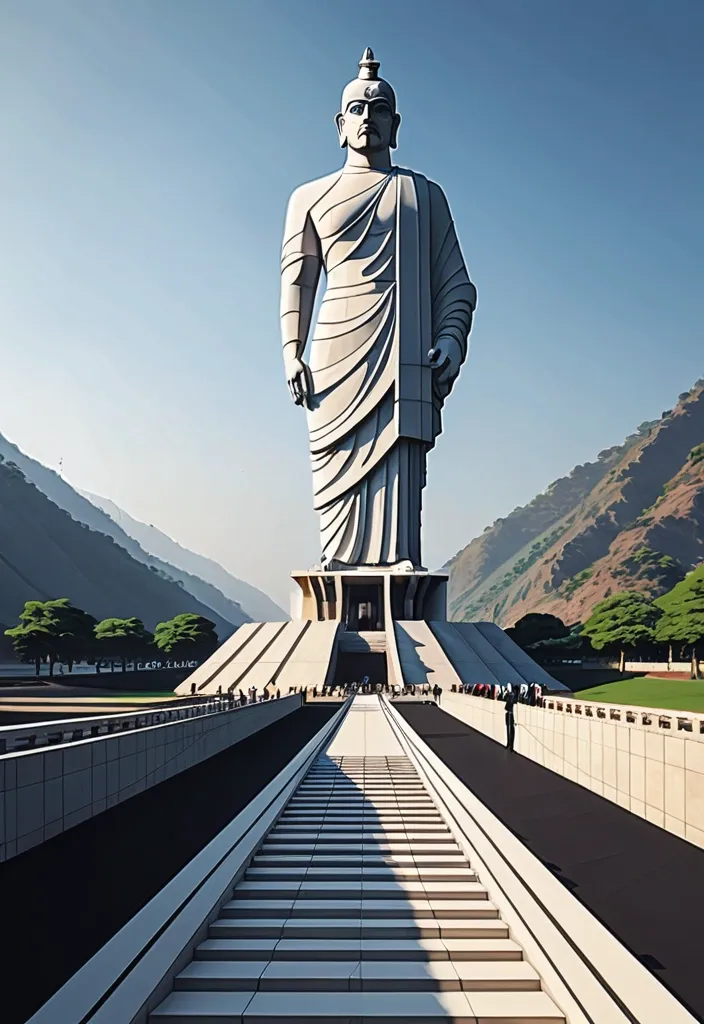

Create a striking graphic travel painting of Statue of Unity (the world's tallest statue , with a height of 182 metres (597 feet) , ) in Narmada valley , near Kevadia in the state of Gujarat , India , in a vertical 4:5 composition. Capture the location from a dramatic , steep overhead perspective , emphasizing its authentic architectural details , paving patterns , stairways , crossings , pathways , or natural surroundings. Eliminate the horizon and sky , allowing the ground-level geometry to dominate the composition. Populate the scene with numerous small contemporary figures moving naturally through the space. Give each person varied poses , walking directions , and subtle interactions , maintaining realistic proportions , consistent scale , and believable spatial relationships. Build the artwork around bold geometric compositions , strong contrasts between light and dark surfaces , carefully balanced shadows , and restrained yet vivid clothing accents. Use expressive painterly textures , subtle grain , simplified details , and confident cropping to create the feel of a sophisticated illustrated travel poster. Add "Statue of Unity" in small , uppercase , modern sans-serif typography at the upper-left corner , integrated subtly into the composition. Maintain a refined balance between architectural geometry , human movement , and artistic expression. The final result should feel visually rich , contemporary , atmospheric , and unmistakably connected to the real character of the destination. Restrictions: No additional text , captions , logos , borders , signatures , or watermarks. ,
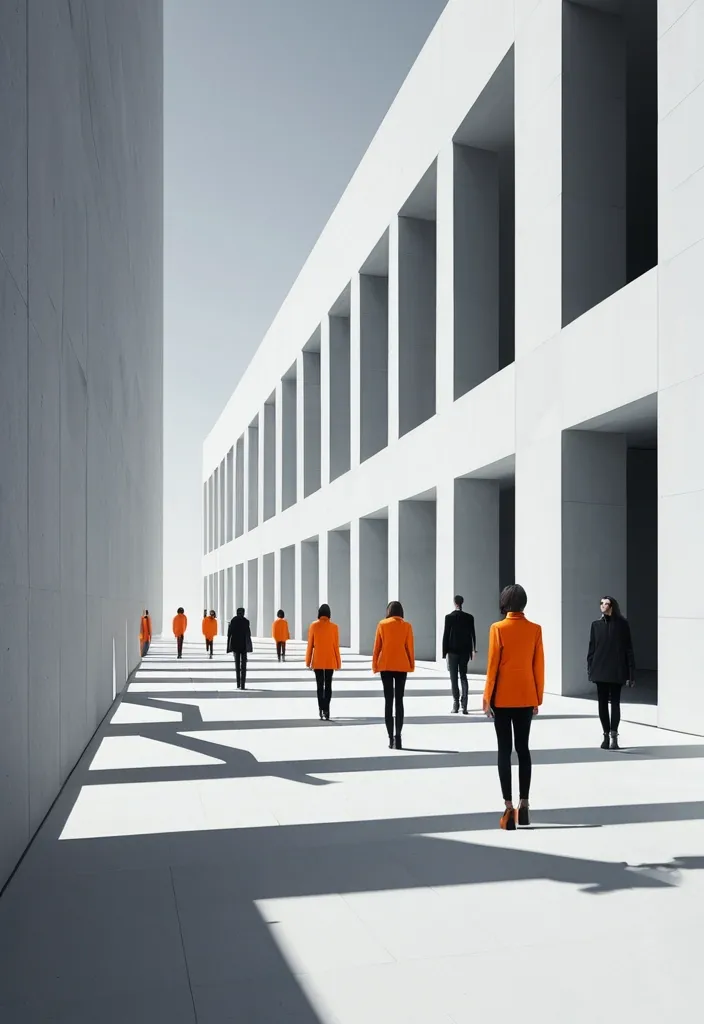
BRAND NAME: AKOTA SERIES: Max0.5 MAIN TITLE: Mastram DEPTH SYSTEM: layered slabs PRIMARY COLOR: Orange ACCENT COLOR: Gray ASPECT RATIO: 9:16 Create a high-end multi-person editorial campaign poster where depth and perspective become the main design system. Build the scene around one strong spatial structure , such as nested architectural frames , lines converging toward a vanishing point , irregular stacked platforms , or large horizontal layers. The architecture should immediately create a clear foreground , middle ground , and background. Place multiple adult figures at different distances and heights within the same coherent perspective field. Their scale must change naturally with depth. Use one or two strong foreground figures , several smaller midground figures , and a few distant figures. Avoid evenly spaced people , grids , lineups , or team-photo compositions. Make people and architecture physically overlap. Some figures should pass through frames , disappear behind walls , be partially hidden by platforms , appear between layers , or emerge from deeper spaces. The result should feel like one real photographed environment , not separate people pasted onto a layout. Integrate the main title into the architecture whenever possible. Let typography follow the perspective of a frame , wall , platform , or structural edge. It may change scale , become partially occluded , or stretch across several depth planes , but it should remain readable. Keep the environment minimal and sculptural. Use large geometric forms , controlled negative space , one dominant color system , realistic directional daylight , and consistent architectural shadows. The spatial idea should still read clearly at thumbnail size. Use realistic fashion photography for the cast: natural skin texture , believable anatomy , real hair , accurate hands and feet , natural fabric folds , varied poses , and subtle movement. Avoid duplicated figures , plastic skin , floating bodies , or overly staged model poses. Supporting typography should stay minimal and secondary. The final image should feel like a real contemporary fashion , cultural , or brand campaign where people , architecture , type , and perspective are all part of the same composition. ,