Search Results for inclusive
Explore AI generated designs, images, art and prompts by top community artists and designers.
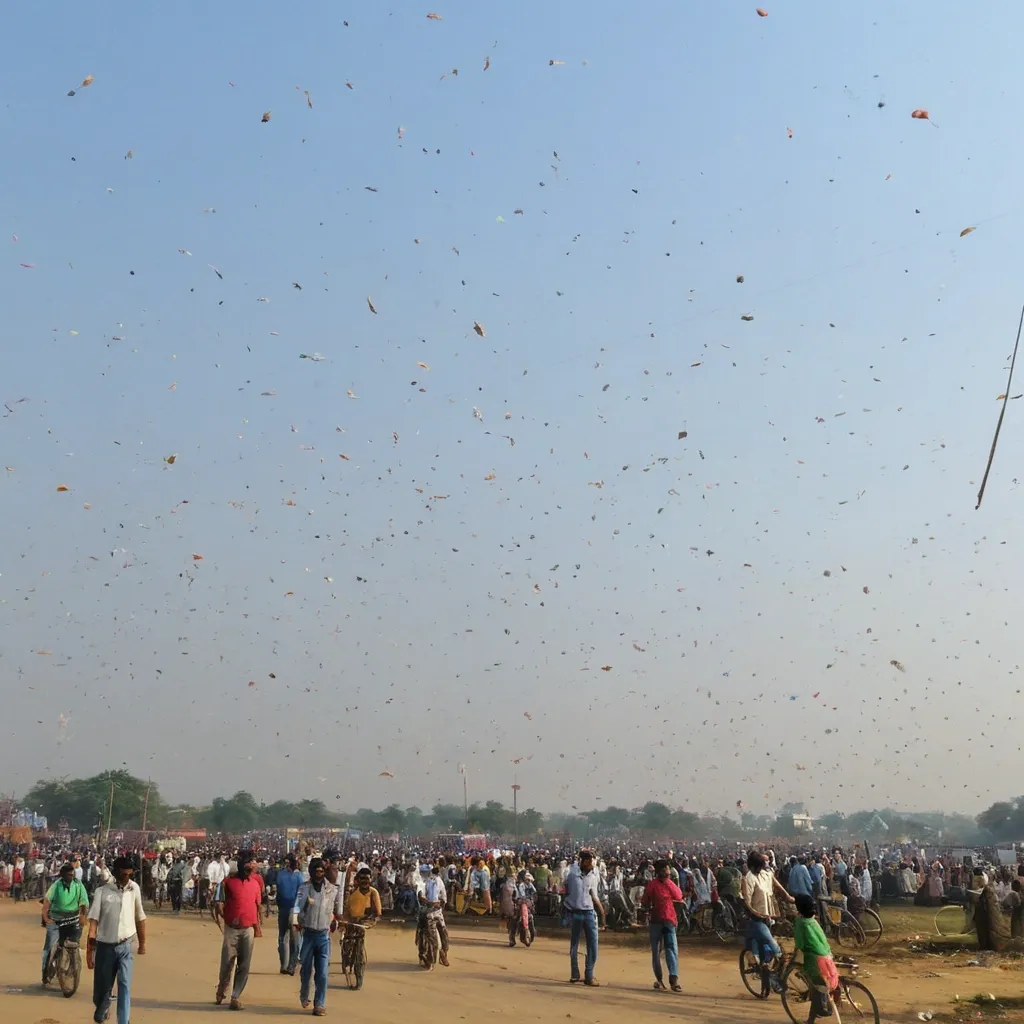

For the cover of the **Indian festival for the "Happy Uttarayan" cycle** , it is important to visually convey the values of **Festival Uttarayan** , **Flying kites** , and **people enjoying**. The visual proposal should be modern , welcoming , and symbolic , reflecting the essence of the content that will be explored in the manual. Below is a detailed description of the cover: ### **Visual Composition:** 1. **Central Image:** * A **stylized woman with wings** emerging from an abstract composition of shapes and colors. The wings can be represented in a **fluid and elegant** way , symbolizing growth and the freedom gained through knowledge. * **Diversity of Kites**: The central figure should be representative of **diverse ethnicities** , with the woman's face and body presented in an inclusive manner. The idea is to communicate that all women , regardless of their origin or background , are part of this transformation movement. * **Cultural Elements**: Cultural details can be incorporated into the wings or the background , such as **line art style kites** (Indian style kites) and other symbols that refer to the ancestry and cultural richness of women. 2. **Typography:** * **Main Title (Women with kites)**: Use a **modern and imposing typography** , such as **Montserrat** or **Bebas Neue** , in **bold** , with a large size (minimum 32px) and adjusted letter spacing. The font should be simple but powerful , to reflect the strength of the concept. * **Subtitle**: "Gender Literacy as an Instrument of Equality and Transformation". Use a lighter typography , such as **Roboto** or **Lora** , with a size of 16px-18px to ensure good readability. The font can be more fluid and rounded to balance with the stronger title. * **Typography Color**: Use **deep purple (#4A148C)** or **vibrant orange (#FF5722)** for the title , creating contrast with the background and giving it prominence. The subtitle can be in **white** or **yellow (#FFEB3B)** , creating harmony and visibility. 3. **Color Palette:** * **Background**: The background can have a mix of warm and vibrant tones , such as **orange** , **purple** , and **yellow**. The use of these colors should symbolize energy , transformation , and the celebration of femininity. A **soft gradient** or a texture that evokes gujarati cultural and artistic elements can be used. * **Details and Graphic Elements**: Use graphic elements such as **thin lines** or **geometric shapes** to frame the cover , such as circles or flowers , giving a modern and dynamic touch to the composition. * **Color Contrasts**: To ensure the title stands out , the cover background can be a **dark or neutral** tone , while the title and subtitle stand out in **vibrant** colors. 4. **Additional Elements:** * **Symbolic Iconography**: Small icons , such as **kites** , **bugal** , **hat** , **lineart style kites** , can be subtly distributed throughout the cover to add cultural and symbolic elements without cluttering the main image. * **Text Positioning**: The title can occupy the upper central part , with the subtitle immediately below , to create a clear reading hierarchy. 5. **Environment and Graphic Style:** * The cover should be **minimalist** , with enough space between the elements to ensure readability and an uncluttered look. * The **artistic details** and **fluid shapes** should symbolize the concept of **freedom** , **transformation** , and **growth**. The use of **organic elements** (such as flowers or leaves) can bring softness to the composition , balancing the strength of the concept with a welcoming tone. ### **Visual Message:** * The cover needs to convey the idea of **emancipation** and **movement** , representing women who seek **personal and collective growth** in the educational and social fields. * The use of vibrant colors and symbolic images such as kites allude to **female power** , **struggle** , and **social transformation** , which are essential to the content of the workshop series. This cover design not only aligns with the themes of the *Happy Uttarayan* (Women with kites) series , but also promotes an aesthetic that captivates the target audience and reinforces the importance of **Kites festival** in the context of Professional and Technological Education. ,

*An ultra-minimalist , high-end logo for a Pilates and holistic wellness studio. The design consists solely of a single , symbolic icon—no text—centered on a pristine white background. The icon is a gracefully stylized human silhouette in a poised Pilates posture (e.g. , single-leg balance or controlled extension) , rendered with feather-light , fluid lines that evoke breath , flow , and mindful movement. Key detail: the foot is clearly elevated or delicately detached from the ground—creating intentional negative space between the sole and an implied floor—emphasizing lightness , recovery , and dynamic balance. The entire silhouette uses clean , ultra-thin line work (0.25–0.5 pt equivalent) , with subtle curvature and tapered ends , avoiding any heaviness or visual clutter. Color palette: a sophisticated harmony of muted moss green (#6B8E6B or similar) , warm ivory beige (#F5F0E6) , and soft graphite grey (#4A4A4A) , applied with high contrast but gentle tonal transitions. Use color sparingly—ideally one or two tones max—to maintain elegance and scalability. The overall aesthetic merges architectural precision with organic softness: think Japanese minimalism meets Scandinavian wellness design. It must feel serene , inclusive , and quietly powerful—conveying feminine energy without excluding any gender. Optimized for die-cut production , luxury merchandise (tote bags , ceramic mugs , apparel embroidery) , and large-format signage. Every curve must be vector-ready , with no fills—only delicate contours that breathe negative space.* ,
Fairness means ensuring your analysis doesn't create or reinforce bias. This can be challenging , but if the analysis is not objective , the conclusions can be misleading and even harmful. In this reading , you’re going to explore some best practices you can use to guide your work toward a more fair analysis! Consider fairness Following are some strategies that support fair analysis: Best practice Explanation Example Consider all of the available data Part of your job as a data analyst is to determine what data is going to be useful for your analysis. Often there will be data that isn’t relevant to what you’re focusing on or doesn’t seem to align with your expectations. But you can’t just ignore it; it’s critical to consider all of the available data so that your analysis reflects the truth and not just your own expectations. A state’s Department of Transportation is interested in measuring traffic patterns on holidays. At first , they only include metrics related to traffic volumes and the fact that the days are holidays. But the data team realizes they failed to consider how weather on these holidays might also affect traffic volumes. Considering this additional data helps them gain more complete insights. Identify surrounding factors As you’ll learn throughout these courses , context is key for you and your stakeholders to understand the final conclusions of any analysis. Similar to considering all of the data , you also must understand surrounding factors that could influence the insights you’re gaining. A human resources department wants to better plan for employee vacation time in order to anticipate staffing needs. HR uses a list of national bank holidays as a key part of the data-gathering process. But they fail to consider important holidays that aren’t on the bank calendar , which introduces bias against employees who celebrate them. It also gives HR less useful results because bank holidays may not necessarily apply to their actual employee population. Include self-reported data Self-reporting is a data collection technique where participants provide information about themselves. Self-reported data can be a great way to introduce fairness in your data collection process. People bring conscious and unconscious bias to their observations about the world , including about other people. Using self-reporting methods to collect data can help avoid these observer biases. Additionally , separating self-reported data from other data you collect provides important context to your conclusions! A data analyst is working on a project for a brick-and-mortar retailer. Their goal is to learn more about their customer base. This data analyst knows they need to consider fairness when they collect data; they decide to create a survey so that customers can self-report information about themselves. By doing that , they avoid bias that might be introduced with other demographic data collection methods. For example , if they had sales associates report their observations about customers , they might introduce any unconscious bias the employees had to the data. Use oversampling effectively When collecting data about a population , it’s important to be aware of the actual makeup of that population. Sometimes , oversampling can help you represent groups in that population that otherwise wouldn’t be represented fairly. Oversampling is the process of increasing the sample size of nondominant groups in a population. This can help you better represent them and address imbalanced datasets. A fitness company is releasing new digital content for users of their equipment. They are interested in designing content that appeals to different users , knowing that different people may interact with their equipment in different ways. For example , part of their user-base is age 70 or older. In order to represent these users , they oversample them in their data. That way , decisions they make about their fitness content will be more inclusive. Think about fairness from beginning to end To ensure that your analysis and final conclusions are fair , be sure to consider fairness from the earliest stages of a project to when you act on the data insights. This means that data collection , cleaning , processing , and analysis are all performed with fairness in mind. A data team kicks off a project by including fairness measures in their data-collection process. These measures include oversampling their population and using self-reported data. However , they fail to inform stakeholders about these measures during the presentation. As a result , stakeholders leave with skewed understandings of the data. Learning from this experience , they add key information about fairness considerations to future stakeholder presentations. ,
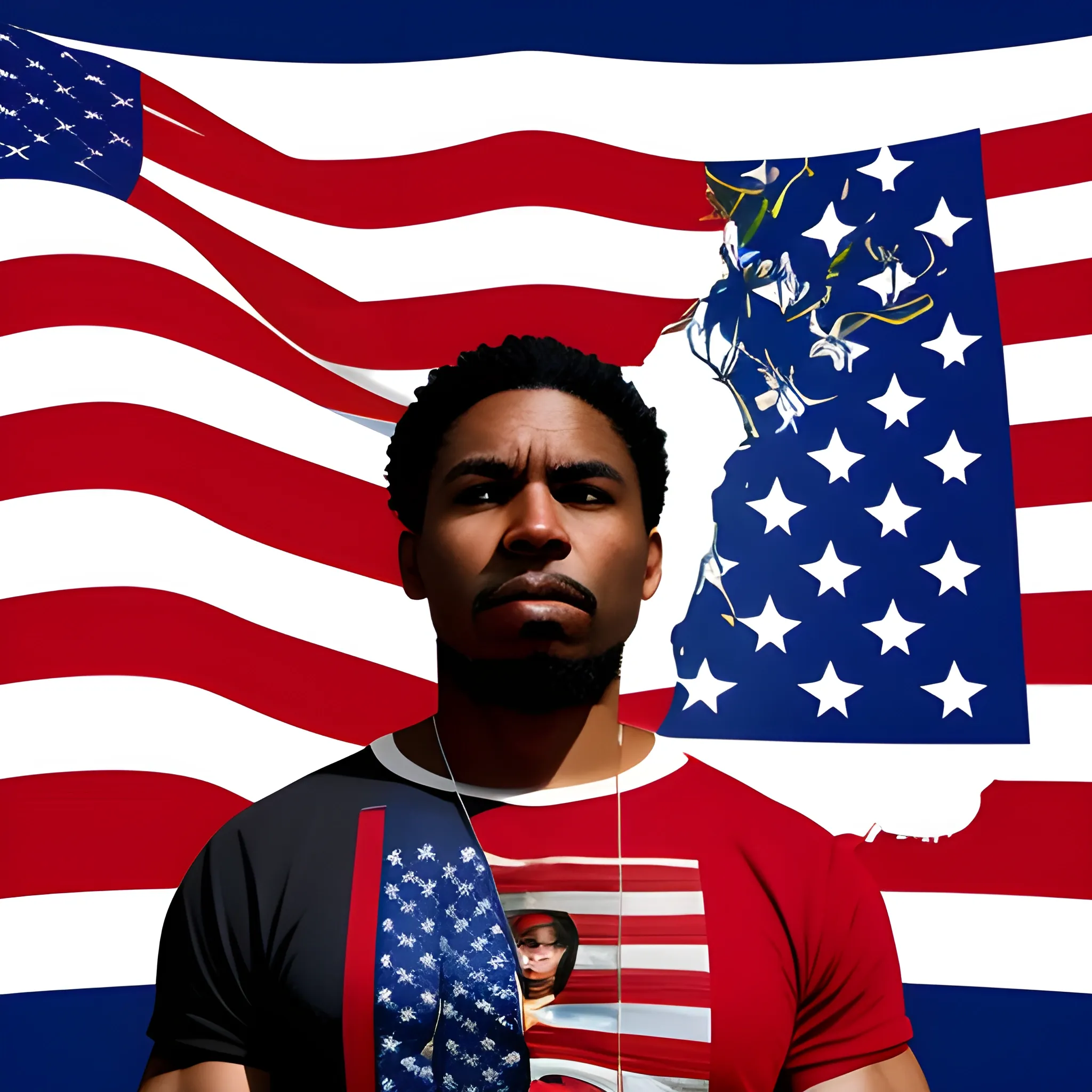
an impactful image for a t-shirt design that features three men , representing the Native American , Black American , and White American communities , standing in front of the United States flag. In the foreground , a Native American man stands tall , adorned in traditional attire that reflects his cultural heritage. He emanates pride and wisdom , showcasing the resilience and deep connection to the land. Beside him , a Black American man exudes strength and determination. He stands with confidence , representing the struggles and triumphs of the African American community , symbolizing progress and resilience. Completing the trio , a White American man stands shoulder to shoulder with his counterparts , embodying unity and collaboration. He represents the diversity within the country and the shared responsibility of all Americans in shaping a better future. The United States flag serves as the backdrop , with its vibrant red , white , and blue colors waving proudly. The stars and stripes symbolize the nation's unity , freedom , and opportunity , reminding us of the collective journey we undertake as a diverse and inclusive society. This design aims to inspire dialogue , understanding , and mutual respect among people from all backgrounds. It celebrates the cultural mosaic that defines America , promoting a sense of unity and shared purpose. ,

crie um catalogo de Produtos de Automação Residencial que Posso Oferecer 1. **Sistemas de Iluminação Inteligente:** Esses sistemas permitem o controle remoto das luzes da casa , podendo programar a intensidade e o horário que elas devem acender ou apagar. 2. **Sistemas de Segurança Automatizados:** Com câmeras e alarmes inteligentes , esses sistemas melhoram a segurança da residência , permitindo monitoramento em tempo real e notificações de atividades suspeitas. 3. **Termostatos Inteligentes:** Esses dispositivos ajustam automaticamente a temperatura da casa com base nas preferências do usuário e na temperatura externa , economizando energia. 4. **Sistemas de Irrigação Automatizada:** Esses sistemas ajudam a manter o jardim saudável , programando a irrigação de acordo com as necessidades específicas das plantas. 5. **Sistemas de Entretenimento Doméstico Inteligente:** Com esses sistemas , é possível programar e controlar dispositivos de entretenimento , como televisões e sistemas de som , à distância. 6. **Assistente de Voz Inteligente:** Este dispositivo permite que os usuários controlem vários aspectos da casa usando apenas comandos de voz. 7. **Fechaduras e Sistemas de Segurança de Porta Inteligentes:** Esses sistemas permitem o controle de acesso à residência , podendo inclusive ser controlados à distância. 8. **Eletrodomésticos Inteligentes:** Eletrodomésticos conectados à internet que facilitam o dia a dia , permitindo o controle à distância e oferecendo funcionalidades extras , como o monitoramento do conteúdo da geladeira. , Cartoon ,
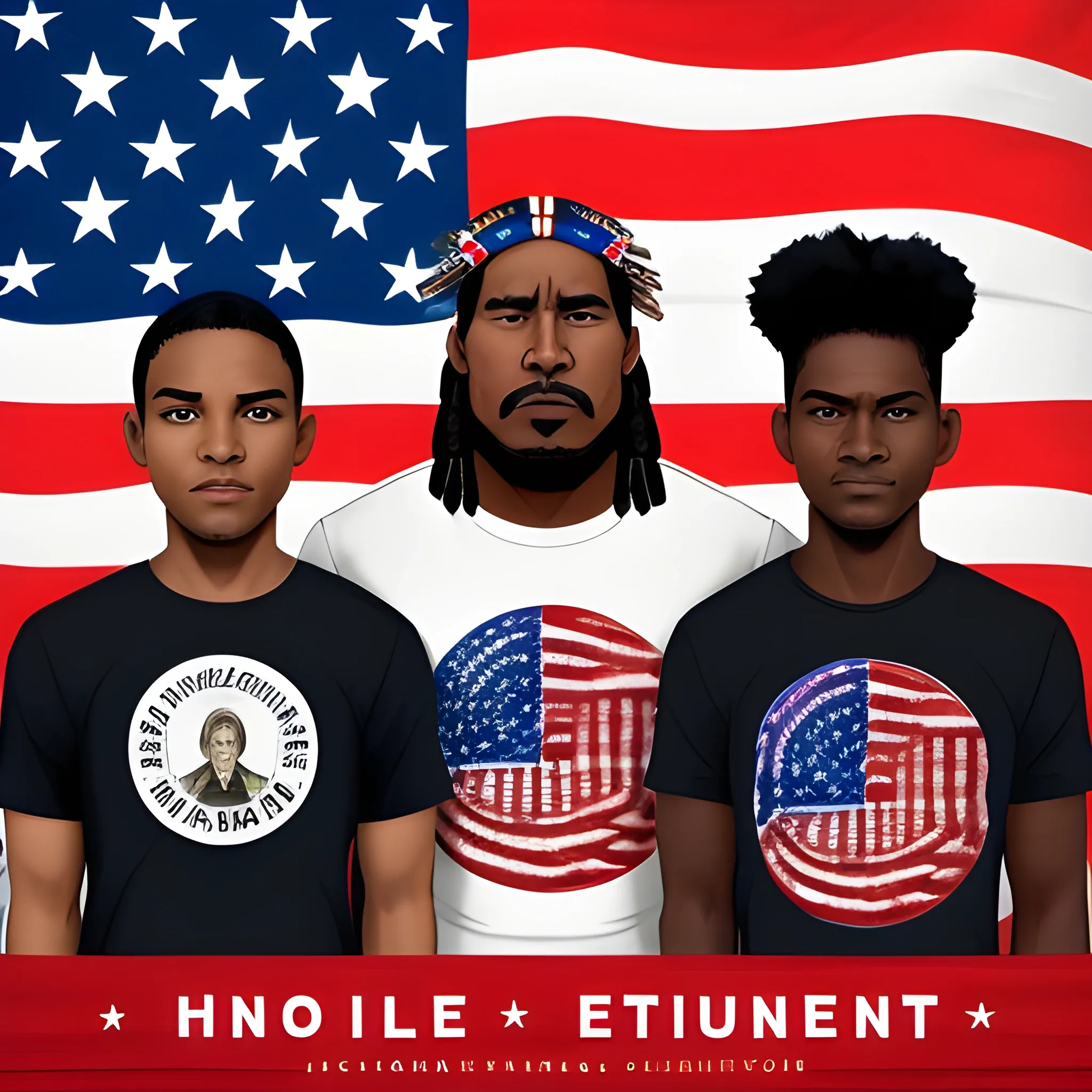
an impactful image for a t-shirt design that features three men , representing the Native American , Black American , and White American communities , standing in front of the United States flag. In the foreground , a Native American man stands tall , adorned in traditional attire that reflects his cultural heritage. He emanates pride and wisdom , showcasing the resilience and deep connection to the land. Beside him , a Black American man exudes strength and determination. He stands with confidence , representing the struggles and triumphs of the African American community , symbolizing progress and resilience. Completing the trio , a White American man stands shoulder to shoulder with his counterparts , embodying unity and collaboration. He represents the diversity within the country and the shared responsibility of all Americans in shaping a better future. The United States flag serves as the backdrop , with its vibrant red , white , and blue colors waving proudly. The stars and stripes symbolize the nation's unity , freedom , and opportunity , reminding us of the collective journey we undertake as a diverse and inclusive society. This design aims to inspire dialogue , understanding , and mutual respect among people from all backgrounds. It celebrates the cultural mosaic that defines America , promoting a sense of unity and shared purpose. ,