Search Results for negative space
Explore AI generated designs, images, art and prompts by top community artists and designers.
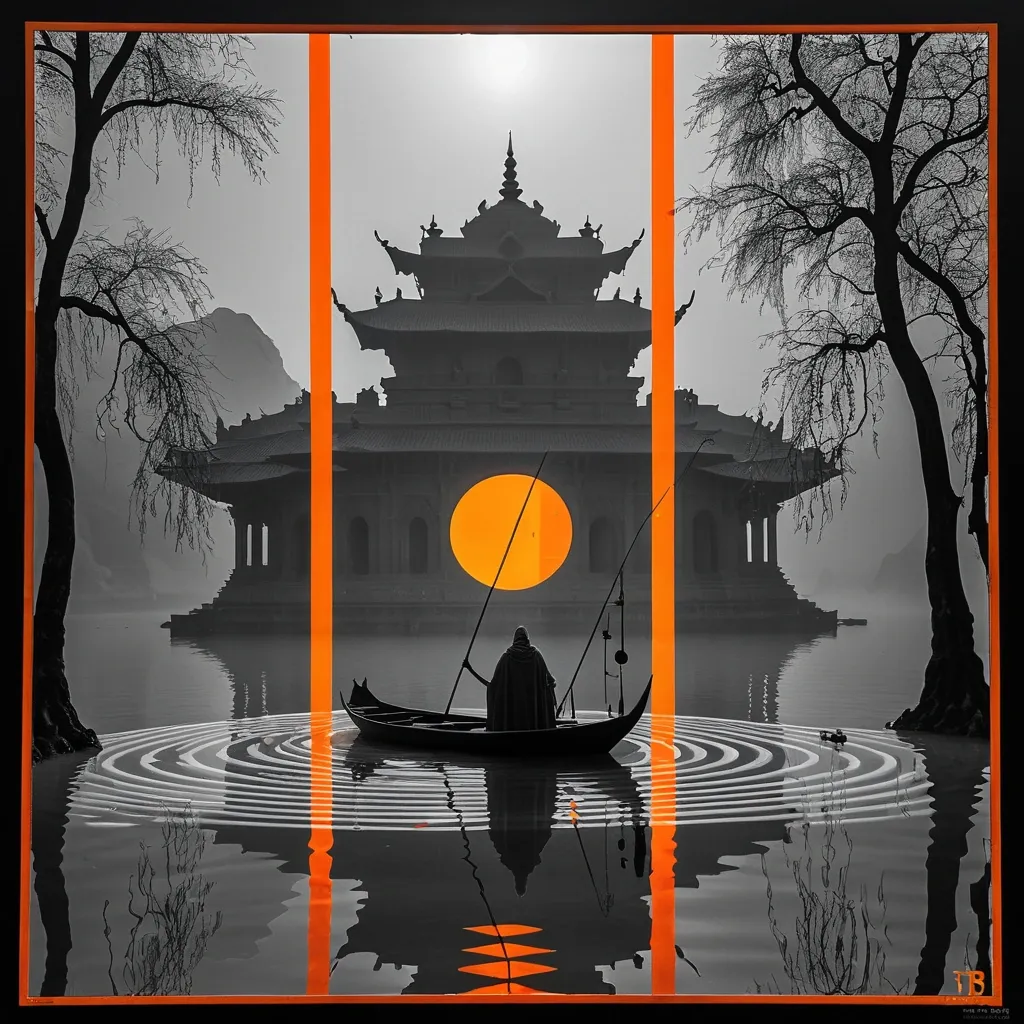

Premium editorial campaign poster ar 5:4. Real photograph of a grey surreal landscape where a robed figure sits in a narrow boat casting a fishing rod toward a row of fish suspended mid-air , one orange door , on vertical lines near a bare tree , a near-black form against cool off-black negative space , deep shadows that still show the material. One saturated ember-orange element only , and it must be physical: ORANGE DETAIL — a translucent membrane lit opening. Beside the boat looms a giant snail shell housing a roman numeral clock face. Stretch one part of the subject into broad , soft horizontal optical afterimages: A saffron flag wavering with symbol "ॐ" at the top of Hindu temple. The focal edge stays crisp. No generic speed waves. Compose for the ratio: let the silhouette cut a pale orange sun glows through layered mist above a mirror-still water surface in Background , crop boldly , keep it sparse. Exactly two text elements: headline "SOMNATH" and a small line ""Har Har Mahadev". Compact , extended geometric sans , all caps in orange , quiet in size , never distorted; white on shadow or dark on white. Bright diffuse sunlight , slight underexposure , very fine grain. Palette: hot orange , near-black , charcoal , ember orange. No logos , HUD , neon grids , particles , gradients , extra text or frames. ,
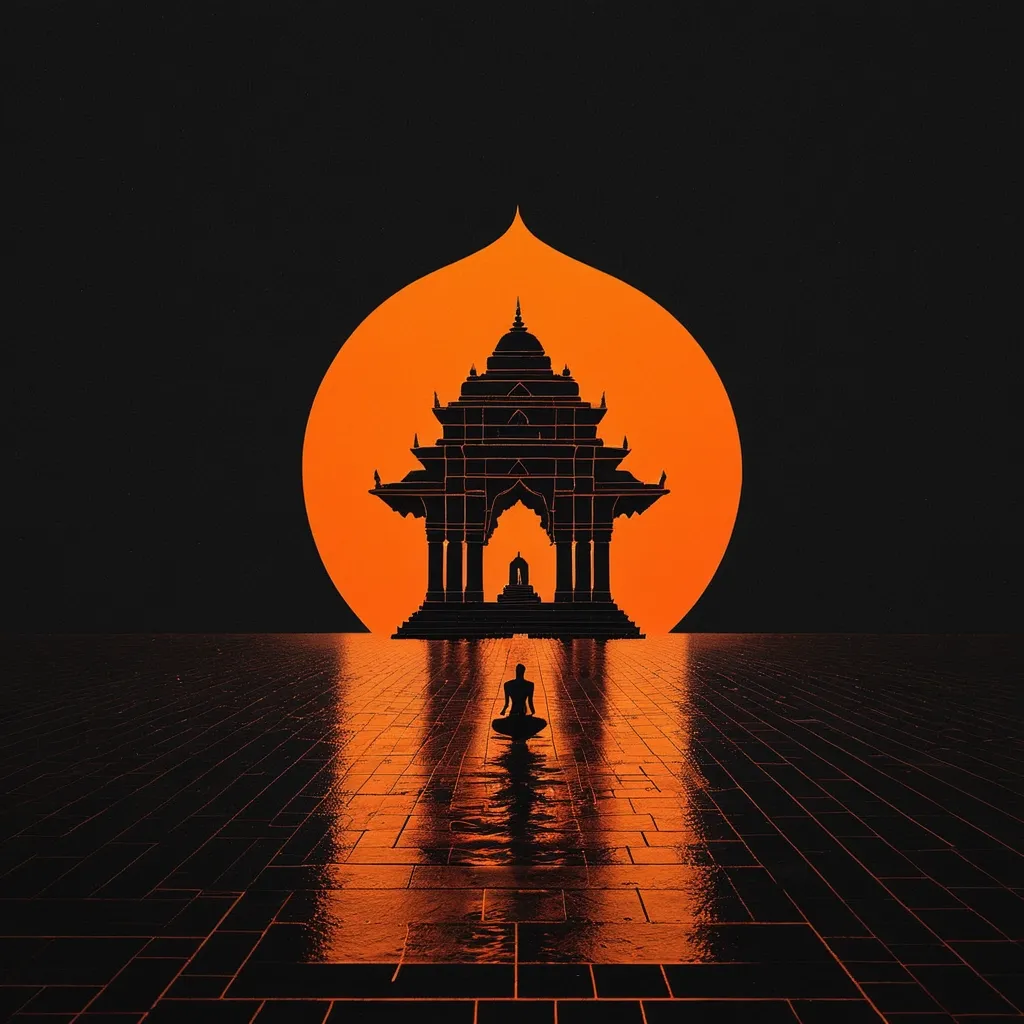
Premium editorial campaign poster , ar 5:4. Real photograph of a Manifestation of Somnath Temple as a monolith , one orange door , one tiny figure , a near-black form against cool off-black negative space , deep shadows that still show the material. One saturated ember-orange element only , and it must be physical: ORANGE DETAIL — a translucent membrane , edge , seam or lit opening. Everything else stays near-Somnath Temple. Stretch one part of the subject into broad , soft horizontal optical afterimages: A saffron flag wavering with symbol "ॐ" at the top of Hindu temple. The focal edge stays crisp. No generic speed waves. Compose for the ratio: let the silhouette cut a sunset at the edge of ocean in Background , crop boldly , keep it sparse. Exactly two text elements: headline "SOMNATH" and a small line ""Har Har Mahadev". Compact , extended geometric sans , all caps in orange , quiet in size , never distorted; white on shadow or dark on white. Bright diffuse sunlight , slight underexposure , very fine grain. Palette: hot orange , near-black , charcoal , ember orange. No logos , HUD , neon grids , particles , gradients , extra text or frames. ,
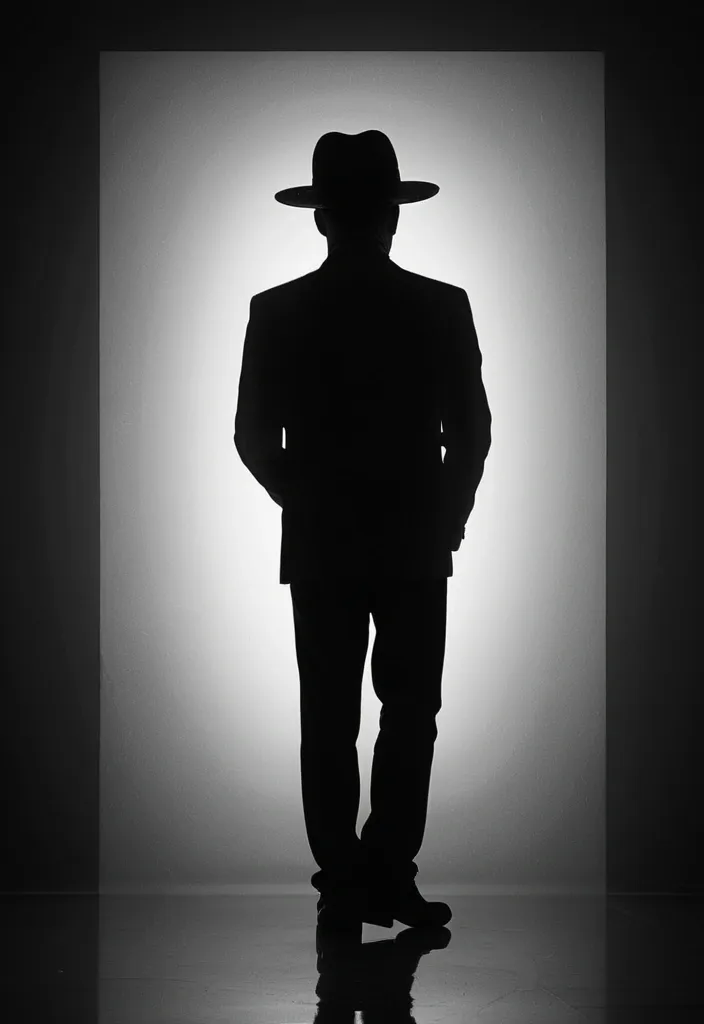
Generate a portrait image of A black and white photograph shows the blurred silhouette of a mature man(from upload) behind a frosted or translucent surface , wearing a big hat to the right , in the style of clever use of negative space. The back is sharply defined and pressed against the surface , creating a stark contrast with the rest of the hazy , indistinct figure. The background is a captured in a Neon Noir Blade-Edge Elegance , where sharp dot and angular neon lights striping out dramatic forms mute tones , enhancing the mysterious and artistic atmosphere. Make it symmetrical. ar 9:16. ,
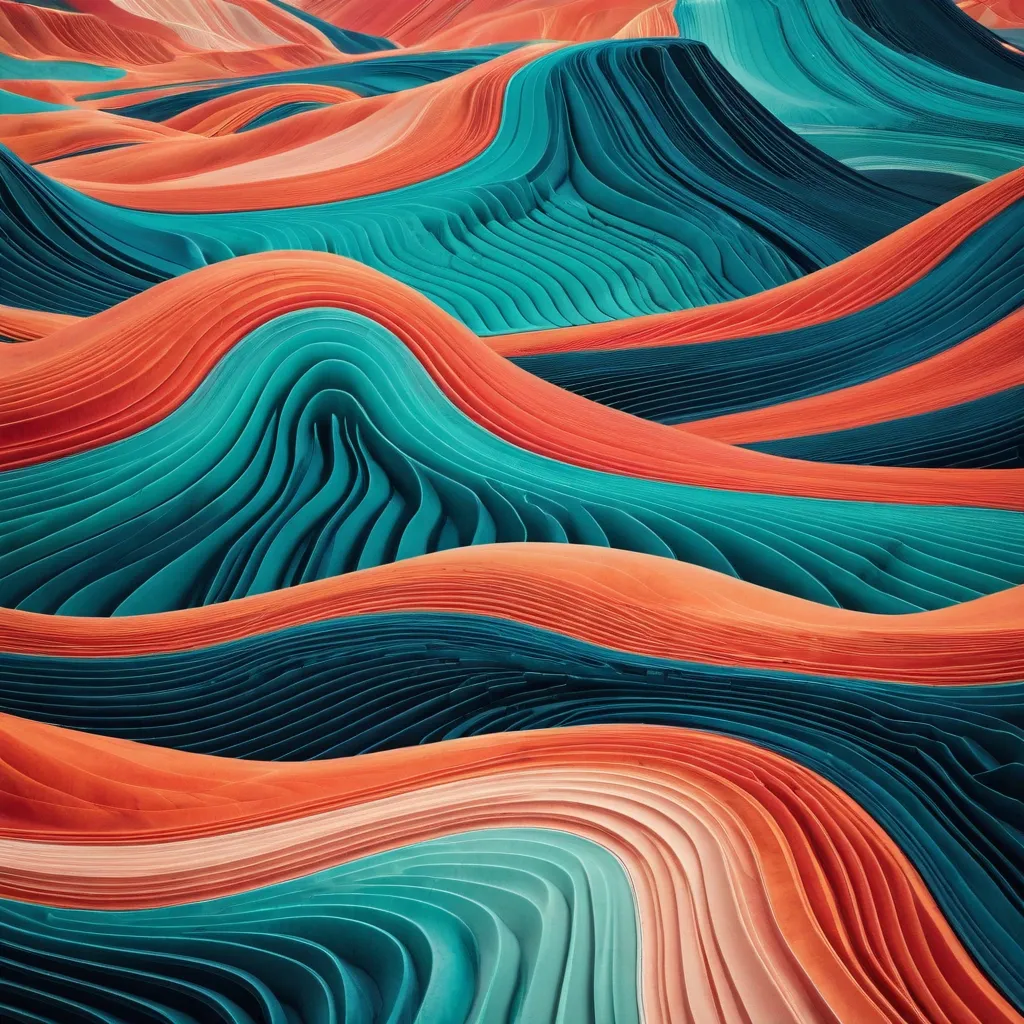
MINERAL CURRENT: Colorful mineral flows. Create a premium art poster that transforms an imaginary landscape into a vibrant , abstract world of continuous topographic contour lines , combining Eastern landscape aesthetics with modern editorial design. Construct the terrain from hundreds of long , smooth , elegant flowing lines that naturally follow its shape , elevation , and movement. The contour lines should become the actual structure of the landscape , forming soft hills , sweeping folds , flowing rifts , or interconnected mineral formations rather than simply decorating a realistic surface. Use large , recognizable landforms with strong silhouettes , layered depth , and clear visual hierarchy. Vary line density naturally , with tighter contours around curves and folds and wider spacing across calmer surfaces. Keep every line flowing in harmony with the overall composition. Apply a bold but controlled palette with strong warm and cool contrast. Combine colors such as deep indigo , cobalt blue , turquoise , coral pink , vermilion , peach orange , emerald green , and warm cream according to the chosen palette. Let colors transition smoothly along the contour lines , creating substantial color fields and harmonious gradients without random rainbow effects. Keep the landscape monumental , abstract , and highly graphic. If a scale element is specified , make it extremely small , occupying less than 1% of the image. Balance intricate linework with generous negative space to maintain strong thumbnail readability. Reserve a calm upper area for refined editorial typography. Include the main title , Chinese subtitle , and poetic tagline using elegant serif lettering , generous spacing , and a contemporary exhibition-poster aesthetic. The final artwork should feel colorful , poetic , sophisticated , and strongly line-driven , with visual impact created through continuous contours , bold color relationships , flowing terrain forms , and clean graphic composition. Avoid realistic landscape photography , rocky textures , chaotic patterns , broken strokes , excessive detail , cinematic CGI , plastic 3D surfaces , watermarks , logos , copyright text , and unnecessary decorative elements. ,
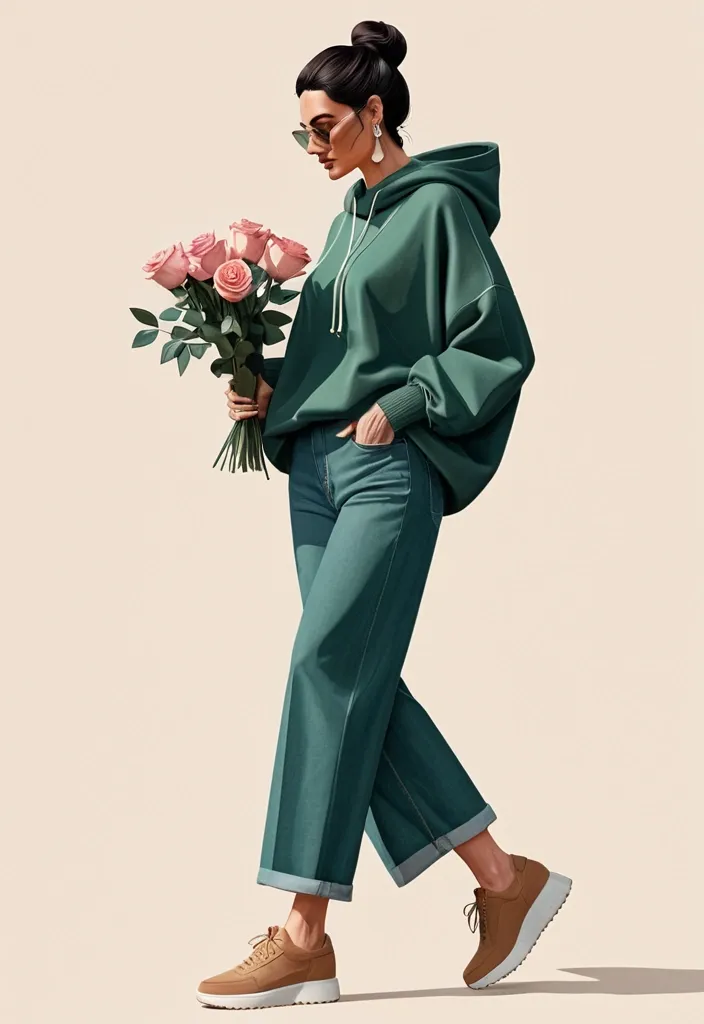
Create a stylish , full-body editorial fashion illustration of a young woman in a modern casual outfit , using a minimalist , textured geometric art style. She wears an oversized forest-green hoodie , wide-leg blue denim jeans with folded cuffs , and chunky brown sneakers. Her dark hair is tied in a neat low bun. She carries a bouquet of vibrant pink roses wrapped in white paper , a takeaway coffee cup , and a black shoulder bag. Show her walking naturally in a relaxed pose , viewed from a three-quarter rear angle , with soft , elegant body proportions and simplified facial details. Use a warm ivory background with plenty of negative space , soft ground shadows , subtle paper grain , visible brush textures , and angular polygonal shading across the clothing and shoes. The color palette features deep forest green , denim blue , warm brown , cream , and vivid pink. Soft diffused lighting , clean composition , contemporary lifestyle magazine aesthetic , hand-painted digital illustration , refined edges , artistic fabric textures , vertical 3:4 composition , high detail. No photorealism , no 3D rendering , no extra objects , no text or watermark. ar 9:16. ,
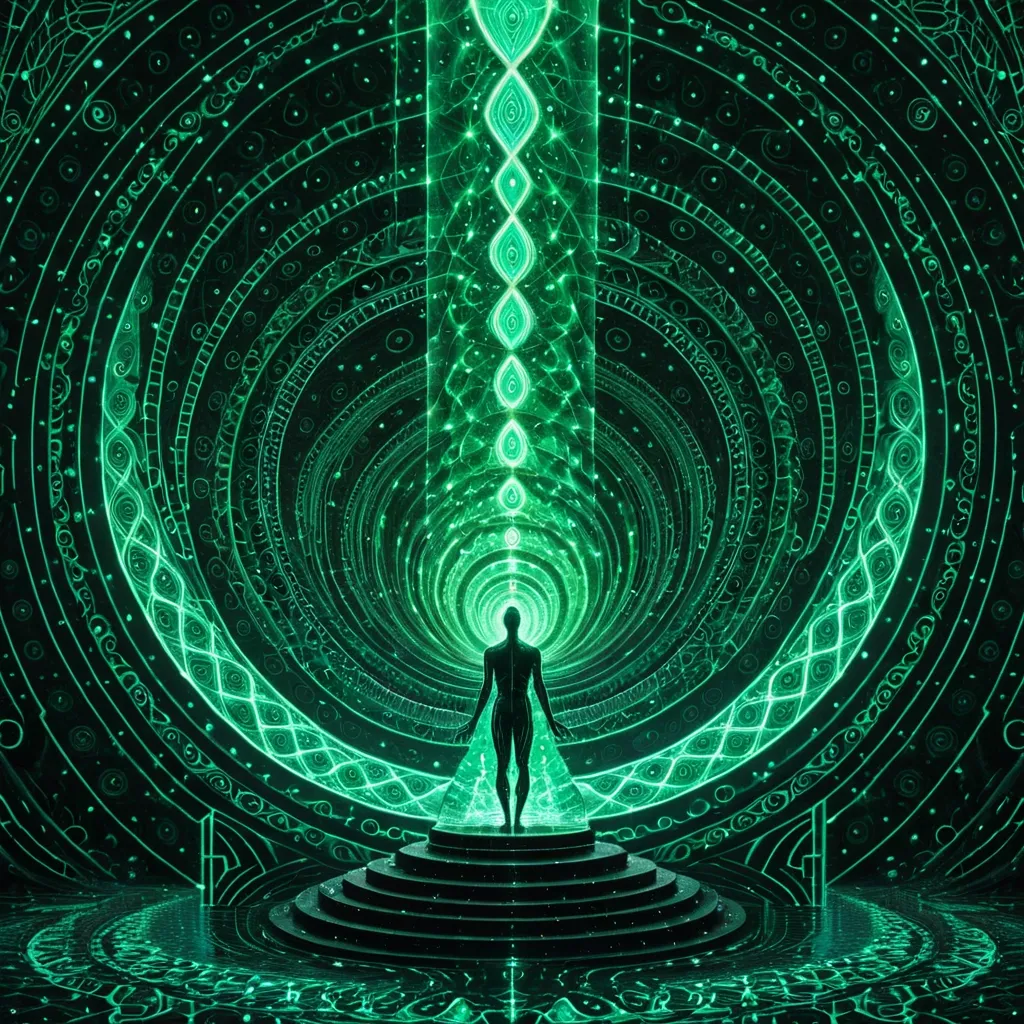
A meditating figure levitating horizontal vortex at the threshold of a Sacred Geometry Fractal Portal , but reconstruct its drops and structure from thousands of elongated dots and scales with varied lengths , depths , and scales. here ancient , mystical patterns of emerald and neon unlock hidden panoramic and secret knowledge. with denser and shorter dots near the visual core and longer waves extending toward the camera to create dramatic Z-axis depth , perspective , and a sense of motion. Use a controlled color system built around the chosen mystical patterns. Keep the main subject vivid and coherent , while deep shadows and dark gaps between the drops create strong negative space and dimensional contrast. Add only a small amount of accent color when needed. ar 1:1. ,
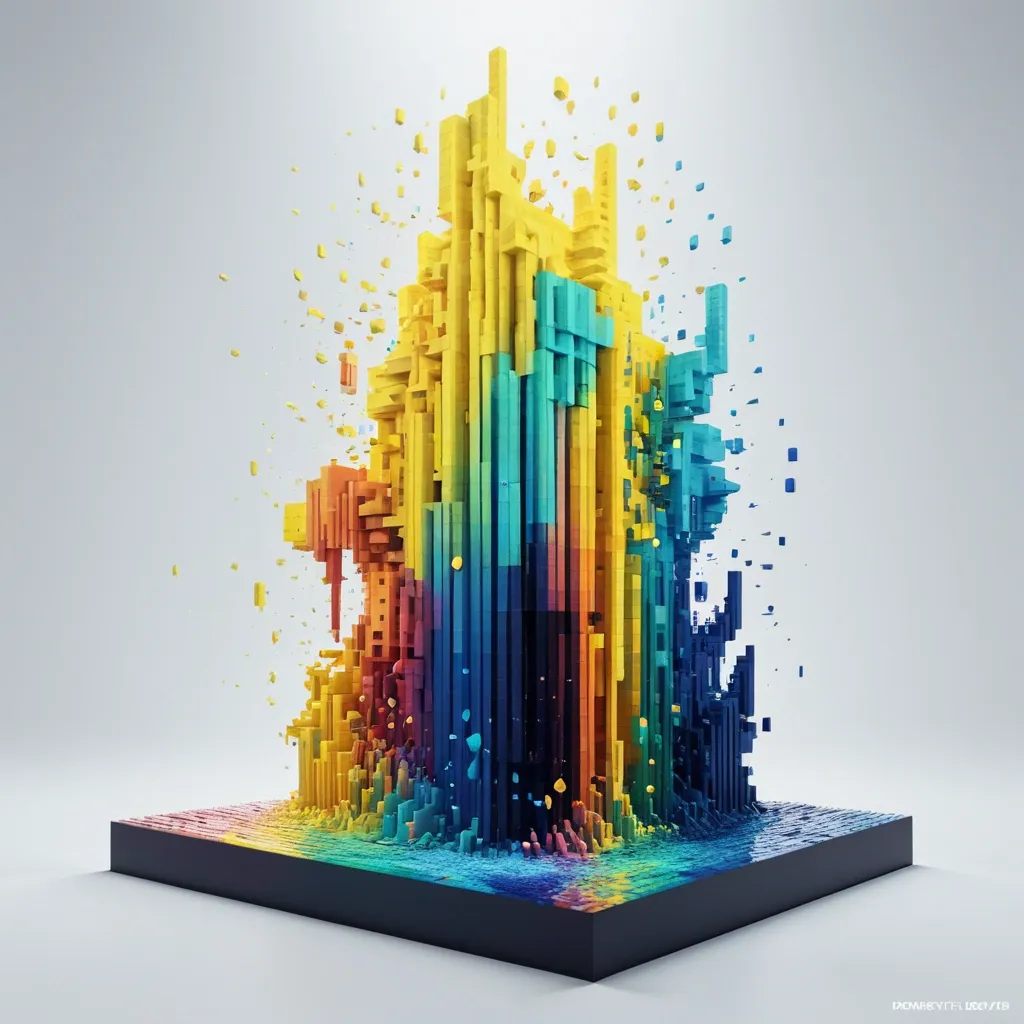
Palette: light yellow + waves blue + radial Motion: spiral bloom Create a 9:16 experimental 3D voxel poster featuring a dancer , in flowing artifacts , rotating liquid paints drops beneath the figure in a whimsical watercolor composition. Let the blocks follow the natural growth direction of the petals instead of becoming random pixels. Build a strong spatial motion based on the selected direction , with denser and shorter blocks near the visual core and longer blocks extending toward the camera to create dramatic Z-axis depth , perspective , and a sense of motion. Use a controlled color system built around the chosen palette. Keep the main subject vivid and coherent , while deep shadows and dark gaps between the drops create strong negative space and dimensional contrast. Add only a small amount of accent color when needed. The final image should feel like a premium contemporary art poster: bold silhouette , strong thumbnail impact , rich spatial depth , refined lighting , and a clear balance between dense 3D geometry and minimal typography. Avoid Minecraft aesthetics , flat pixel art , random cubes , identical extrusion lengths , rainbow colors , excessive text , heavy neon , thick 3D lettering , meaningless placeholder copy , logos , numbering , watermarks , and cheap CGI materials. ,
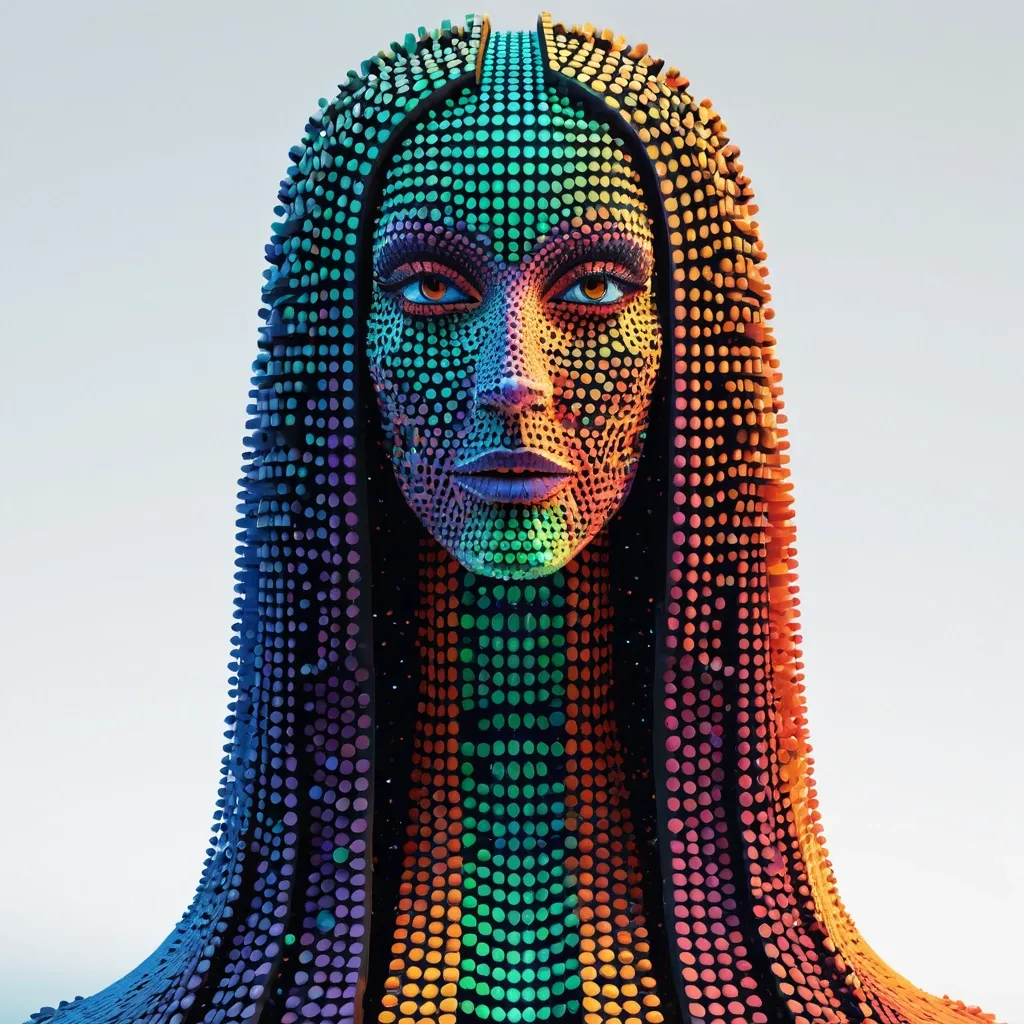
Create a experimental 3D image featuring a female , wears a towering headdress of frog's eyes , Her long , wavy brown hair flows beneath the dress. in flowing and rotating dots beneath the figure , but reconstruct its drops and structure from thousands of elongated dots and scales with varied lengths , depths , and scales. Let the dots follow the natural growth direction of the dots instead of becoming random drops. Build a strong spatial motion based on the selected direction in canopy shape , with denser and shorter dots near the visual core and longer waves extending toward the camera to create dramatic Z-axis depth , perspective , and a sense of motion. Use a controlled color system built around the chosen palette. Keep the main subject vivid and coherent , while deep shadows and dark gaps between the drops create strong negative space and dimensional contrast. Add only a small amount of accent color when needed. The final image should feel like a premium contemporary art poster: bold silhouette , strong thumbnail impact , rich spatial depth , refined lighting , and a clear balance between dense 3D geometry and minimal typography. Avoid Minecraft aesthetics , flat pixel art , random cubes , identical extrusion lengths , rainbow colors , excessive text , heavy neon , thick 3D lettering , meaningless placeholder copy , logos , numbering , watermarks , and cheap CGI materials. ,
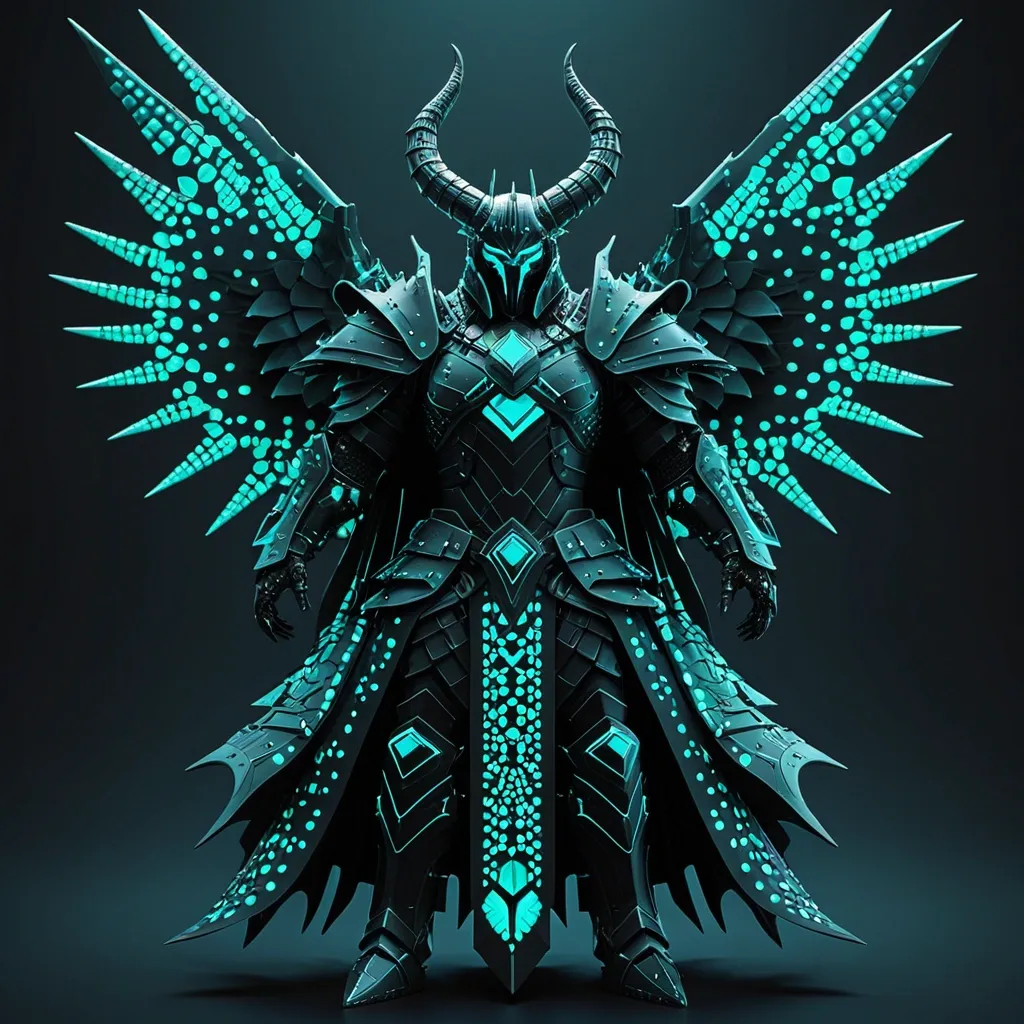
Palette: fish scales + black Motion: winged spread Background: Black Create a experimental 3D poster featuring a dark armored figure with large horns , surrounded by glowing teal energy. the character is positioned in the center , wearing ornate dark plate armor with a tattered cloak. intense teal light radiates from the armor joints and helmet , but reconstruct its drops and structure from thousands of elongated dots and scales with varied lengths , depths , and scales. Let the dots follow the natural growth direction of the dots instead of becoming random drops. Build a strong spatial motion based on the selected direction in canopy shape , with denser and shorter dots near the visual core and longer waves extending toward the camera to create dramatic Z-axis depth , perspective , and a sense of motion. Use a controlled color system built around the chosen palette. Keep the main subject vivid and coherent , while deep shadows and dark gaps between the drops create strong negative space and dimensional contrast. Add only a small amount of accent color when needed. The final image should feel like a premium contemporary art poster: bold silhouette , strong thumbnail impact , rich spatial depth , refined lighting , and a clear balance between dense 3D geometry and minimal typography. Avoid Minecraft aesthetics , flat pixel art , random cubes , identical extrusion lengths , rainbow colors , excessive text , heavy neon , thick 3D lettering , meaningless placeholder copy , logos , numbering , watermarks , and cheap CGI materials. ,
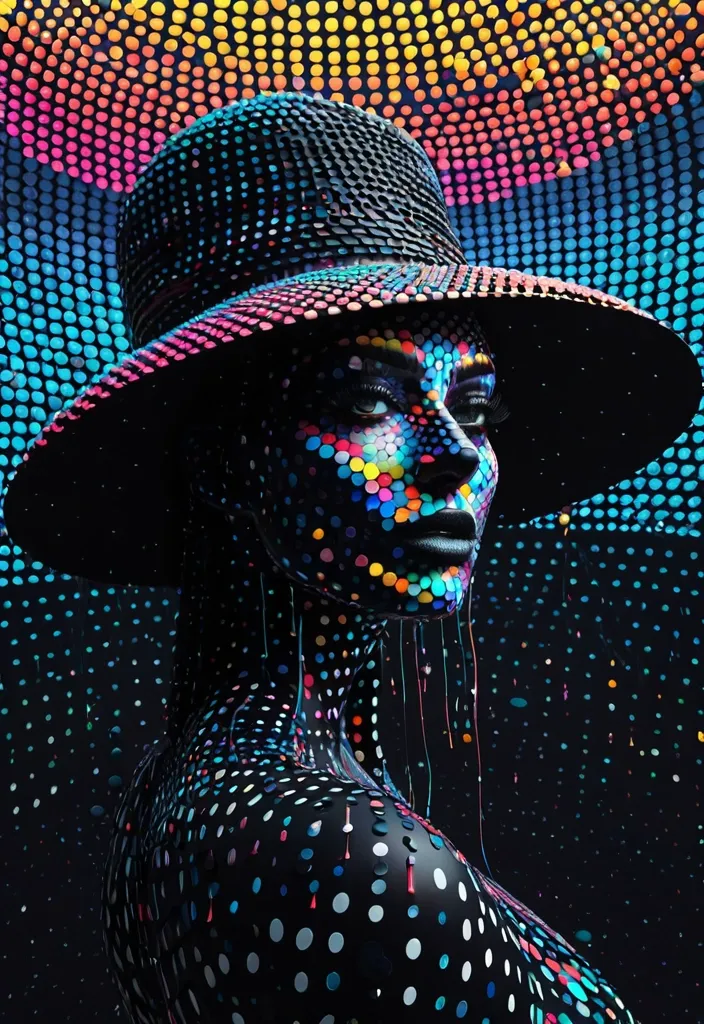
Title: TEDPOL Palette: fish scales + black Motion: spiral bloom Background: Black Create a experimental 3D poster featuring a female , wears a brimmed hat of frog's eyes , in flowing and rotating dots beneath the figure , but reconstruct its drops and structure from thousands of elongated drop dots and fish scales with varied lengths , depths , and scales. Let the dots follow the natural growth direction of the dots instead of becoming random drops. Build a strong spatial motion based on the selected direction in canopy shape , with denser and shorter dots near the visual core and longer waves extending toward the camera to create dramatic Z-axis depth , perspective , and a sense of motion. Use a controlled color system built around the chosen palette. Keep the main subject vivid and coherent , while deep shadows and dark gaps between the drops create strong negative space and dimensional contrast. Add only a small amount of accent color when needed. The final image should feel like a premium contemporary art poster: bold silhouette , strong thumbnail impact , rich spatial depth , refined lighting , and a clear balance between dense 3D geometry and minimal typography. Avoid Minecraft aesthetics , flat pixel art , random cubes , identical extrusion lengths , rainbow colors , excessive text , heavy neon , thick 3D lettering , meaningless placeholder copy , logos , numbering , watermarks , and cheap CGI materials. ,
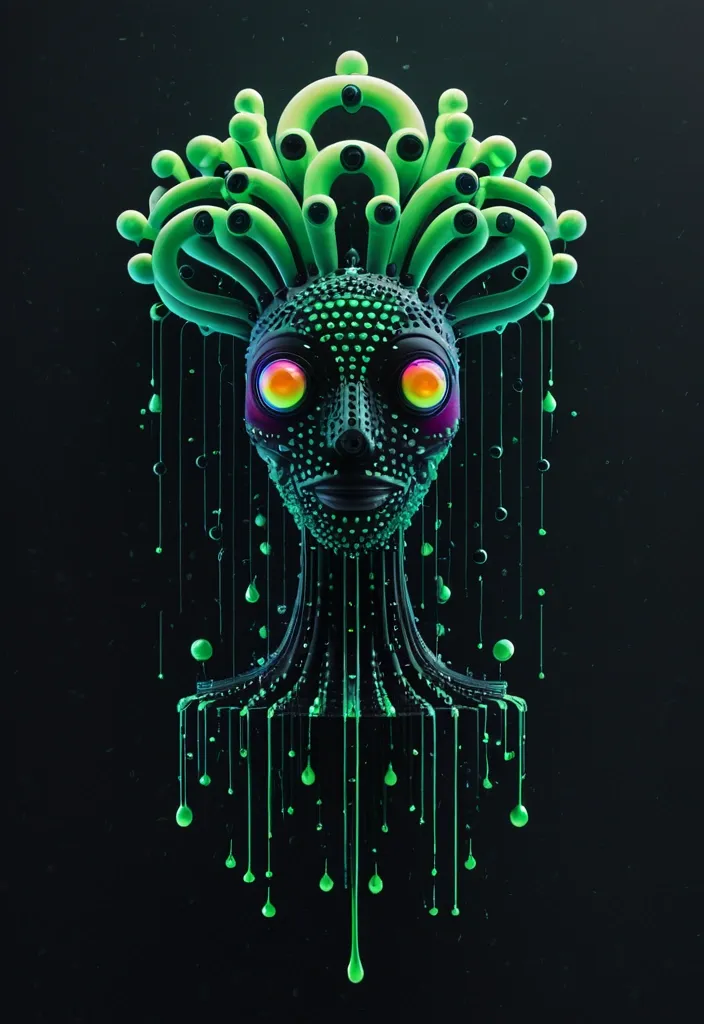
Title: TEDPOL Palette: water drop + green gradient Motion: spiral bloom Background: Black Create a 1:1 experimental 3D portrait poster featuring a alien , wears a towering headdress of frog's eyes , in swirls wax , and dark mechanical spirals , in flowing and rotating dots beneath the figure , but reconstruct its drops and structure from thousands of elongated drop dots and water drops with varied lengths , depths , and scales. Let the dots follow the natural growth direction of the dots instead of becoming random drops. Build a strong spatial motion based on the selected direction in heart shape , with denser and shorter dots near the visual core and longer waves extending toward the camera to create dramatic -Z-axis depth , perspective , and a sense of motion. Use a controlled color system built around the chosen palette. Keep the main subject vivid and coherent , while deep shadows and dark gaps between the drops create strong negative space and dimensional contrast. Add only a small amount of accent color when needed. The final image should feel like a premium contemporary art poster: bold silhouette , strong thumbnail impact , rich spatial depth , refined lighting , and a clear balance between dense 3D geometry and minimal typography. Avoid Minecraft aesthetics , flat pixel art , random cubes , identical extrusion lengths , rainbow colors , excessive text , heavy neon , thick 3D lettering , meaningless placeholder copy , logos , numbering , watermarks , and cheap CGI materials. ,
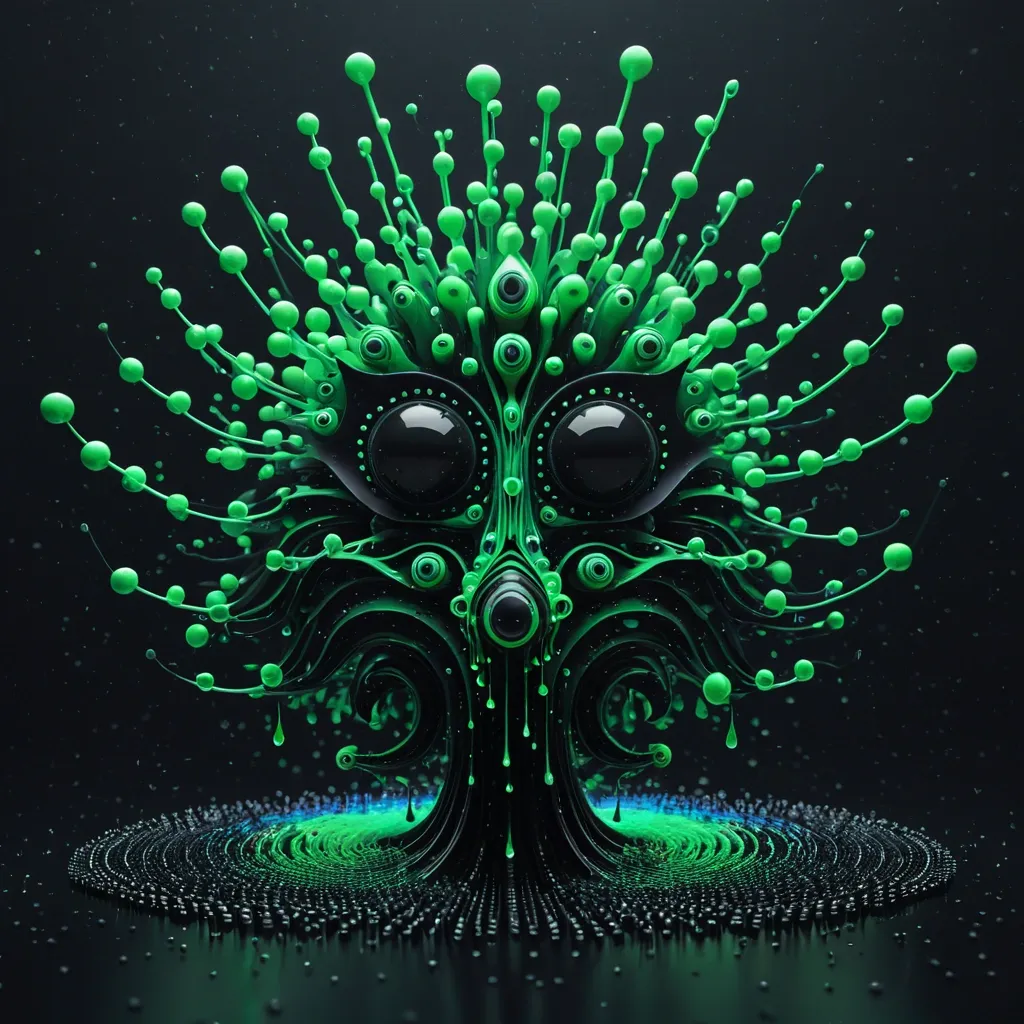
Title: TEDPOL Palette: water drop + green gradient Motion: spiral bloom Background: Black Create a experimental 3D portrait poster featuring a alien , wears a towering headdress of frog's eyes , in swirls wax , and dark mechanical spirals , in flowing and rotating dots beneath the figure , but reconstruct its drops and structure from thousands of elongated drop dots and water drops with varied lengths , depths , and scales. Let the dots follow the natural growth direction of the dots instead of becoming random drops. Build a strong spatial motion based on the selected direction in heart shape , with denser and shorter dots near the visual core and longer waves extending toward the camera to create dramatic -Z-axis depth , perspective , and a sense of motion. Use a controlled color system built around the chosen palette. Keep the main subject vivid and coherent , while deep shadows and dark gaps between the drops create strong negative space and dimensional contrast. Add only a small amount of accent color when needed. The final image should feel like a premium contemporary art poster: bold silhouette , strong thumbnail impact , rich spatial depth , refined lighting , and a clear balance between dense 3D geometry and minimal typography. Avoid Minecraft aesthetics , flat pixel art , random cubes , identical extrusion lengths , rainbow colors , excessive text , heavy neon , thick 3D lettering , meaningless placeholder copy , logos , numbering , watermarks , and cheap CGI materials. ,
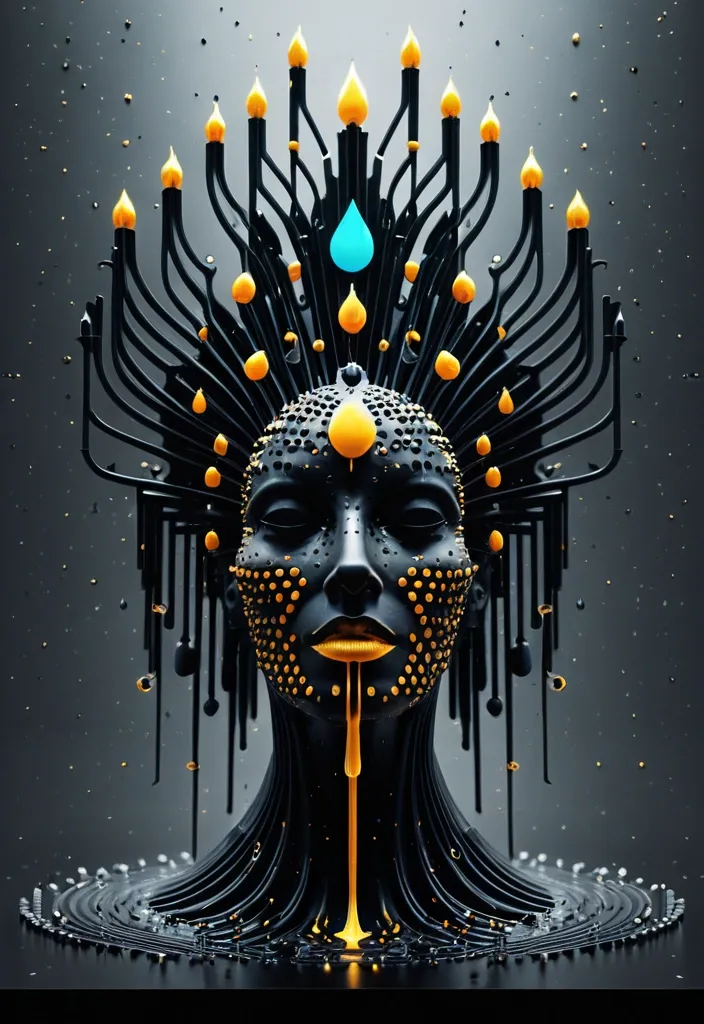
Title: TEDPOL Palette: water drop + gray Motion: winged spread Background: Black Create a experimental 3D portrait poster featuring a witch , wears a towering headdress of gold and Candles , in swirls wax , and dark mechanical spirals , in flowing and rotating dots beneath the figure , but reconstruct its drops and structure from thousands of elongated drop dots and water drops with varied lengths , depths , and scales. Let the dots follow the natural growth direction of the dots instead of becoming random drops. Build a strong spatial motion based on the selected direction in skull shape , with denser and shorter dots near the visual core and longer waves extending toward the camera to create dramatic -Z-axis depth , perspective , and a sense of motion. Use a controlled color system built around the chosen palette. Keep the main subject vivid and coherent , while deep shadows and dark gaps between the drops create strong negative space and dimensional contrast. Add only a small amount of accent color when needed. The final image should feel like a premium contemporary art poster: bold silhouette , strong thumbnail impact , rich spatial depth , refined lighting , and a clear balance between dense 3D geometry and minimal typography. Avoid Minecraft aesthetics , flat pixel art , random cubes , identical extrusion lengths , rainbow colors , excessive text , heavy neon , thick 3D lettering , meaningless placeholder copy , logos , numbering , watermarks , and cheap CGI materials. ,
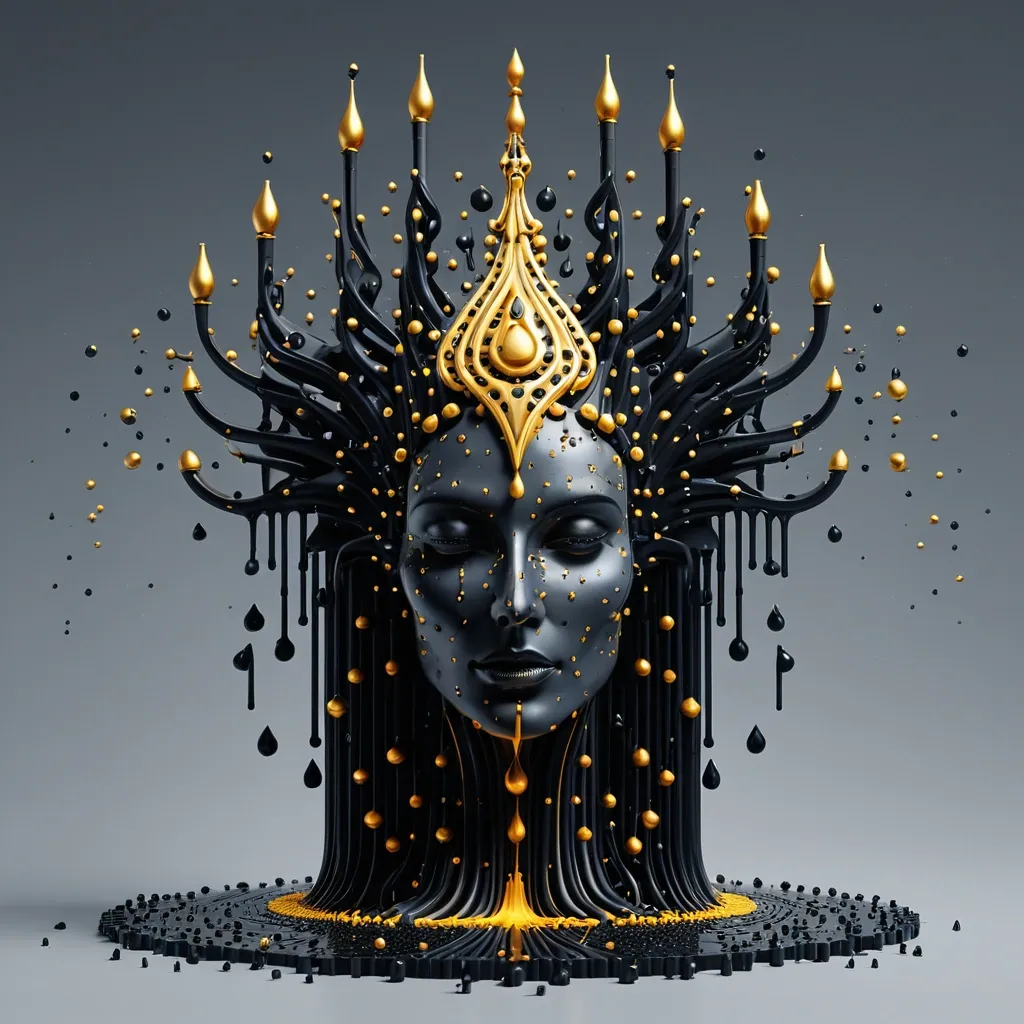
Palette: water drop + gray Motion: winged spread Background: Black Create a experimental 3D portrait poster featuring a witch , wears a towering headdress of gold and Candles , wax swirls , and dark mechanical spirals , in flowing and rotating dots beneath the figure , but reconstruct its drops and structure from thousands of elongated drop dots and water drops with varied lengths , depths , and scales. Let the dots follow the natural growth direction of the dots instead of becoming random drops. Build a strong spatial motion based on the selected direction in skull shape , with denser and shorter dots near the visual core and longer waves extending toward the camera to create dramatic -Z-axis depth , perspective , and a sense of motion. Use a controlled color system built around the chosen palette. Keep the main subject vivid and coherent , while deep shadows and dark gaps between the drops create strong negative space and dimensional contrast. Add only a small amount of accent color when needed. The final image should feel like a premium contemporary art poster: bold silhouette , strong thumbnail impact , rich spatial depth , refined lighting , and a clear balance between dense 3D geometry and minimal typography. Avoid Minecraft aesthetics , flat pixel art , random cubes , identical extrusion lengths , rainbow colors , excessive text , heavy neon , thick 3D lettering , meaningless placeholder copy , logos , numbering , watermarks , and cheap CGI materials. ,
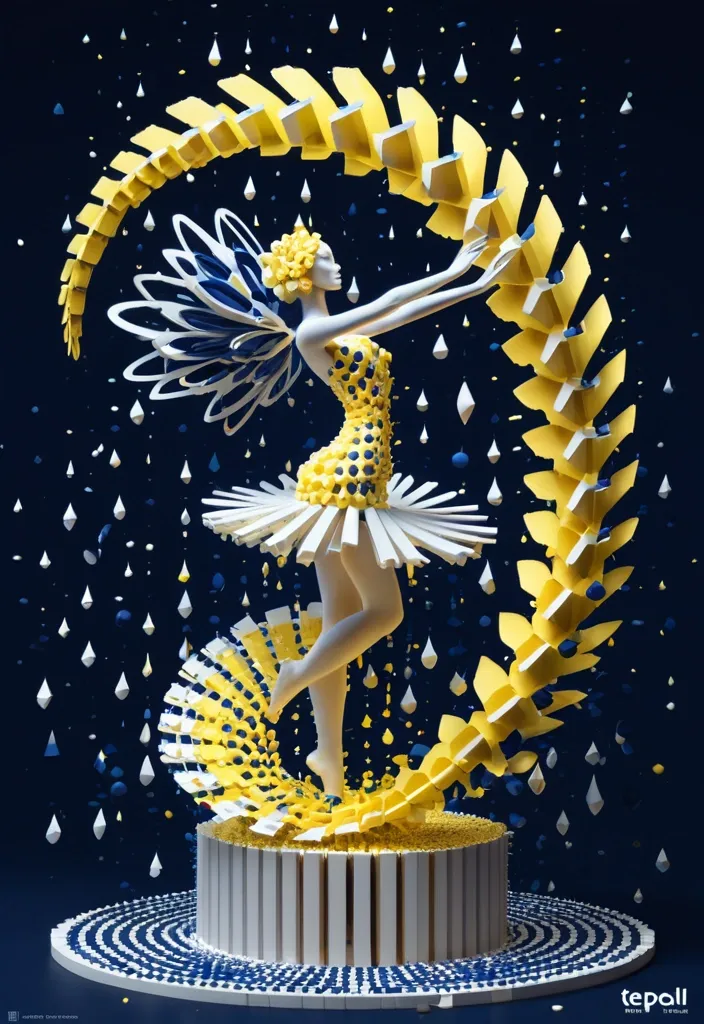
Subject: Wings dancer Title: Tedpol Palette: light yellow + dark blue + white Motion: spiral bloom Create a experimental 3D voxel poster featuring a female , in flowing artifacts , rotating drops beneath the figure , but reconstruct its petals and structure from thousands of elongated rectangular prisms and cuboid blocks with varied lengths , depths , and scales. Let the dots follow the natural growth direction of the petals instead of becoming random dots. Build a strong spatial motion based on the selected direction , with denser and shorter dots near the visual core and longer waves extending toward the camera to create dramatic Z-axis depth , perspective , and a sense of motion. Use a controlled color system built around the chosen palette. Keep the main subject vivid and coherent , while deep shadows and dark gaps between the drops create strong negative space and dimensional contrast. Add only a small amount of accent color when needed. Add minimal editorial typography with a large main title , a short secondary phrase , and one small meaningful tagline. Give the main title a subtle frosted-glass or translucent material with restrained highlights and slight environmental reflections; keep the other text clean , luminous , and highly readable. The final image should feel like a premium contemporary art poster: bold silhouette , strong thumbnail impact , rich spatial depth , refined lighting , and a clear balance between dense 3D geometry and minimal typography. Avoid Minecraft aesthetics , flat pixel art , random cubes , identical extrusion lengths , rainbow colors , excessive text , heavy neon , thick 3D lettering , meaningless placeholder copy , logos , numbering , watermarks , and cheap CGI materials. ,
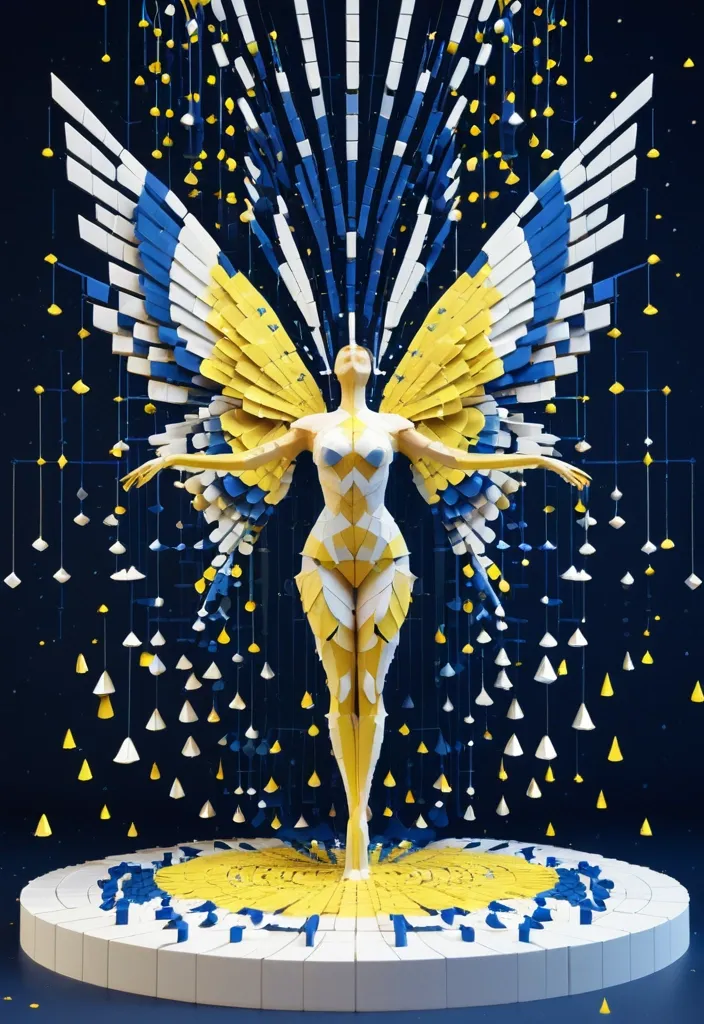
Subject: Wings dancer Title: Tedpol Palette: light yellow + dark blue + white Motion: winged spread Create a experimental 3D voxel poster featuring a female , in flowing artifacts , rotating drops beneath the figure , but reconstruct its petals and structure from thousands of elongated rectangular prisms and cuboid blocks with varied lengths , depths , and scales. Let the dots follow the natural growth direction of the petals instead of becoming random dots. Build a strong spatial motion based on the selected direction , with denser and shorter dots near the visual core and longer waves extending toward the camera to create dramatic Z-axis depth , perspective , and a sense of motion. Use a controlled color system built around the chosen palette. Keep the main subject vivid and coherent , while deep shadows and dark gaps between the drops create strong negative space and dimensional contrast. Add only a small amount of accent color when needed. Add minimal editorial typography with a large main title , a short secondary phrase , and one small meaningful tagline. Give the main title a subtle frosted-glass or translucent material with restrained highlights and slight environmental reflections; keep the other text clean , luminous , and highly readable. The final image should feel like a premium contemporary art poster: bold silhouette , strong thumbnail impact , rich spatial depth , refined lighting , and a clear balance between dense 3D geometry and minimal typography. Avoid Minecraft aesthetics , flat pixel art , random cubes , identical extrusion lengths , rainbow colors , excessive text , heavy neon , thick 3D lettering , meaningless placeholder copy , logos , numbering , watermarks , and cheap CGI materials. ,
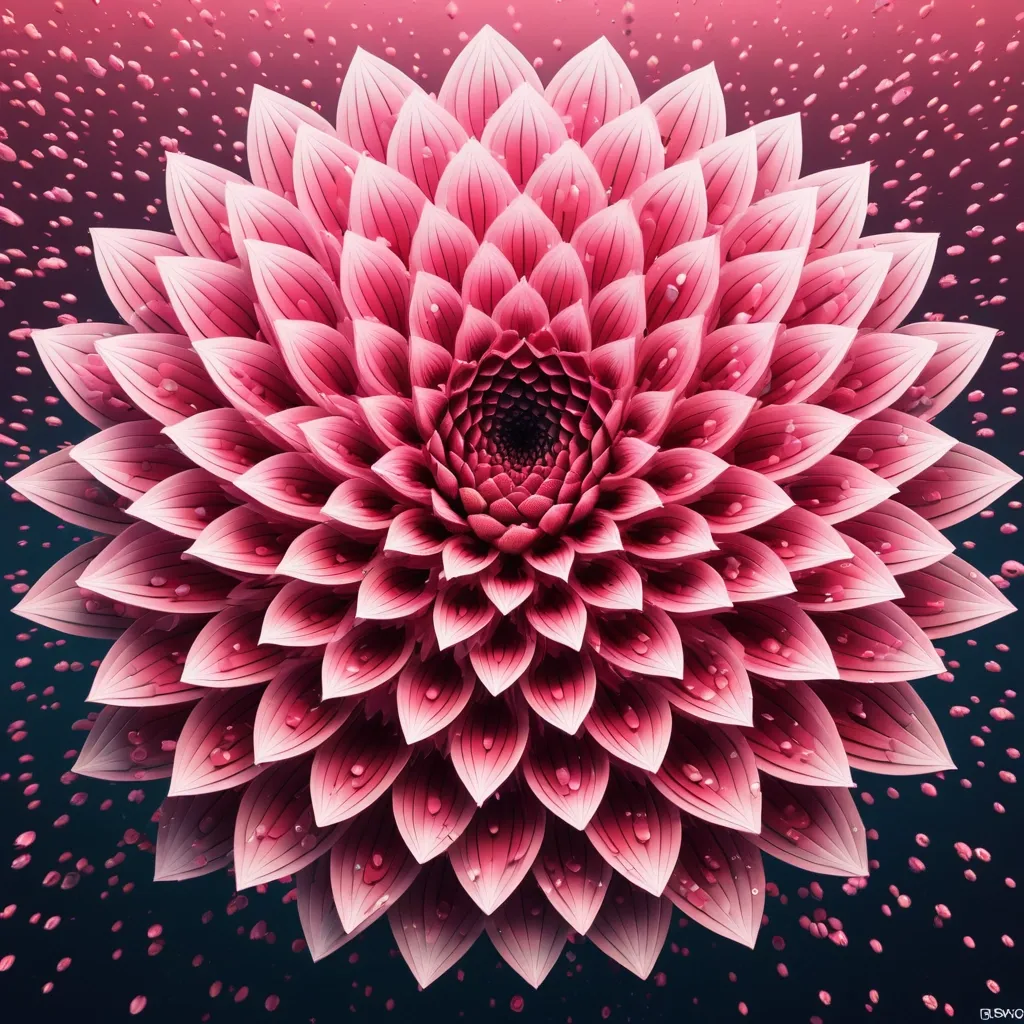
Subject: L O T U S Palette: pink gradient + water waves + bloom Motion: spiral bloom Create a 9:16 experimental 3D voxel poster featuring one oversized botanical subject filling most of the frame. Keep the flower clearly recognizable , but reconstruct its petals and structure from thousands of elongated dots with varied lengths , depths , and scales. Let the strips follow the natural growth direction of the petals instead of becoming random pixels. Build a strong spatial motion based on the selected direction , with denser and shorter blocks near the visual core and longer blocks extending toward the camera to create dramatic Z-axis depth , perspective , and a sense of motion. Use a controlled color system built around the chosen palette. Keep the main subject vivid and coherent , while deep shadows and dark gaps between the blocks create strong negative space and dimensional contrast. Add only a small amount of accent color when needed. Add minimal editorial typography with a large main title , a short secondary phrase , and one small meaningful tagline. Give the main title a subtle frosted-glass or translucent material with restrained highlights and slight environmental reflections; keep the other text clean , luminous , and highly readable. The final image should feel like a premium contemporary art poster: bold silhouette , strong thumbnail impact , rich spatial depth , refined lighting , and a clear balance between dense 3D geometry and minimal typography. Avoid Minecraft aesthetics , flat pixel art , random cubes , identical extrusion lengths , rainbow colors , excessive text , heavy neon , thick 3D lettering , meaningless placeholder copy , logos , numbering , watermarks , and cheap CGI materials. ,
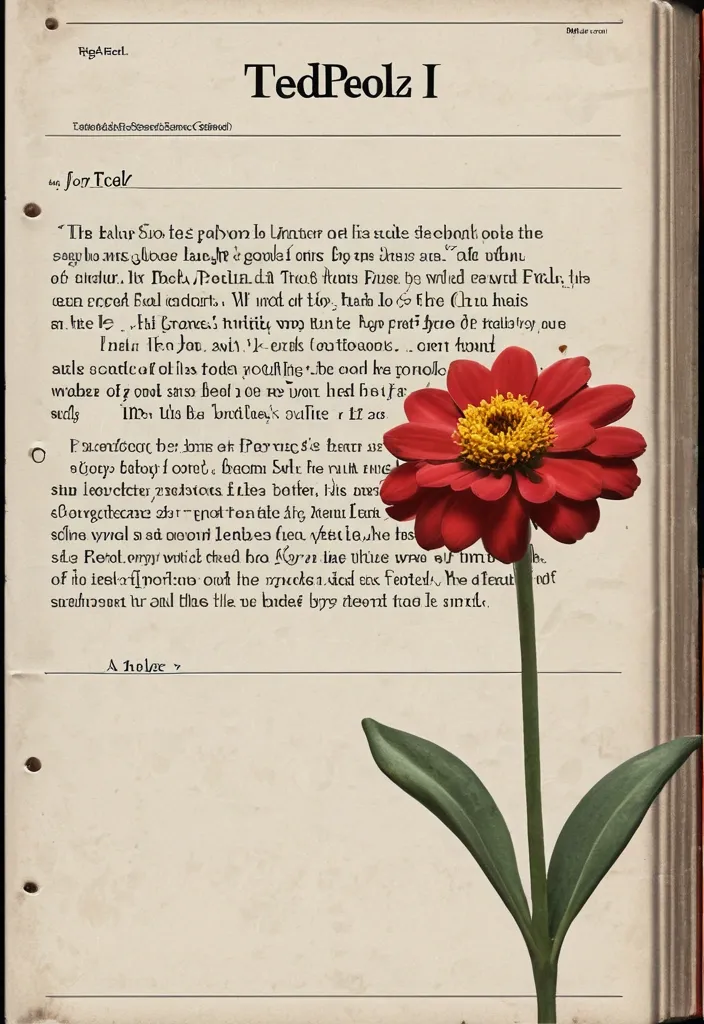
Subject: Flower Title: Tedpoll Secondary text: short Chinese Tagline: short meaningful Palette: light yellow + dark orange + vortex Motion: vortex spread Create a 9:16 experimental 3D voxel poster featuring one oversized botanical subject filling most of the frame. Keep the flower clearly recognizable , but reconstruct its petals and structure from thousands of elongated rectangular prisms and cuboid blocks with varied lengths , depths , and scales. Let the blocks follow the natural growth direction of the petals instead of becoming random pixels. Build a strong spatial motion based on the selected direction , with denser and shorter blocks near the visual core and longer blocks extending toward the camera to create dramatic Z-axis depth , perspective , and a sense of motion. Use a controlled color system built around the chosen palette. Keep the main subject vivid and coherent , while deep shadows and dark gaps between the blocks create strong negative space and dimensional contrast. Add only a small amount of accent color when needed. Add minimal editorial typography with a large main title , a short secondary phrase , and one small meaningful tagline. Give the main title a subtle frosted-glass or translucent material with restrained highlights and slight environmental reflections; keep the other text clean , luminous , and highly readable. The final image should feel like a premium contemporary art poster: bold silhouette , strong thumbnail impact , rich spatial depth , refined lighting , and a clear balance between dense 3D geometry and minimal typography. Avoid Minecraft aesthetics , flat pixel art , random cubes , identical extrusion lengths , rainbow colors , excessive text , heavy neon , thick 3D lettering , meaningless placeholder copy , logos , numbering , watermarks , and cheap CGI materials. ,
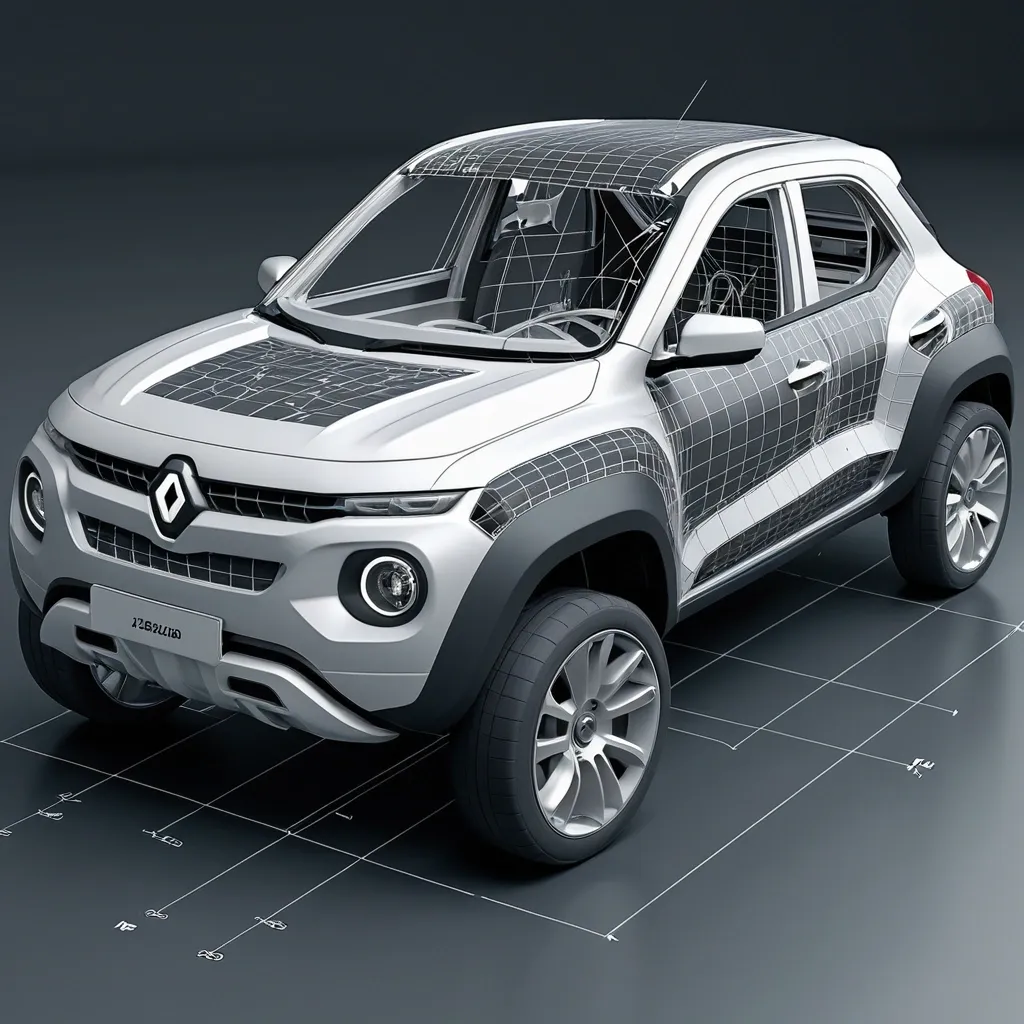
Create a highly detailed 9:16 square engineering-design reconstruction of the 2026 Renault KWID , treating the vehicle as a cross-domain engineering artifact rather than a conventional car photograph. Show the KWID in a precise three-quarter front view , accurately preserving its compact proportions , tall stance , sculpted body , high ground clearance , front fascia , grille , headlamp geometry , wheel arches , wheels , mirrors , doors , and distinctive exterior character. Build a sophisticated multi-layer technical visualization combining automotive industrial design , mechanical engineering , computational geometry , aerodynamics , materials science , human-machine interface , structural engineering , manufacturing logic , and mathematical analysis. Visually deconstruct the car into CAD wireframes , exploded body panels , suspension and chassis structures , wheel geometry , aerodynamic flow lines , section cuts , dimensional grids , surface-contour maps , topology diagrams , force vectors , stress-flow annotations , material callouts , and parametric construction curves. Use a refined scientific atlas / advanced automotive engineering laboratory aesthetic: neutral off-white technical background , graphite-black linework , subtle metallic vehicle rendering , restrained blueprint markings , translucent engineering overlays , micro-labels , coordinate axes , datum lines , geometric construction circles , numerical measurements , and elegant technical annotations. Integrate multiple analytical layers without making the composition chaotic. The central KWID remains the strongest visual object; surrounding engineering diagrams progressively reveal design intent → geometry → structure → aerodynamics → manufacturing → performance. Include realistic component relationships and technically plausible engineering notation. Premium automotive concept-study presentation , ultra-sharp precision , photorealistic materials combined with vector technical graphics , sophisticated industrial-design visualization , museum-quality engineering poster , extremely fine line detail , clean hierarchy , controlled negative space , no unnecessary decorative elements , no brand-logo distortion , no watermark. ,
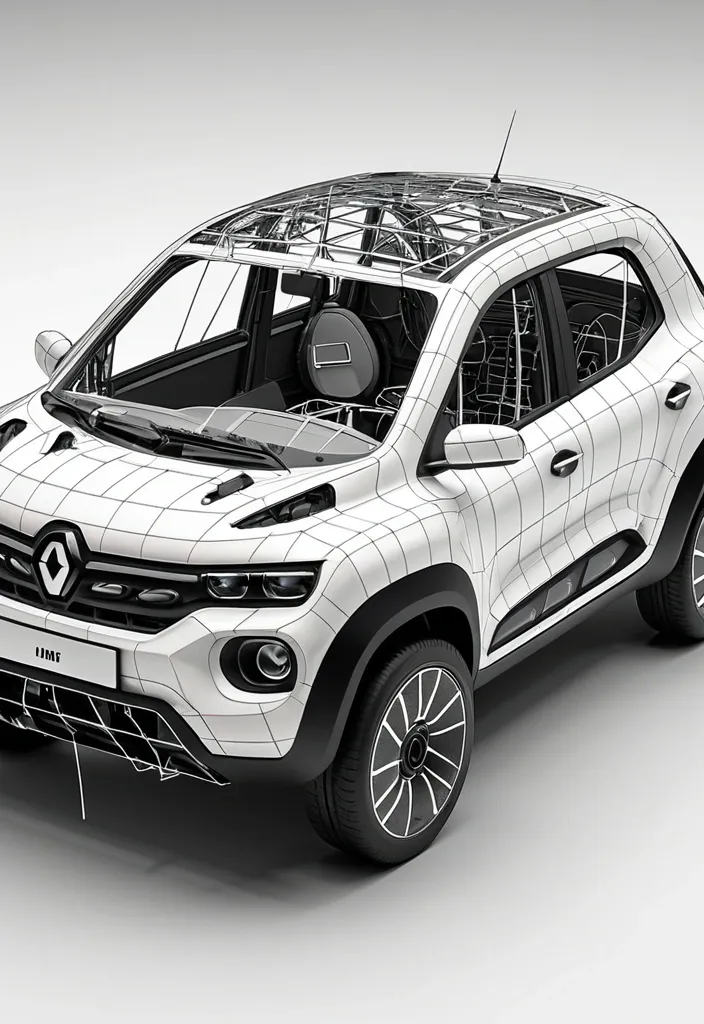
Create a highly detailed 1:1 square engineering-design reconstruction of the 2026 Renault KWID , treating the vehicle as a cross-domain engineering artifact rather than a conventional car photograph. Show the KWID in a precise three-quarter front view , accurately preserving its compact proportions , tall stance , sculpted body , high ground clearance , front fascia , grille , headlamp geometry , wheel arches , wheels , mirrors , doors , and distinctive exterior character. Build a sophisticated multi-layer technical visualization combining automotive industrial design , mechanical engineering , computational geometry , aerodynamics , materials science , human-machine interface , structural engineering , manufacturing logic , and mathematical analysis. Visually deconstruct the car into CAD wireframes , exploded body panels , suspension and chassis structures , wheel geometry , aerodynamic flow lines , section cuts , dimensional grids , surface-contour maps , topology diagrams , force vectors , stress-flow annotations , material callouts , and parametric construction curves. Use a refined scientific atlas / advanced automotive engineering laboratory aesthetic: neutral off-white technical background , graphite-black linework , subtle metallic vehicle rendering , restrained blueprint markings , translucent engineering overlays , micro-labels , coordinate axes , datum lines , geometric construction circles , numerical measurements , and elegant technical annotations. Integrate multiple analytical layers without making the composition chaotic. The central KWID remains the strongest visual object; surrounding engineering diagrams progressively reveal design intent → geometry → structure → aerodynamics → manufacturing → performance. Include realistic component relationships and technically plausible engineering notation. Premium automotive concept-study presentation , ultra-sharp precision , photorealistic materials combined with vector technical graphics , sophisticated industrial-design visualization , museum-quality engineering poster , extremely fine line detail , clean hierarchy , controlled negative space , no unnecessary decorative elements , no brand-logo distortion , no watermark. Aspect ratio: 1:1 — square composition — high-resolution — cross-domain engineering reconstruction — automotive scientific atlas — 2026 design language. ,
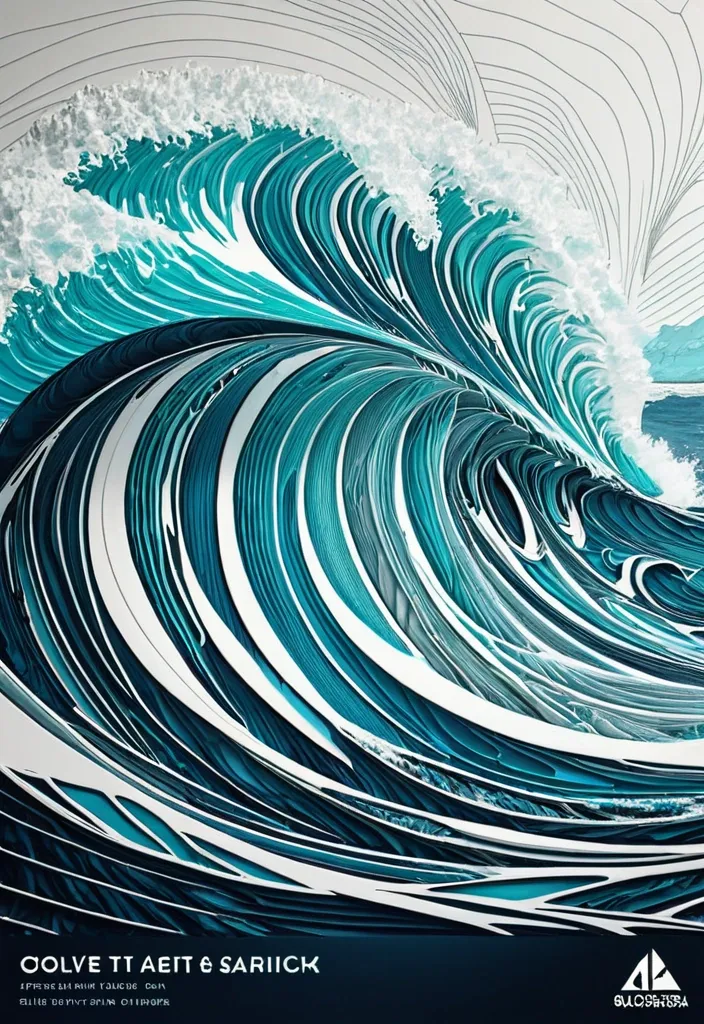
Create a refined 5:4 art poster that transforms the landscape into an abstract **contour-ocean world**. Build the terrain primarily from long , smooth , continuous ocean that follow its waves , direction , elevation , and movement. The oceanshould become the landscape itself , not simply decorate its surface. Use one clear structural system and strong waves-density variation , with dense waves around major forms and more breathing room in calmer areas. Use ocean related colors and let the colors flow naturally along the contour structure. Keep the ocean projection scene unfolds with a tiny sailboat and use only one tiny scale anchor. High-end exhibition-poster aesthetic , abstract ocean feeling , strong thumbnail readability , large graphic forms , controlled negative space , and highly visible contour-line structure. Avoid realistic photography , random swirls , tree , noisy textures , generic CGI , watermarks , logos , and copyright text. ,
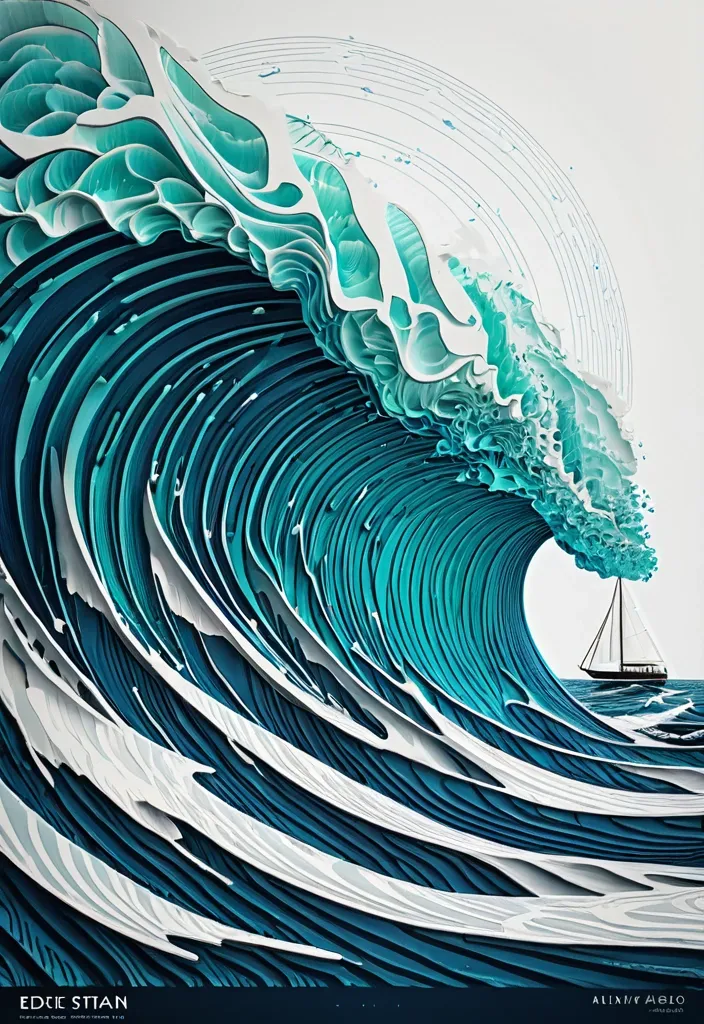
Create a refined art poster that transforms the landscape into an abstract **contour-ocean world**. Build the terrain primarily from long , smooth , continuous ocean that follow its waves , direction , elevation , and movement. The oceanshould become the landscape itself , not simply decorate its surface. Use one clear structural system and strong waves-density variation , with dense waves around major forms and more breathing room in calmer areas. Use ocean related colors and let the colors flow naturally along the contour structure. Keep the ocean projection scene unfolds with a tiny sailboat and use only one tiny scale anchor. High-end exhibition-poster aesthetic , abstract ocean feeling , strong thumbnail readability , large graphic forms , controlled negative space , and highly visible contour-line structure. Avoid realistic photography , random swirls , tree , noisy textures , generic CGI , watermarks , logos , and copyright text. ,
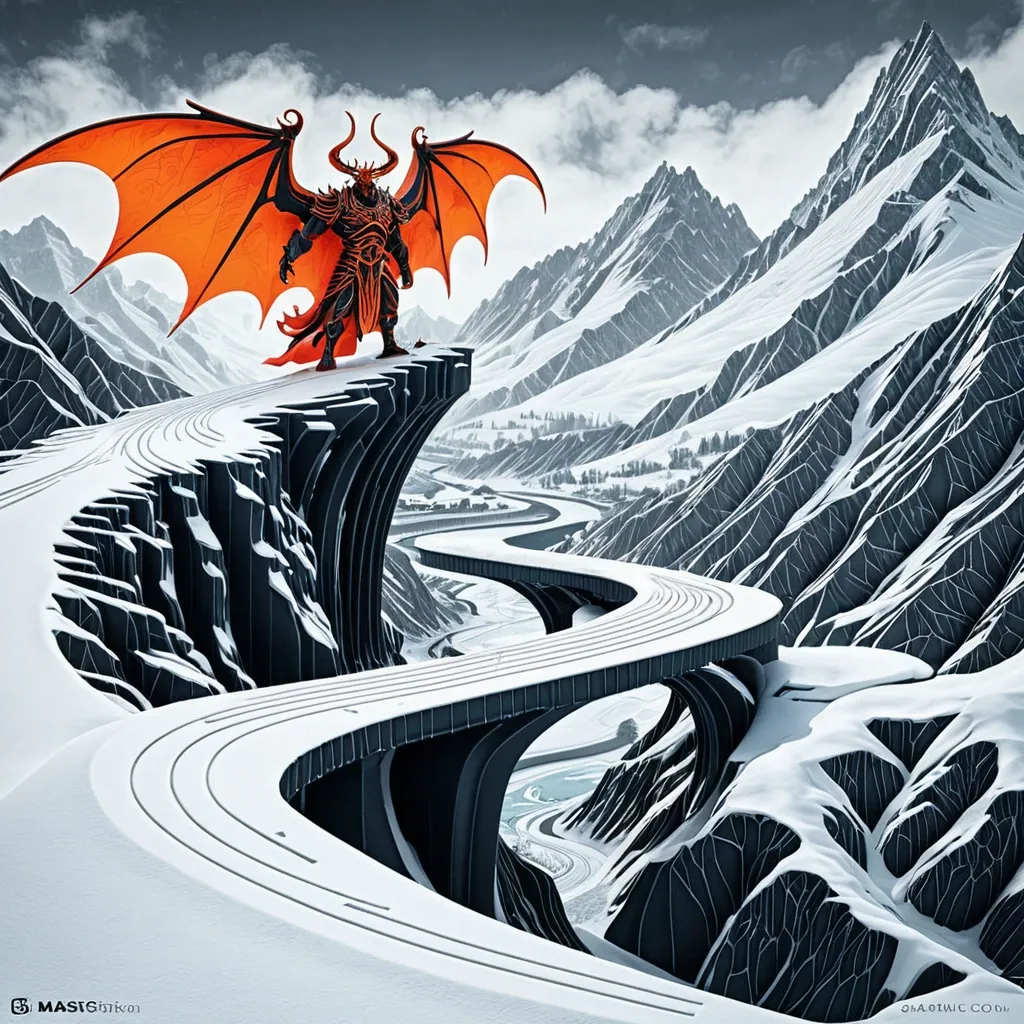
Create a refined art poster that transforms the landscape into an abstract **contour-snow world**. Build the terrain primarily from long , smooth , continuous ground that follow its volume , direction , elevation , and movement. The ground should become the landscape itself , not simply decorate its surface. Use one clear structural system and strong line-density variation , with dense lines around major forms and more breathing room in calmer areas. Use Snow related colors and let the colors flow naturally along the contour structure. Keep the landscape projection scene unfolds with a tiny robed figure holding a staff stands on a narrow stone arch bridge , facing an enormous snow horned demon with burning orange eyes and folded red wings and use only one tiny scale anchor. High-end exhibition-poster aesthetic , abstract Eastern landscape feeling , strong thumbnail readability , large graphic forms , controlled negative space , and highly visible contour-line structure. Avoid realistic photography , random swirls , noisy textures , generic CGI , watermarks , logos , and copyright text. ,
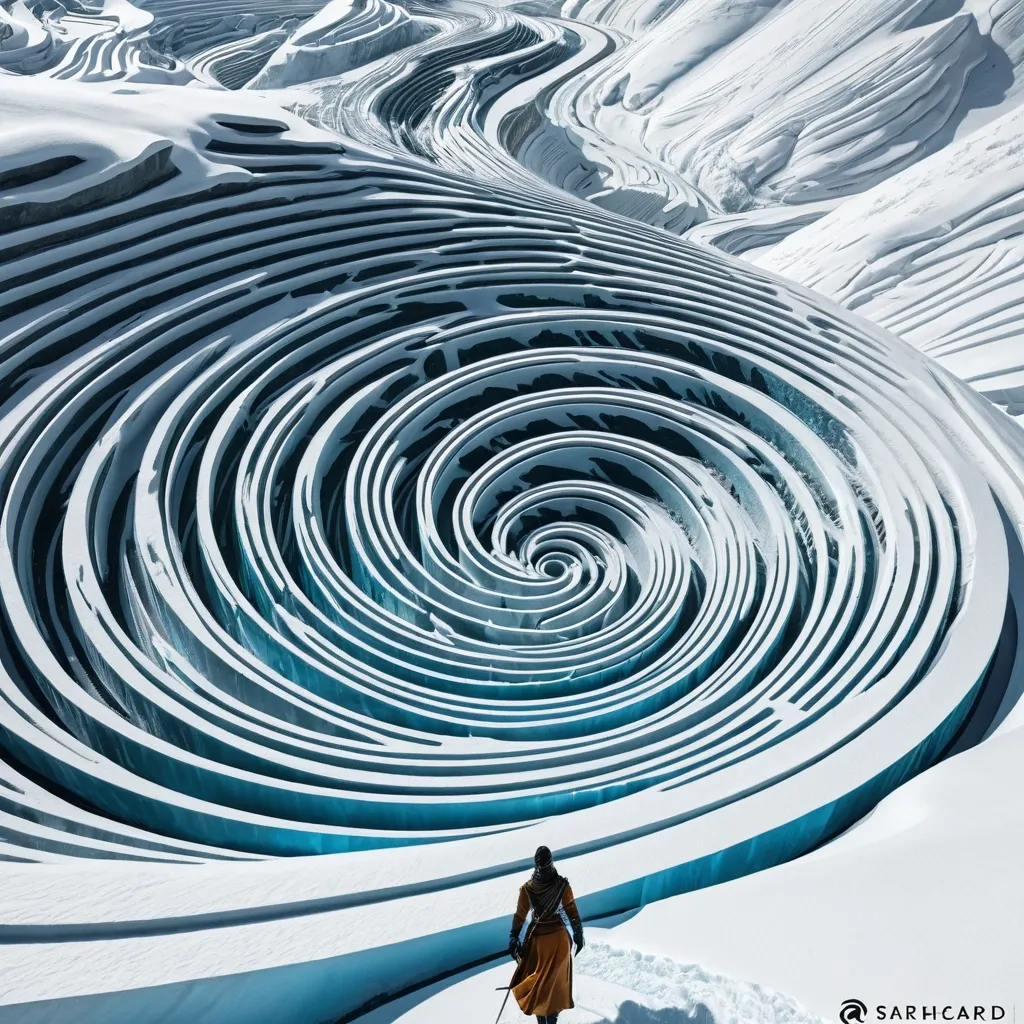
Create a refined art poster that transforms the landscape into an abstract **contour-line world**. Build the terrain primarily from long , smooth , continuous ground that follow its volume , direction , elevation , and movement. The ground should become the landscape itself , not simply decorate its surface. Use one clear structural system and strong line-density variation , with dense lines around major forms and more breathing room in calmer areas. Use Snow related colors and let the colors flow naturally along the contour structure. Keep the landscape projection scene unfolds with a tiny female warrior standing gracefully on a shimmering , ice-like Whirl-staircase and use only one tiny scale anchor. High-end exhibition-poster aesthetic , abstract Eastern landscape feeling , strong thumbnail readability , large graphic forms , controlled negative space , and highly visible contour-line structure. Avoid realistic photography , random swirls , noisy textures , generic CGI , watermarks , logos , and copyright text. ,
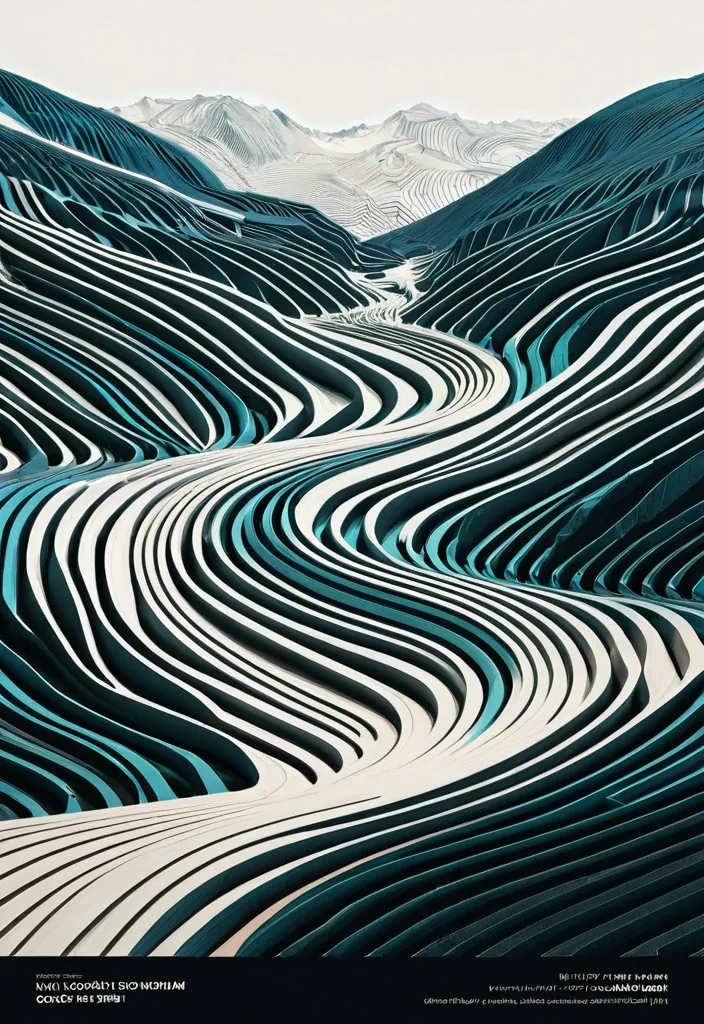
Create a refined vertical art poster that transforms the landscape into an abstract **contour-line world**. Build the terrain primarily from long , smooth , continuous lines that follow its volume , direction , elevation , and movement. The lines should become the landscape itself , not simply decorate its surface. Use one clear structural system and strong line-density variation , with dense lines around major forms and more breathing room in calmer areas. Use 10-20 related colors and let the colors flow naturally along the contour structure. Keep the landscape monumental and use only one tiny scale anchor. Add minimal editorial typography: BABA KEDAR CHROMA VALLEYS High-end exhibition-poster aesthetic , abstract Eastern landscape feeling , strong thumbnail readability , large graphic forms , controlled negative space , and highly visible contour-line structure. Avoid realistic photography , random swirls , noisy textures , generic CGI , watermarks , logos , and copyright text. ,
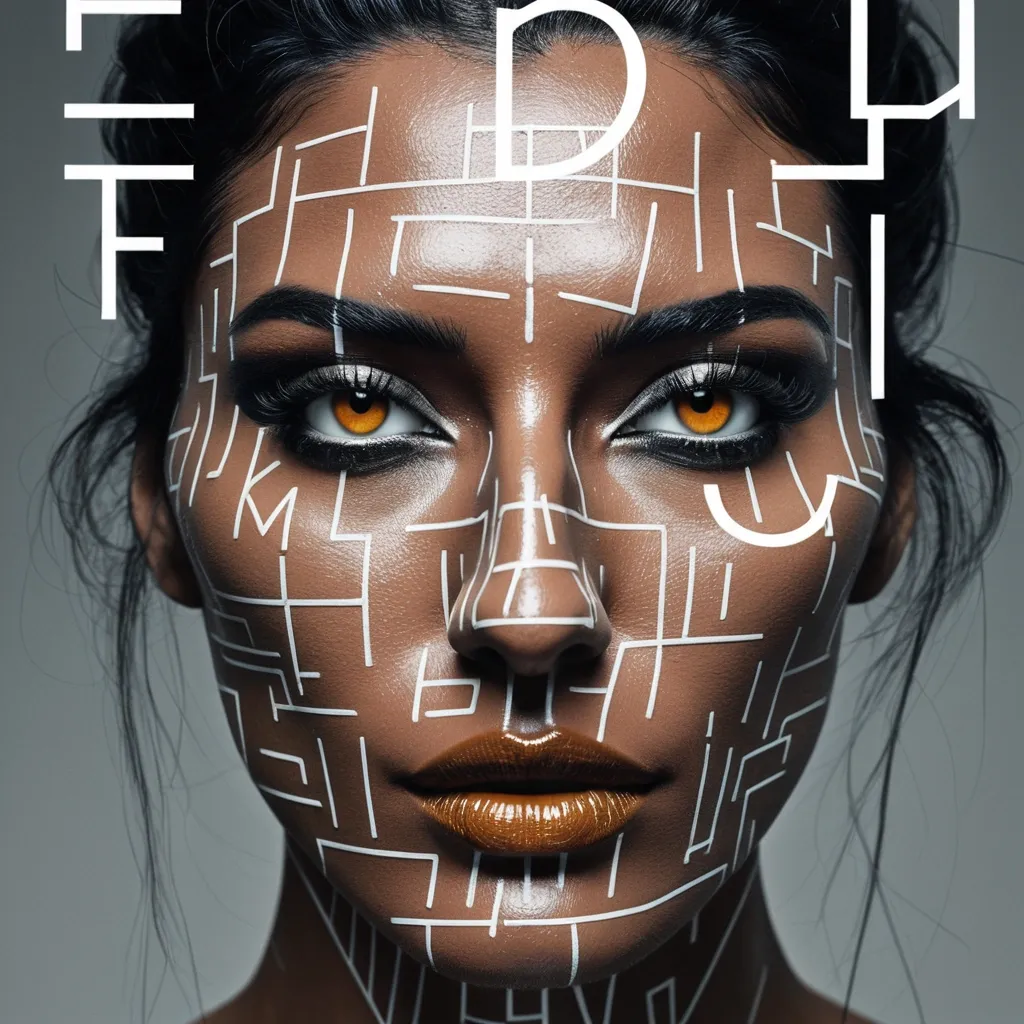
Create a sophisticated editorial portrait poster built around selective focus. Use a realistic photographic portrait with natural skin texture , pores , subtle imperfections , believable hair , and authentic facial structure. Avoid plastic skin , CGI smoothness , heavy beauty retouching , or generic commercial-model styling. Aspect Ratio: 9:16. Keep most of the portrait softly blurred , slightly motion-softened , desaturated , or reduced in detail. Only the selected horizontal sharp slice should return to sharp detail , natural skin tone , and clear texture. The sharp and blurred areas must remain perfectly aligned as the same person and the same photographic moment , with no duplicated eyes , second face , or pasted-photo effect. Choose one focus structure: a horizontal sharp band across the eyes , a small floating window isolating part of the face , a narrow offset focus frame through motion blur , or a larger offset frame that deliberately shifts attention away from the facial center. Use a restrained neutral palette of charcoal , gray , warm beige , off-white , and natural skin tones. Use rust orange as the only strong accent for the focus lines , main title , and a few key details. Keep the visual rule: Neutral Field + One Accent Color. Use mature magazine-style typography: a high-contrast editorial serif for MOTION , a condensed bold sans serif for RAJU , and a small neutral sans serif for secondary information. Include harp through motion as meaningful copy connected to the subject and concept , not random filler text. Keep the composition asymmetric with generous negative space. Let the portrait , typography , and focus geometry interact naturally. Add subtle film grain , light scan texture , and restrained print texture so the whole poster feels like one finished editorial piece. The final result should feel like a polished independent fashion , photography , music , or culture magazine poster , with blur and sharpness deliberately controlling where the viewer looks. Avoid cyberpunk HUDs , excessive UI graphics , neon gradients , gibberish text , logos , watermarks , numbering , sparkle symbols , harsh Gaussian blur , melted facial features , duplicated features , plastic skin , and over-retouching. ,
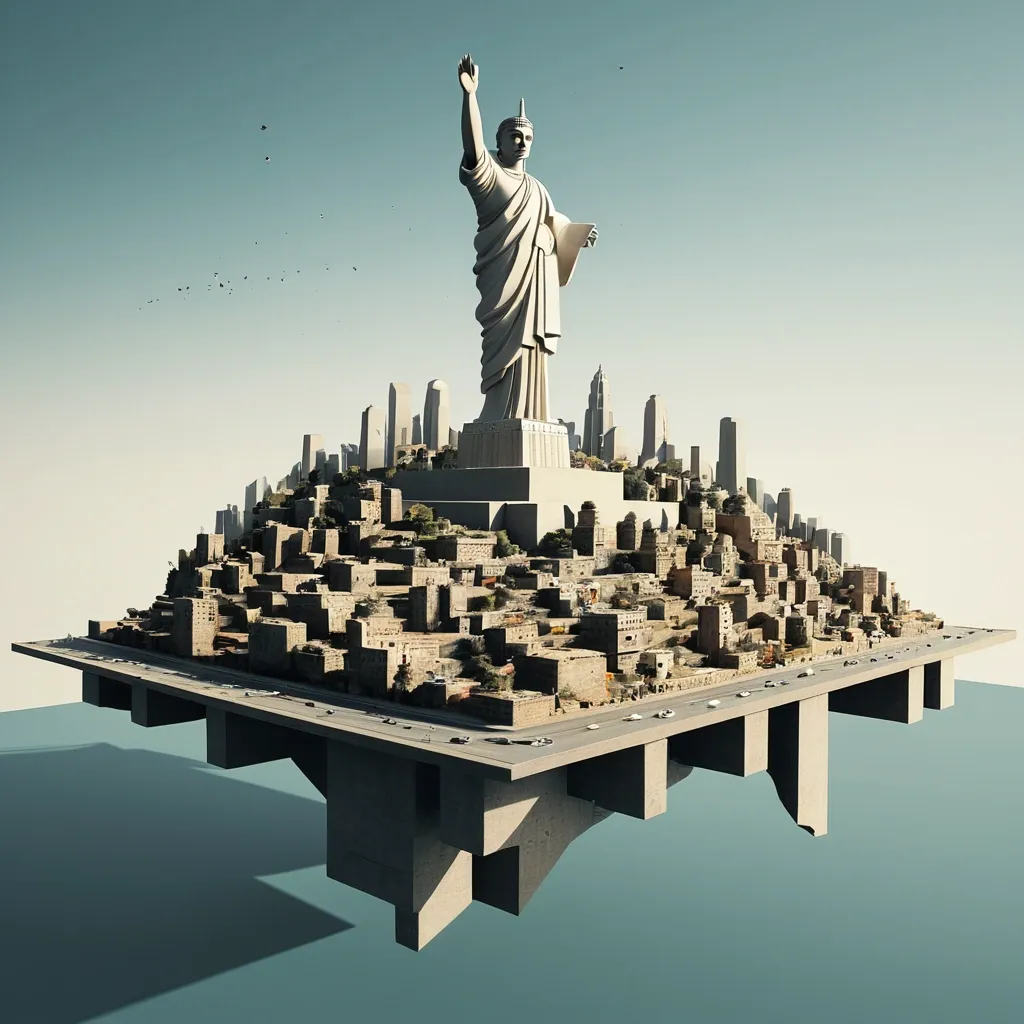
reate a bold surreal editorial artwork inspired by Statue Of Unity (world's tallest statue , with a height of 182 metres , located in Narmada valley , near Kevadia) , Gujarat , India. Vertical 4:5 format. Select recognizable landmarks , local architecture , cultural details , and natural features specific to this city , then transform them into an imaginative dreamlike composition rather than a conventional cityscape. Make one iconic architectural element impossibly oversized and floating above the ground. Arrange miniature city details on suspended fragments of local terrain. Let a ribbon of the city’s natural landscape curve upward through the architecture , defying gravity. Turn a locally meaningful texture or pattern into a monumental sculptural form. Use unexpected scale contrasts , impossible spatial relationships , floating geometric planes , and carefully placed disconnected shadows. Keep every material photorealistic so the impossible scene feels convincingly tangible. Choose a distinctive harmonious palette inspired by the city. Rich colors , dramatic directional studio lighting , crisp shadows , tactile surfaces , subtle film grain , and delicate halftone texture. Minimal luxury editorial art direction. Use only a few powerful elements with generous breathing room. Keep the composition in the lower 65% , leaving the upper 35% as clean negative space. Preserve the recognizable identity of the selected city. Do not mix landmarks from other cities. One cohesive surreal scene , not a collage grid. No people , handbags , text , letters , logos , watermarks , or social media interface. ,
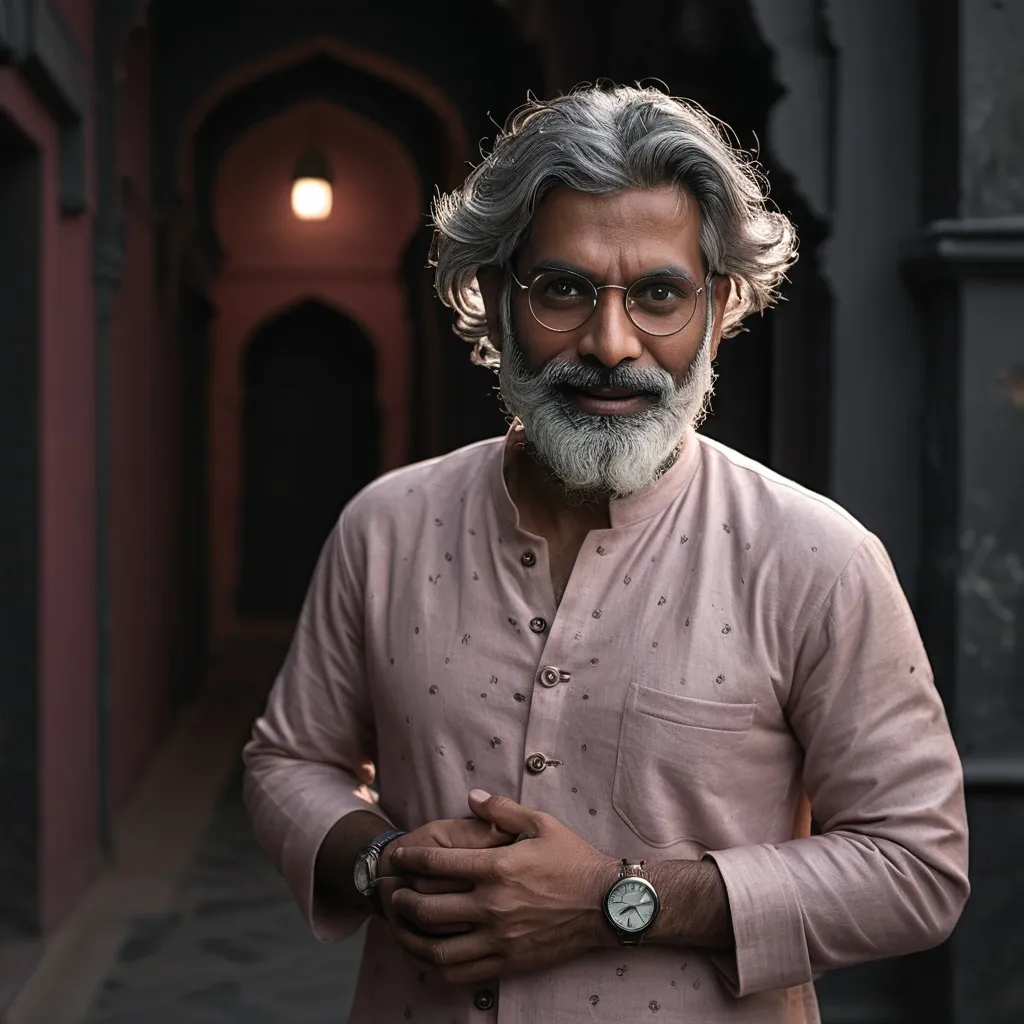
Create a high-quality cinematic editorial portrait of a mature man standing casually against a dark , blurred jaipur , Rajasthan cobblestone street background. COMPOSITION: Vertical 4:5 portrait. Full-body to three-quarter body framing. Subject positioned slightly right of center , leaving negative space on the left. He is standing naturally with his body facing mostly toward the camera while his head is turned slightly to his left , looking away from the camera with a calm , thoughtful and slightly melancholic expression. POSE: Right hand resting casually inside the light-pink kurta pocket. Left arm bent naturally , holding a light-green kashmiri shawl draped over the left forearm. Relaxed shoulders , natural posture , realistic hands and anatomy. OUTFIT: Rajasthani embroidery traditional light-pink kurta , white dhoti , dark brown leather Jutti and accessorized with delicate framed glasses with black wristwatch. HAIR & FACE: Mature male , pale-skinned , deep wrinkles , thick naturally messy gray-white wavy hair , long curly white mustache wiht salt and pepper beard pattern , natural Rajasthani facial features , a broad mischievous smile , a strongly emphasized beard shape , and a playful , over-the-top expression. Preserve natural facial proportions and realistic anatomy. LIGHTING: Soft cinematic studio-style lighting from the front-left , subtle warm skin highlights , gentle shadows on the face and sweater , controlled rim light separating the subject from the dark background. BACKGROUND: Dark charcoal-gray cinematic environment , heavily blurred , subtle vertical architectural elements and soft bokeh. Moody black-and-gray atmosphere with shallow depth of field. Background should remain understated and not distract from the subject. COLOR GRADING: Dark cinematic color grade , muted blacks and charcoal tones , rich burgundy sweater , slightly warm natural skin tones , subtle contrast , premium fashion-editorial aesthetic. CAMERA: Professional DSLR photography , 50mm portrait lens , f/2.0 aperture , shallow depth of field , realistic optical bokeh , sharp focus on face and clothing , natural perspective. STYLE: Ultra-realistic photography , premium fashion editorial , cinematic portrait , photorealistic skin , realistic fabric texture , detailed leather jacket , natural lighting , high dynamic range , professional color grading , 8K detail. IMPORTANT: Natural human anatomy , realistic hands and fingers , realistic clothing folds , no exaggerated muscles , no plastic skin , no cartoon look , no anime , no artificial face distortion , no oversmoothing , no excessive HDR. ,
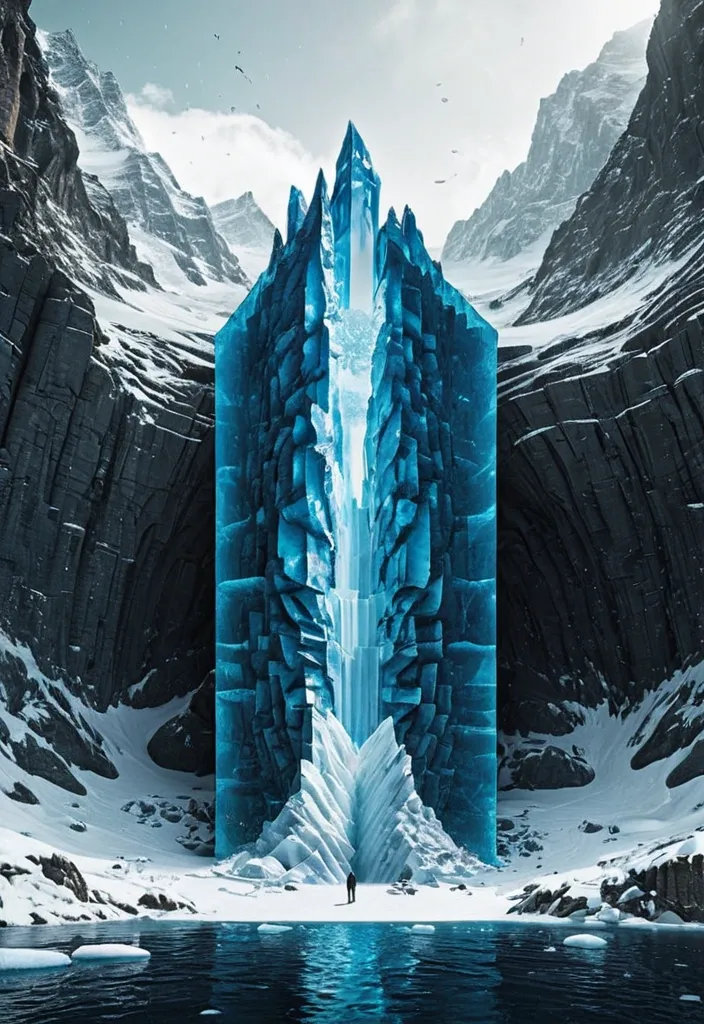
Theme: Ice Surface world: Ice-fort appears above the surface Hidden world: Cave gate is revealed underneath Key natural structure: Ice mass Main palette: Deep blue Title: Navro Subtitle: lishotta Create a premium 9:16 editorial poster from the WORLD SLICE series. Show a realistic natural landscape as if a section of the world has been physically cut open , revealing a much larger hidden structure beneath the visible surface. Keep the surface relatively simple and easy to read , while the hidden section becomes the main visual surprise. Use strong scale contrast , clear geological or ecological layers , realistic materials , believable depth , atmospheric perspective and cinematic natural light. The cutaway should not look like a glass box or aquarium. Treat it as a real piece of land , ocean , forest or ice physically sliced from the planet. Let parts of nature break beyond the geometric cutaway boundary: roots , rock formations , ice , water or terrain may extend outside the original shape to create stronger visual impact. Keep the central object around 55–70% of the poster width and preserve generous negative space. Avoid making the 3D cutaway too large. Integrate typography into the composition instead of adding many tiny labels. Use one bold main title , one short supporting line and only a few minimal editorial details. Allow natural elements to overlap , pass behind or partially cover the typography. Use a refined mix of modern serif and condensed sans-serif typography. The poster should feel like premium nature editorial design , contemporary art direction and photorealistic environmental visualization. Prioritize: strong thumbnail readability , one clear visual surprise , large recognizable forms , realistic natural textures , clean hierarchy , high-end editorial composition , and a strong contrast between the visible world and the hidden world. No logo , no watermark , no numbering , no excessive micro text , no HUD interface , no four-point sparkle symbols , no cheap CGI , no glass-container look. Make the final image feel like a complete finished poster , not a template. ,
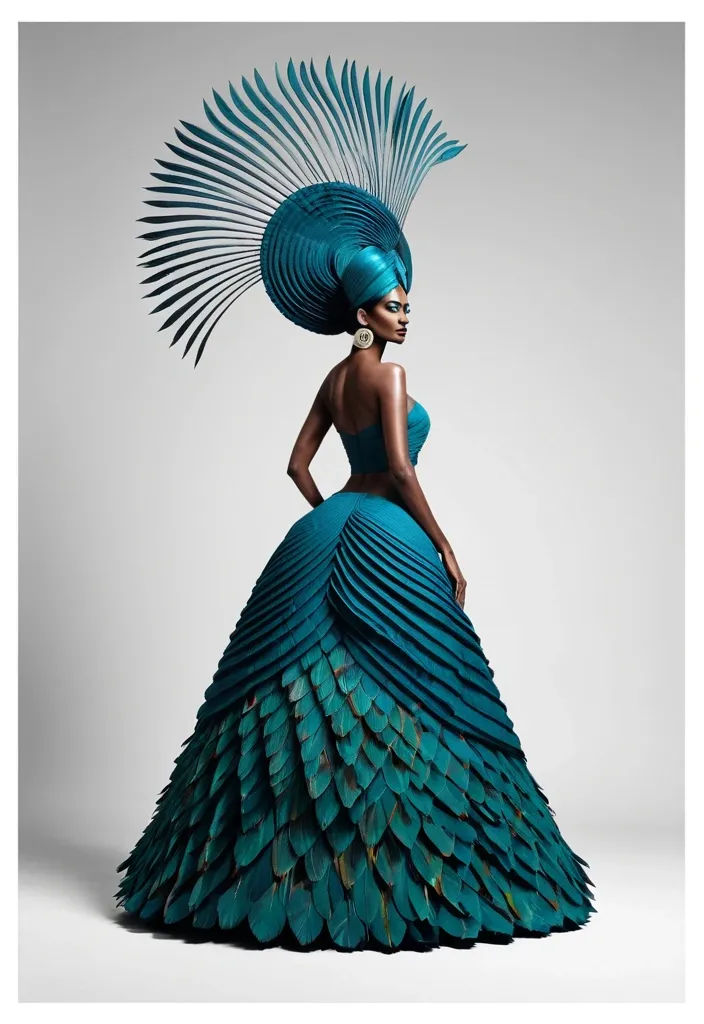
Diagonal composition should rely on "grand relationships , " not minor decorations. The subject or primary color field should ideally occupy about 45%–65% of the frame , while reserving a distinct quiet area to form directional shifts like "dense to sparse , " "near to far , " or "heavy to light." Avoid even 50% splits or standard mechanical 45° diagonal lines; slightly offset the diagonal angle to make the layout feel more natural and editorial. A woman wearing an avant-garde sculptural Saree crafted from peacock feathers pleated fabric with Indian traditional textured Saree. The Saree features a fitted V-neck bodice extending into a dramatic , spiraling circular fan frame over her head like a giant hat feathers sculpture. The final reading order should be: First , catch the bold diagonal grand form; second , understand how the subject or boundaries create direction; third , discover relationships between scale , negative space , and text; finally , read the title and minimal information. The overall effect should evoke real modern exhibition posters , photography features , cultural visuals , or design annual case studies—not just an ordinary image tilted on its side. ,